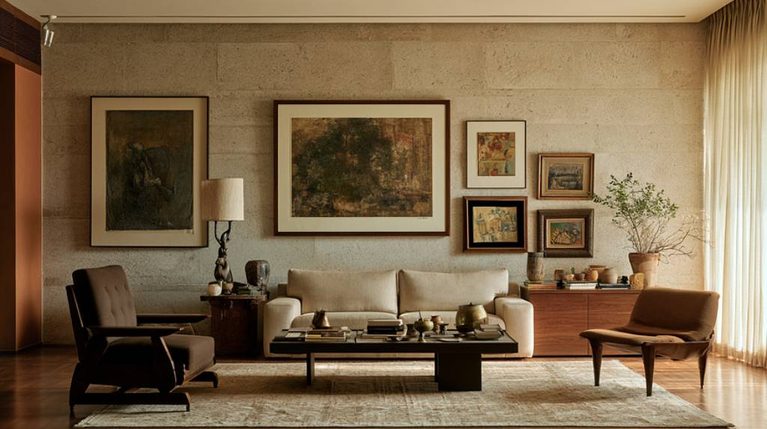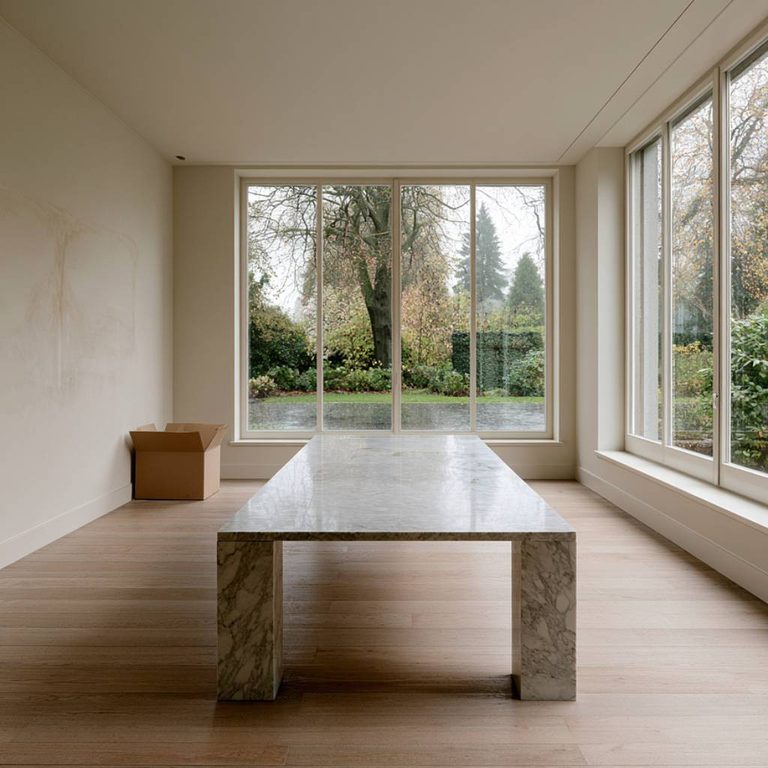

A new home is rarely defined by the day it is purchased.
Paperwork may be signed, keys may change hands, and rooms may already carry the careful intention of design. Furniture is placed with thought, light is studied, textures are chosen. From the outside, everything appears complete. Yet something essential is still missing, something that cannot be bought, arranged, or installed.
It arrives later, almost quietly.
On the first night you decide to sleep there.
The house is still unfamiliar then.
Even after days of movement and preparation, the air feels slightly different, as though it has not yet learned your rhythm. Sounds travel in unfamiliar ways. A distant door closing, the faint hum of electricity, the soft settling of walls adjusting to evening temperature and each small noise feels louder than it should. You listen more carefully than usual, aware of being inside a space that does not yet fully know you.
There is a peculiar vulnerability in that first night.
During the day, activity protects you. Unpacking, arranging, opening boxes, speaking to people, these movements create a sense of control. But night removes that protection. Darkness asks for stillness. And in stillness, the truth becomes visible: you are not only entering a house; you are beginning a relationship with it.
Lying in an unfamiliar room, sleep does not come immediately.
Your body searches for orientation. The ceiling is different. The light from the window falls in a new direction. Even the silence carries another texture. You notice details you would never observe later, the way shadows rest on a wall, the faint scent of fresh paint or wood, the emptiness that still lingers between objects. It is not discomfort exactly, but awareness. A heightened presence inside the unknown.
This moment holds both arrival and uncertainty.
You have reached a place meant to hold your life, yet life has not fully arrived. The rooms wait. The walls are patient. Nothing demands anything from you, and that quiet patience can feel unexpectedly emotional. A home, before it becomes familiar, is simply space. And space, when first encountered in darkness, asks a gentle question: Will you belong here?
Sleep, when it finally comes, feels different from ordinary sleep.
It is lighter, more attentive, as though part of you remains awake, listening. Dreams drift between past and future, the home you left behind, the life not yet formed here. Memory and possibility share the same night. In this way, the first sleep in a new home is not only physical rest; it is a crossing. Something closes. Something begins.
Morning reveals the change.
Light enters the room without hesitation, touching objects that now feel slightly less foreign. The sounds of the house no longer surprise you. Movement becomes easier. You walk through the rooms with a quiet recognition that did not exist the night before. Nothing dramatic has happened, yet everything has shifted by a small, almost invisible degree.
This is the true beginning of living.
Not ownership. Not decoration. But presence.
A house becomes lived in not when furniture arrives, but when vulnerability does.
To sleep somewhere is to trust it. It is to release control, to allow unconsciousness within unfamiliar walls. That act of trust, so ordinary we rarely name it; is what transforms architecture into refuge. Without it, even the most beautiful space remains only arrangement.
Over time, the memory of that first night fades.
Daily routines take its place. Conversations echo through rooms. Meals are shared. Laughter settles into corners. Silence becomes comfortable rather than uncertain. The house learns your footsteps, and you learn its light. What once felt unknown slowly becomes inseparable from you.
Yet something of that first sleep always remains.
Hidden beneath habit is the quiet knowledge of beginning, the fragile instant when belonging was not guaranteed, when the future of this place was still unwritten. Remembering it reveals how gently homes are formed. Not through design alone, but through moments of surrender.
Perhaps this is why the first night matters so deeply.
It is the only time you experience a home before it becomes ordinary. The only moment when arrival and vulnerability exist together, perfectly balanced. After that, life fills the space, and the question of belonging is answered without words.
Years later, you may not recall the exact arrangement of furniture or the colour of the walls.
But you will remember a feeling: lying awake in unfamiliar quiet, sensing that something irreversible had begun. A subtle crossing from elsewhere into here.
And in that soft, uncertain darkness, a house almost without you noticing it becomes a home.