
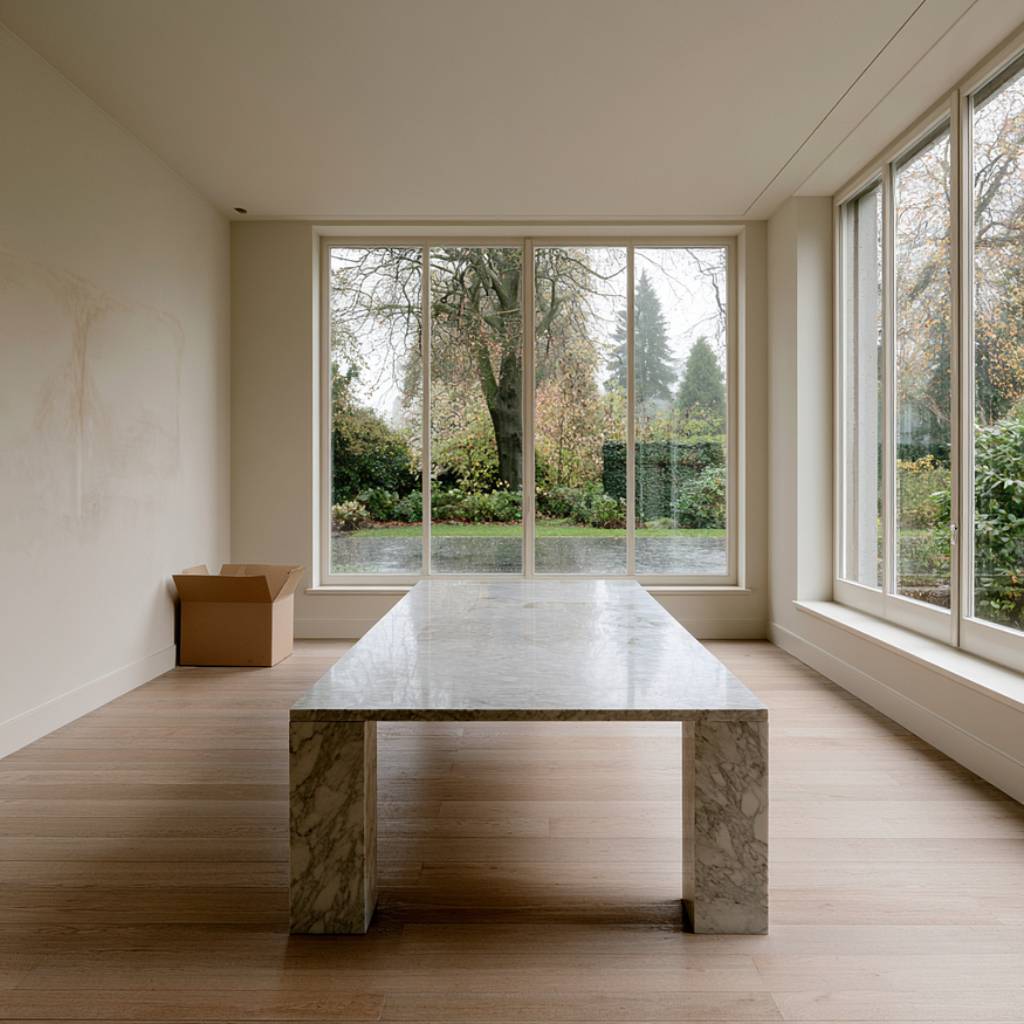
The last box was smaller than expected. It held nothing remarkable: two framed photographs, a handwritten recipe folded into an old cookbook, a brass key that no longer opened any lock and a ceramic bowl that had somehow survived every move the family had ever made. Everything else had already been loaded onto the truck. The wardrobes stood empty. The bookshelves had become pale rectangles against the walls where years of sunlight had been interrupted by books. Curtains had been taken down, leaving the windows strangely exposed. Footsteps echoed through rooms that had once absorbed laughter, arguments, celebrations and ordinary Tuesday evenings. The house had become almost empty, yet no one hurried towards the front door. Something invisible remained behind, making departure more difficult than anyone had expected.
We often believe we leave a house the moment the furniture disappears. In reality, leaving begins much earlier and finishes much later. It begins when favourite chairs are no longer where morning light expects them to be. It continues when familiar sounds slowly disappear, the kettle that always whistled before sunrise, footsteps climbing the staircase, the distant closing of a bedroom door each evening. Yet even after these rituals vanish, the house somehow continues carrying them. Walls become quieter, but they never become unfamiliar. Empty rooms still seem to anticipate voices that have not yet completely left.
Perhaps this is why moving out rarely feels like changing an address. It feels more like saying goodbye to a version of ourselves that only existed inside those rooms. Every home quietly collects habits that no architect could ever draw and no designer could ever specify. The place beside the kitchen window where someone always drank the first cup of tea. The corner of the hallway where school bags were dropped every afternoon despite repeated promises to do otherwise. The dining table where birthdays became anniversaries and anniversaries gradually became family traditions. These moments never leave with the furniture because they were never stored inside the furniture. They became part of the house itself.
Architecture has a remarkable ability to hold memory without speaking about it. A worn edge along a stone staircase quietly records thousands of journeys between childhood and adulthood. A marble threshold polished more softly than the surrounding floor reveals where generations paused before leaving each morning. Timber handrails become smoother exactly where hands naturally rested over decades. Sunlight has its own memory too, returning every afternoon to the same place on the floor regardless of who now lives there. These traces are almost invisible, yet together they create something impossible to pack into moving boxes.
Natural materials seem particularly capable of carrying this continuity. Stone remembers touch not through damage but through gentle change. Oak grows warmer where life has unfolded most frequently. Bronze quietly softens beneath years of ordinary contact. These materials do not resist time. They welcome it. Every mark becomes evidence that the home was loved rather than merely occupied. Long after photographs have been removed from the walls, the architecture continues carrying subtle reminders that life once unfolded here with remarkable consistency.
Environmental psychologists describe this as place attachment, the deep emotional bond people develop with places that become intertwined with their identity. Yet standing inside an almost empty home, no research is necessary to understand the feeling. It reveals itself in hesitation. People walk through rooms one final time without any practical reason. They touch a familiar windowsill. They pause beside the staircase. They look through a window they have looked through thousands of times before, as though hoping to memorise the exact quality of afternoon light one last time. None of these gestures change the move. They simply acknowledge that homes become part of us long before we realise we have become part of them.
What makes this farewell especially moving is that the house itself asks for nothing. It offers no dramatic final moment. It simply remains quietly familiar until the very end. The kitchen still receives the same morning light. Rain still gathers gently outside the windows. The marble floor continues reflecting the changing sky exactly as it always has. The house has not changed because someone is leaving. Only the people have.
Perhaps that is the quiet generosity of great architecture. It never demands ownership. It willingly carries one family’s story before making space for another. The same dining room that once celebrated birthdays will soon welcome different voices. Another child will race along the hallway. Another family will stand at the same kitchen window on a quiet morning. The house does not forget the past, but neither does it remain trapped inside it. It simply continues doing what it has always done, offering shelter for ordinary moments that slowly become unforgettable memories.
Eventually, someone picks up the final box. The front door closes gently behind them. Keys are left where they were promised. The rooms fall silent, but not empty. They remain filled with something that cannot be photographed, measured or transported. Every conversation, every celebration, every quiet evening has quietly settled into the character of the home itself.
The truck disappears around the corner. The house remains exactly where memory will always find it.
The homes we leave behind never truly disappear, they continue living quietly inside us, long after we have learned a new address.


