

There is a peculiar silence that settles over a stone gallery when the right slab is finally found. Until that moment, the day has been filled with comparison. One slab appears too cool beneath natural light, another too dramatic for the room it is meant to inhabit, a third carries beautiful veining but lacks the quiet balance the architect has imagined. People walk slowly through endless rows of marble and quartzite, pausing, stepping back, looking again. Conversations become shorter as decisions become heavier. The search is no longer about finding beautiful stone. Beauty was never in short supply. The search is about recognition, that unmistakable feeling that the material standing before you already belongs to the home that has not yet been built.
Those unfamiliar with luxury residential design often imagine slab selection as a procurement exercise. A specification has been written, a material has been approved and someone simply chooses the closest available option. The reality is remarkably different. Selecting natural stone is one of the few moments in architecture where emotion quietly enters a process otherwise governed by drawings, measurements and technical precision. It is less like shopping and more like casting the lead actor in a film. Once the decision is made, every other scene must unfold around it.
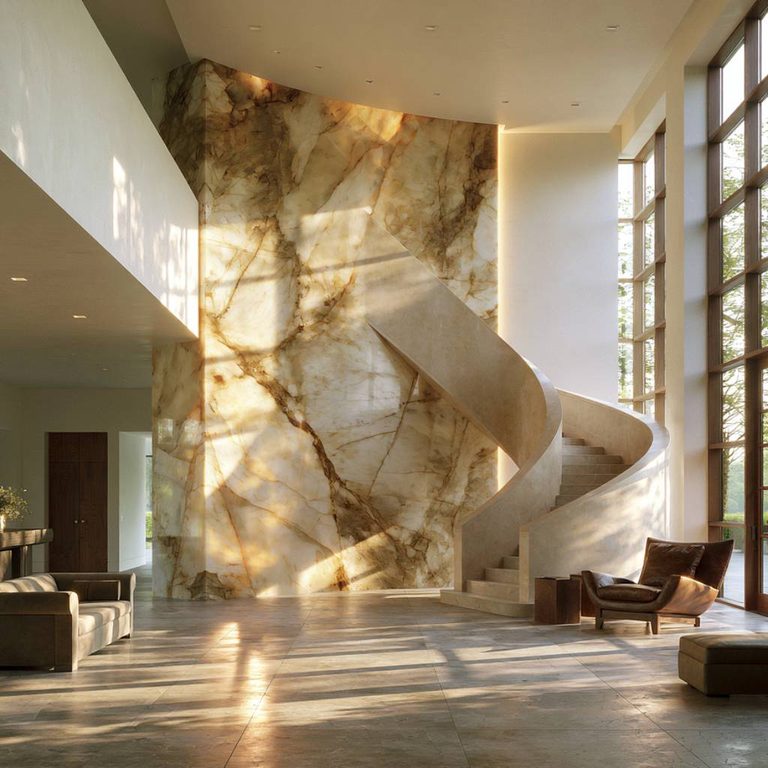
Unlike manufactured materials, natural stone never repeats itself. Every block extracted from the earth carries a geological history that can never be recreated. Millions of years of mineral movement, pressure and crystallisation become visible in veins that drift unpredictably across the surface. Carrara marble speaks with quiet restraint, while Calacatta announces itself through bold movement. Sodalite Blue possesses extraordinary depth, almost like looking into the night sky. Amazonite shifts gently between soft greens and crystalline blues depending on how daylight touches its surface. Patagonia Quartzite feels less like stone and more like a landscape suspended in time. None of these materials can be replaced by another slab bearing the same commercial name. Every piece is entirely individual.
This uniqueness transforms selection into an act of recognition rather than preference. Architects and homeowners do not simply decide which slab they like most. They begin imagining where morning sunlight will fall across it, how adjoining pieces will continue its veining, how furniture will quietly coexist beside it and how the surface will age after years of family life. The material is no longer viewed as an isolated object resting in a warehouse. It already exists inside the future home, long before installation begins.
There is an unmistakable shift when this recognition happens. The pace of conversation changes. Sketches are reopened. Floor plans suddenly feel more real because they now have something tangible attached to them. The architect begins discussing orientation rather than selection. Fabricators quietly photograph slab numbers and mark directional arrows. Project managers confirm dimensions once again, knowing that every subsequent decision now depends upon preserving the integrity of this choice. The room has not yet been built, yet everyone present begins protecting it.
Perhaps this explains why experienced designers rarely rush slab selection. Time invested at this stage is not an inconvenience but insurance. A hurried decision often reveals itself years later in subtle disappointments that no amount of craftsmanship can completely erase. Veins fail to align across adjacent surfaces. Bookmatching loses its intended rhythm. Light interacts differently with neighbouring pieces than originally imagined. The installation may remain technically flawless, yet something quietly feels unresolved. Great architecture often depends upon decisions made long before construction begins, and few decisions carry more emotional weight than choosing the material that will become the visual heart of a home.
This moment also reveals an often-overlooked relationship between architecture and trust. Homeowners place enormous confidence in architects and designers during slab selection because they are being asked to see beyond what currently exists. They are choosing not merely a piece of stone but the future atmosphere of a room. The designer, in turn, trusts the quarry, the fabricator and the installer to preserve that exact material through extraction, transportation, cutting and installation without compromising its identity. An invisible chain of stewardship begins the moment the slab is selected. Every participant becomes responsible for ensuring that the piece admired inside the gallery is the very same piece that eventually becomes part of the completed residence.
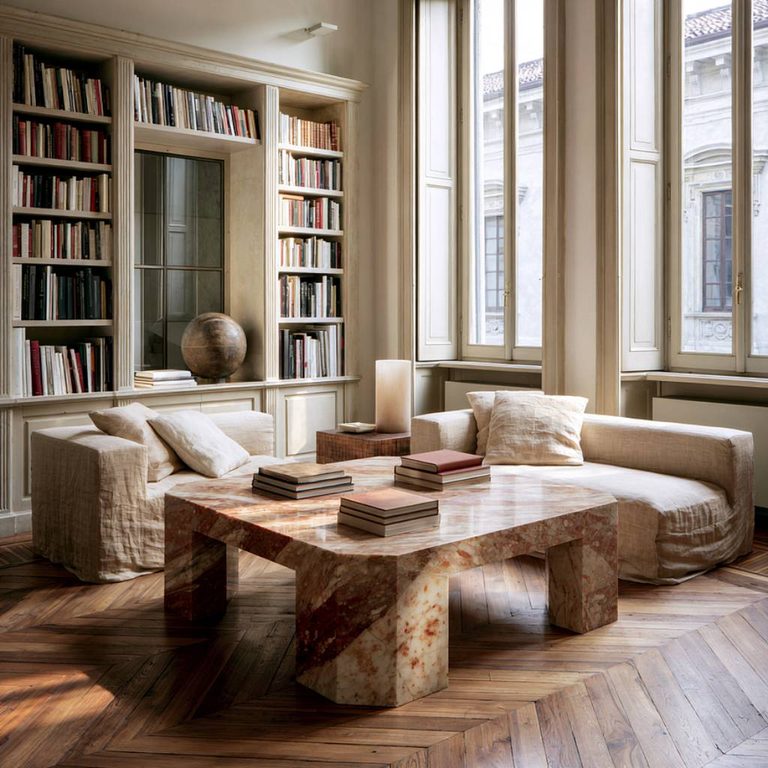
This continuity matters more than many people realise. In luxury residential architecture, authenticity is rarely communicated through words. It is communicated through consistency. The slab admired during selection should be the slab reflected in the finished photographs years later. Homeowners often remember that first meeting with surprising clarity. They recall standing before a monumental piece of Calacatta or Sodalite, tracing the movement of a particular vein and imagining where it would eventually appear inside their home. When that exact pattern greets them years later in their completed living room or kitchen, the architecture feels deeply personal because memory and reality align perfectly.
There is something profoundly human about this process. We often believe recognition belongs only to relationships between people, yet certain places produce the same quiet certainty. A home begins long before foundations are poured. Sometimes it begins inside a stone gallery, where an architect pauses, a homeowner smiles almost instinctively and a single slab quietly announces that the search has come to an end. Nothing has yet been installed, but the emotional centre of the future house has already been found.
The finest homes are rarely remembered because every decision was expensive. They are remembered because somewhere during the journey, someone recognised exactly what belonged there and refused to compromise. That single act of patience continues to shape every morning, every conversation and every memory that unfolds around it long after construction has been forgotten.
The most unforgettable homes often begin with a moment of quiet recognition, when the right material finds the people who were always meant to live beside it.