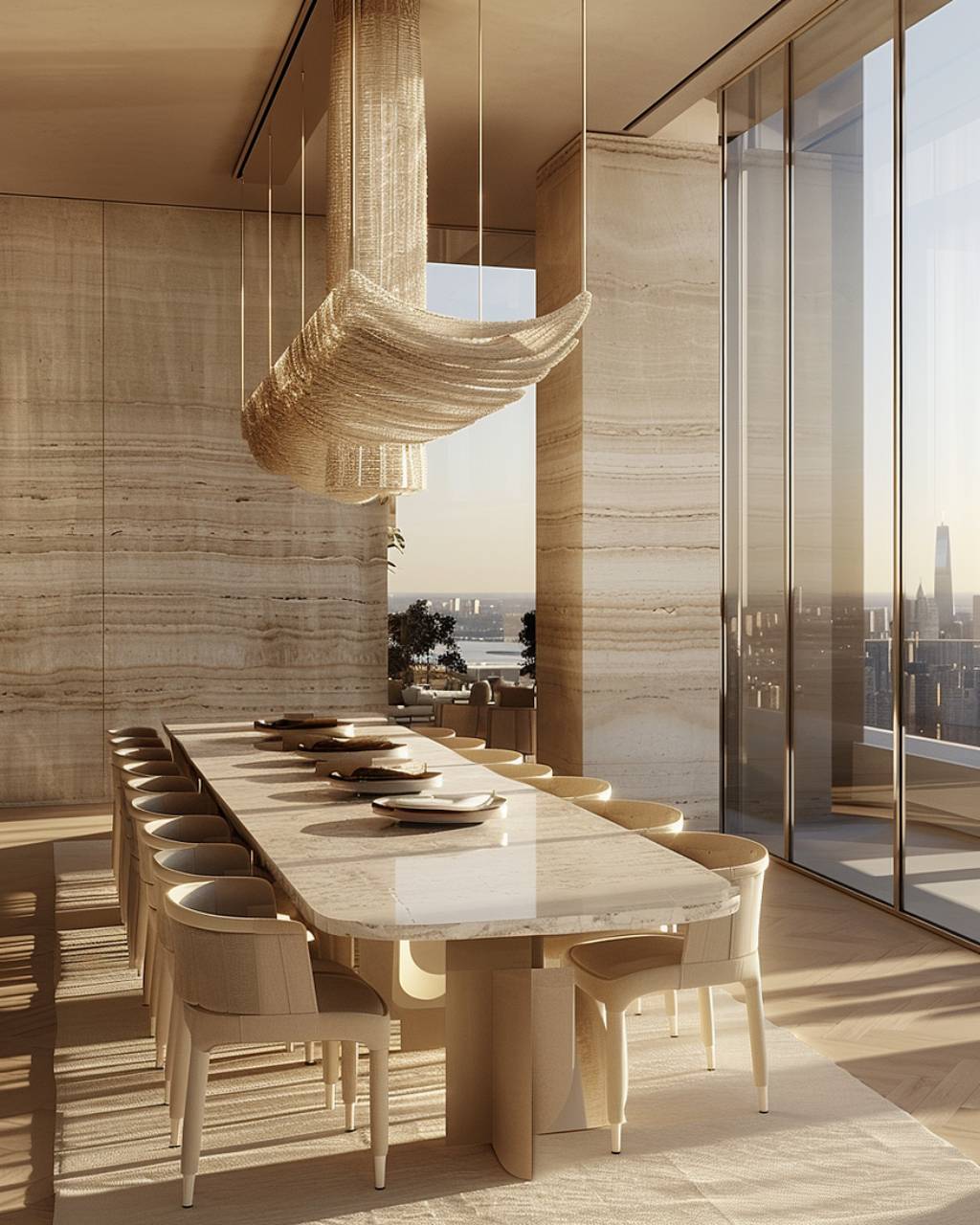
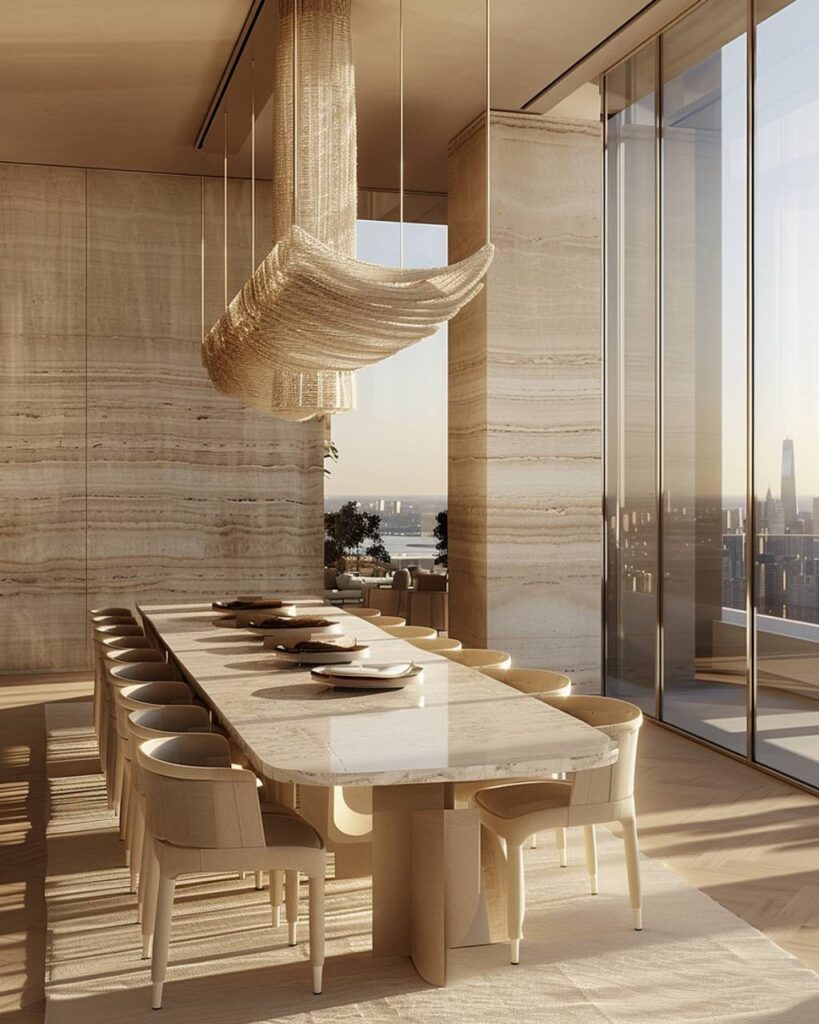
There are moments in every life that divide it quietly into before and after. They do not announce themselves with ceremony. They arrive in the middle of an ordinary evening, between courses, between glances, between breaths. A decision to move cities. A confession long postponed. An agreement that alters the shape of a family. And more often than not, these turning points unfold across a table.
As an architect, I have learned that the most important surfaces in a home are rarely the most photographed ones. The dining table, in particular, holds a gravity that extends beyond design language. It is where careers are reconsidered, where inheritances are discussed, where marriages are steadied or undone, where children declare independence, and where parents quietly accept it. The table becomes witness long before it becomes furniture.
In homes designed for those accustomed to command and control in the public world, vulnerability often finds its first permission indoors. The boardroom demands certainty; the dining table allows doubt. I have watched powerful individuals soften across stone and timber, their hands resting flat against a surface as though grounding themselves before speaking truths that carry weight. The material beneath them does not react. It does not interrupt. It simply holds.
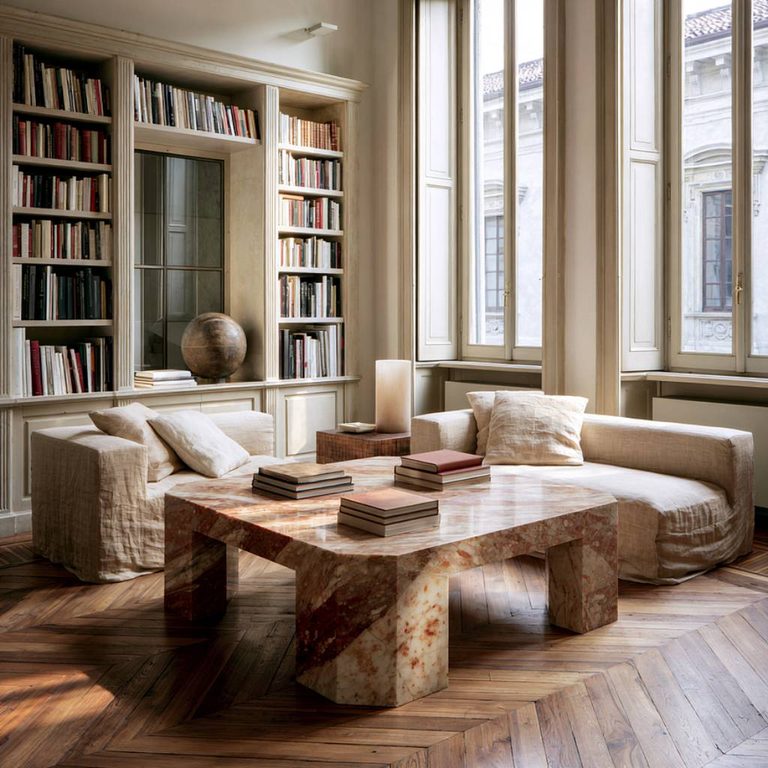
There is something profoundly stabilizing about mass in these moments. A substantial table carved from a single block, shaped from dense wood, formed from earth-born material, anchors the room both physically and emotionally. Its weight is not theatrical. It is reassuring. When conversations feel uncertain, the surface remains certain. When voices waver, the table does not.
Material, in this context, is not aesthetic indulgence. It is psychological architecture. A table that carries real density absorbs the rhythm of evenings over decades. It gathers the soft abrasion of plates set down with finality, the faint rings of wine glasses lifted in both celebration and consolation, the quiet pressure of palms pressed into stillness before a difficult sentence is spoken. These gestures accumulate invisibly. The surface does not forget.
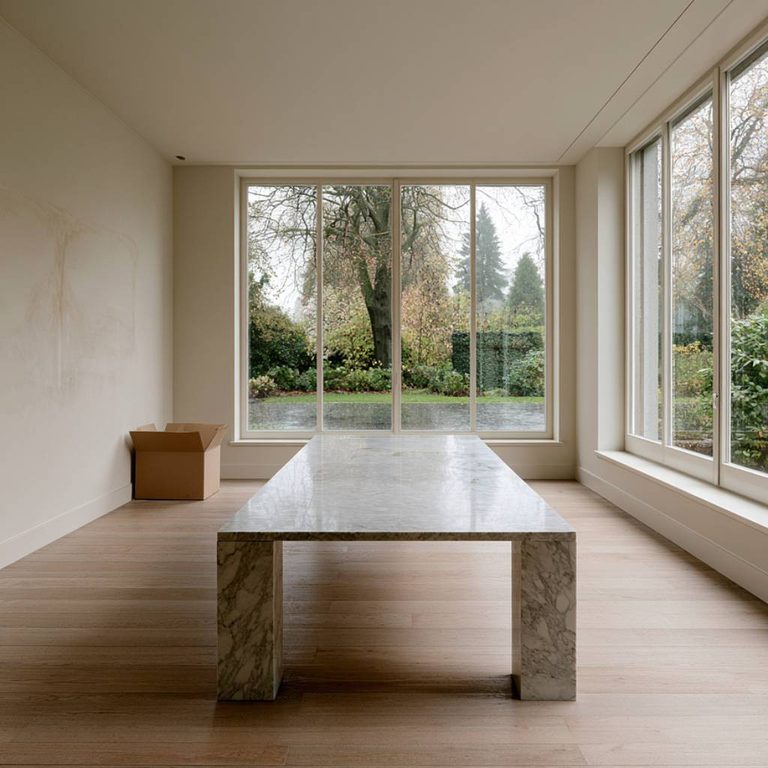
I once completed a residence for a family whose business decisions moved markets across continents. Yet the most consequential decision they ever made, they later told me, happened at home. It was at their dining table, a long, restrained slab with edges left intentionally honest; that they chose to step away from expansion and toward legacy. The discussion lasted hours. There were moments of silence long enough to hear the cutlery settle. Years later, they still speak of that evening not in terms of numbers, but in terms of atmosphere. The room felt steady, they said. The table felt immovable.
That steadiness is not accidental. When designing dining spaces for clients whose lives operate at high velocity, I deliberately create contrast. Light is softened. Acoustics are tuned. The table becomes central and calm. Its proportions are generous, not only to accommodate guests, but to allow emotional space. Elbows rest without crowding. Distance invites reflection. Material temperature meets skin with quiet neutrality. These details shape the tone of dialogue more than most realise.
We underestimate how much human weight a table carries. Not just the literal weight of bodies leaning forward in emphasis or leaning back in resignation, but the weight of consequence. Decisions made at a dining table ripple outward into companies, into families, into geographies. The surface absorbs the impact of those ripples and remains. Long after the urgency fades, it continues to serve breakfast, homework, celebration.
In the most enduring homes, the dining table does not chase fashion. It does not need reinvention every few years. Its authority grows through repetition. The same chairs drawn back. The same light falling across its surface at dusk. The same rituals enacted again and again until they become memory. Over time, the table becomes less an object and more a quiet participant in the life of the house.
There is also an intimacy to horizontality. Unlike walls, which display, or facades, which present, the table invites proximity. It requires people to face one another. In an era increasingly mediated by screens and speed, this simple geometry becomes radical. Eye contact across a solid surface. Hands meeting halfway. Silence shared without distraction. Architecture cannot force honesty, but it can support it.
I often return to the idea that luxury, at its highest level, is not spectacle but support. The most meaningful elements in a home are those that allow life to unfold without resistance. A dining table designed with substance does precisely this. It does not demand attention. It provides foundation. It grounds conversation in something older and steadier than mood.
Years after a project is complete, when clients invite me back, it is rarely to discuss finishes or fixtures. It is to sit again at the table. The edges may have softened imperceptibly. The surface may carry faint marks of use that no polishing could replicate authentically. These traces are not damage; they are biography. The material has lived with them.
In the end, a table is a plane. But within the architecture of a home, it becomes something far more complex. It is a stage for decision, a witness to vulnerability, a keeper of agreements spoken softly and loudly. It absorbs human weight: physical, emotional, historical, and responds by remaining steady.
And perhaps that is why some tables feel different the moment you sit down. You sense, even without knowing why, that something important has happened here before. You feel the quiet authority of a surface that has carried consequence and endured it.
Life changes direction in rooms like these. And long after the voices rise and settle, the table remains, composed, grounded, and ready to hold the next turning point.