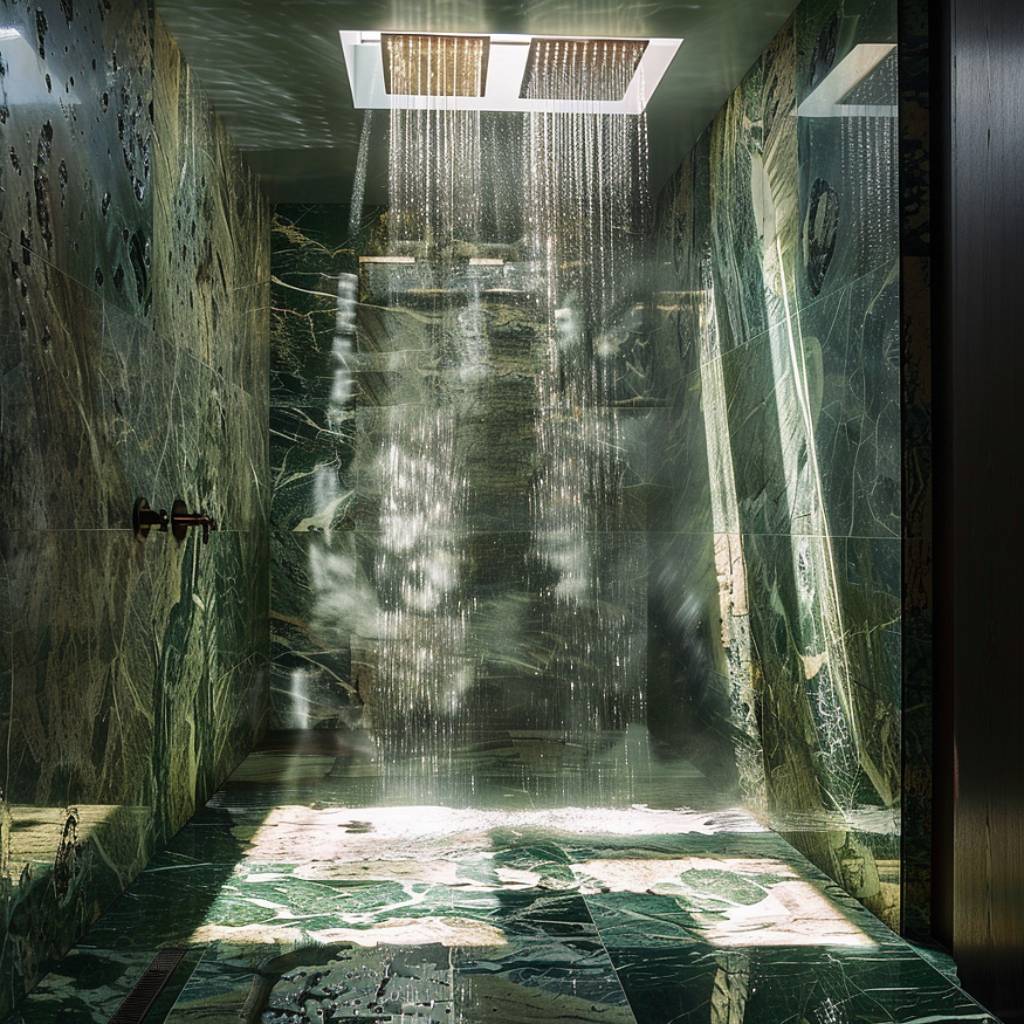
It is rarely the first thing you do when you return. The bag is set down, shoes are removed, and lights are turned on one by one, as if the house needs to be reminded that you are back. The body continues to move, but without intention, just momentum carried over from the day. Even in stillness, there is a residue that does not leave immediately. It stays in the shoulders, in the jaw, in the way the breath refuses to deepen. The week does not end when the work does; it lingers.
The shower, in this moment, is not an indulgence. It is a necessity. Not because the body is dirty, but because it is holding more than it should. Conversations that did not resolve, decisions that stretched longer than expected, and a constant, low-level tension that never found a place to settle do not disappear on their own. They require interruption, and the bathroom becomes that interruption, not dramatic or immediate, but certain.
When the water begins, nothing changes at first. The mind is still active, the body still carrying the same weight, thoughts continuing in loops of unfinished fragments. But the sound of water introduces a different kind of rhythm, one that does not ask for participation. It continues whether you engage with it or not, and slowly, that consistency begins to replace the noise that came before.
Warmth reaches the skin gradually, not all at once but in layers. It moves across the shoulders, down the back, into the spaces where tension tends to collect without permission. The body does not respond immediately; it takes a moment to trust the change, to recognize that it no longer needs to hold itself in the same way. This is where the shift begins not visible, but undeniable.
There is a particular quality to a surface that feels clean and calm, one that does not draw attention to itself or interrupt the experience. It remains consistent under water, under touch, under repetition. The hand moves across it without hesitation, the foot finds stability without thought, and there is no need for adjustment. This quiet reliability matters more than it appears, because in moments like this, the body does not want to think. It wants to release.
As the ritual continues, sound softens further. What was once external becomes internal, and the rhythm of water begins to align with breathing. The pace slows, not through effort but through environment. There is nothing to respond to, nothing to resolve, nothing to manage, only the continuation of something steady and uninterrupted.
This is where the idea of luxury begins to change. It is no longer about scale, or visibility, or materials that demand attention. It is about the absence of friction, the absence of interruption, and the ability of a space to support the body without asking anything in return. In this moment, luxury feels closer to mercy.
There is also a quiet form of care embedded in surfaces that remain composed over time. Materials that do not react unpredictably, that do not require caution in the very moment they are meant to restore, create a sense of ease that goes unnoticed but deeply felt. Maintenance, when done with intention, becomes invisible kindness, preserving the experience rather than altering it. The user may not think about this, but the body responds to it.
At some point, without a clear marker, the thoughts begin to loosen. They do not disappear, but they lose their urgency. What felt immediate begins to feel distant, and what felt heavy begins to feel manageable. The body is no longer carrying everything at once; it has begun, quietly, to let go.
When the water stops, the shift does not end. There is a pause brief, but complete, where the space holds a softened quiet and the air feels different. The body stands still, not out of habit, but because it can. This is the moment that matters, not the shower itself, but what remains after.
A slower breath, a lighter posture, a mind that no longer insists on returning to everything it held before, these are the subtle outcomes of a space that understands its role. The longest week does not disappear, but it no longer sits the same way, and sometimes that is enough.
Because relief is not always about removing what was carried. Sometimes, it is simply about changing how it is held. And in that quiet adjustment, the home does what it is meant to do, not eliminate difficulty, but absorb it, soften it, and return you to yourself just enough that you can begin again.