There is an unexpected stillness in watching someone finish a surface. The workshop may be filled with machinery capable of cutting through solid stone, air compressors humming quietly in the background and workbenches scattered with tools worn smooth by years of use, yet the final moments before completion unfold with remarkable calm. A craftsman leans closer, not because the material demands strength, but because it demands attention. The movement of a polishing pad slows almost imperceptibly. Dust disappears beneath a soft cloth. Fingertips travel across stone that no longer needs measuring but still deserves feeling. Nothing dramatic happens, and yet everything that distinguishes ordinary work from extraordinary craftsmanship reveals itself within these quiet gestures.
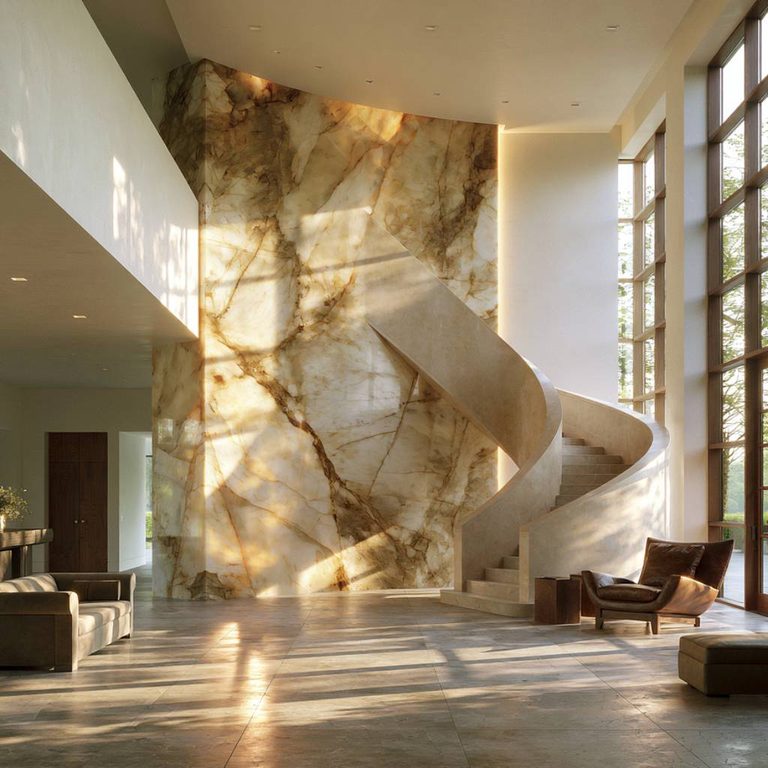
Luxury homes are often celebrated for the finished image they present. Perfectly composed photographs capture expansive living rooms, elegant staircases and marble surfaces that appear almost untouched by human effort. We admire the completed space without considering the invisible hours that transformed raw material into something capable of belonging within a home for generations. Yet the true story of luxury begins long before furniture arrives or sunlight reflects across polished floors. It begins with the patient repetition of seemingly ordinary actions performed by people who understand that excellence is rarely achieved through grand gestures. It is accumulated through thousands of careful decisions that remain hidden beneath the finished surface.
Watching someone make a surface changes the way we understand architecture itself. We begin to realise that beauty is not manufactured at the moment of completion. It is cultivated gradually through observation, correction and restraint. A master fabricator does not rush towards perfection. Instead, they move closer to it with every pass across the stone, every adjustment of pressure and every pause to examine how light now behaves differently across the material. The surface slowly becomes less about the stone itself and more about the relationship between human judgement and natural geology.
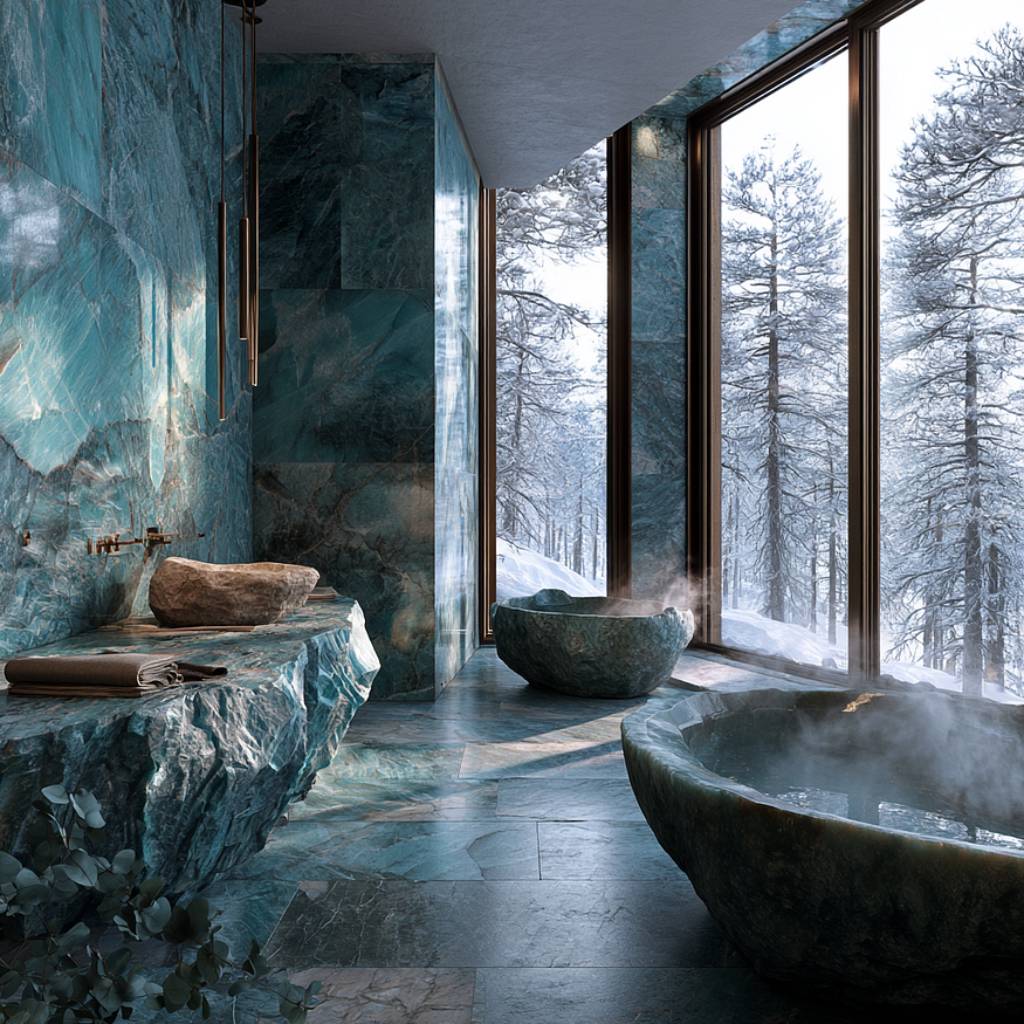
Natural stone offers perhaps the most profound example of this relationship because no two slabs have ever shared the same history. Carrara marble carries millions of years within its delicate grey veining. Sodalite Blue contains crystalline depths that shift with changing daylight. Amazonite reveals colours that seem almost impossible until sunlight discovers them. Patagonia Quartzite resembles landscapes preserved within mineral form. Each material asks to be understood rather than controlled. The craftsman responds not by forcing consistency upon nature, but by learning how to reveal what already exists. The finished surface is therefore never entirely human-made nor entirely natural. It is a collaboration between geological time and patient craftsmanship.
Filming these moments requires an equally thoughtful approach. Modern visual storytelling often rewards movement, speed and immediate impact. Camera operators are encouraged to keep every frame dynamic, every transition energetic and every sequence fast enough to maintain attention. Yet craftsmanship follows a different rhythm. The most revealing images emerge not while machines are operating at full speed but during the quiet intervals surrounding them. A close-up of stone dust settling after polishing. Water slowly washing away residue to reveal hidden depth within the marble. A hand resting briefly before beginning another careful inspection. These are not pauses in the story. They are the story.
Sound plays an equally powerful role in revealing this invisible world. Workshops possess an honesty rarely found elsewhere. Water glides steadily across cutting tables. Abrasive pads produce a soft, rhythmic whisper rather than aggressive noise. Measuring tools touch stone with quiet precision. Conversations remain brief because concentration demands silence more often than words. When filmmakers replace these natural sounds with cinematic music, they unintentionally remove one of craftsmanship’s greatest qualities, its quiet confidence. Real workshops never need dramatic soundtracks. Their rhythm already exists within the work itself.
Perhaps the greatest lesson offered by surface finishing is the value of attention. Contemporary culture increasingly celebrates efficiency, productivity and speed, encouraging every process to become shorter than the one before it. Luxury craftsmanship quietly refuses this philosophy. A polished edge cannot be hurried without consequence. An imperfect joint remains visible for decades. A poorly finished surface may appear acceptable today but slowly reveals its compromises over time. Patience is therefore not simply a desirable characteristic within craftsmanship. It is an essential material alongside stone, timber, bronze and glass.
This understanding extends far beyond architecture. Watching someone make a surface reminds us that meaningful work in any discipline rarely announces itself loudly. It unfolds through repetition that others seldom notice. The excellence of a craftsman lies not in extraordinary moments but in the refusal to lower standards during ordinary ones. That same principle shapes remarkable homes. Owners may never know how many times a slab was repositioned before installation or how many hours were invested in achieving seamless alignment across adjoining pieces. They simply experience a room that feels calm, balanced and complete without consciously understanding why.
Perhaps this is why handcrafted surfaces continue to possess an emotional quality that manufactured perfection struggles to replicate. They contain evidence of human presence without displaying it openly. Every polished corner reflects decisions rather than automation. Every uninterrupted vein across bookmatched marble reveals someone who cared enough to reject easier alternatives. Every flawless transition between materials represents patience translated into architecture. The finished room becomes beautiful not because viewers admire the surface itself, but because they quietly sense the invisible discipline embedded within it.
Watching someone make a surface ultimately teaches us that luxury is less about possession than about process. The marble becomes meaningful because someone respected its character. The finished home feels timeless because countless unnoticed moments were treated with extraordinary care. In the end, the most remarkable surfaces are never those that demand attention first. They are the ones that allow life to unfold effortlessly upon them for decades, carrying every conversation, celebration and quiet morning without ever asking to be noticed.
The most enduring beauty is created by hands that cared long before anyone stopped to look.