There is a moment, just before a craftsman begins to work, that tells you almost everything about the process that follows. It is not dramatic. There are no sparks, no machines roaring into life, no theatrical gestures. Instead, there is a brief pause as a hand settles on a slab of stone, fingers tracing an edge that has already been measured twice. A cloth brushes away invisible dust. Tools are arranged with a familiarity earned over decades rather than days. Nothing has truly begun, and yet everything important has already happened.
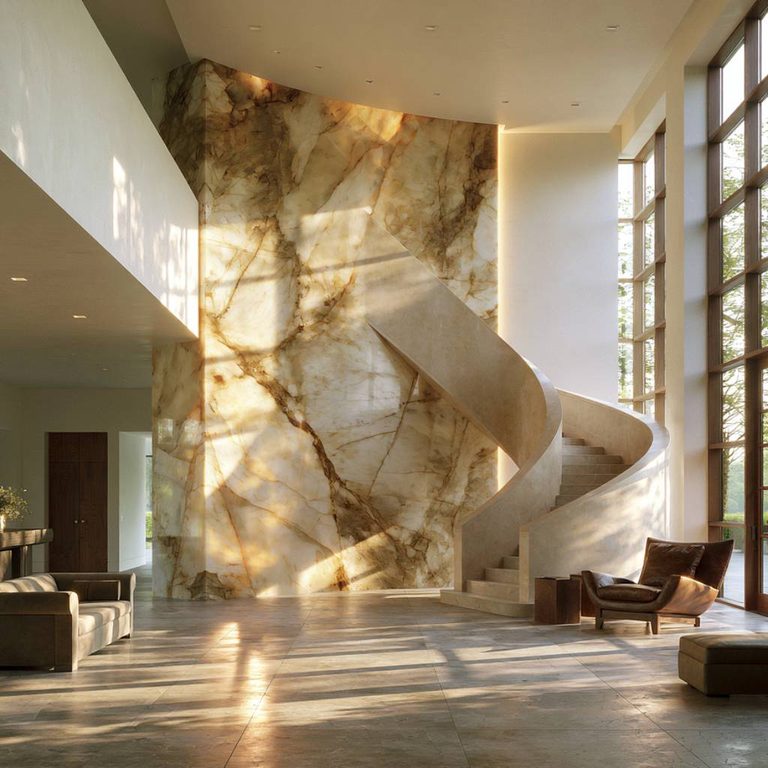
These are the moments that luxury filmmaking too often overlooks. Contemporary visual culture has developed an appetite for spectacle. Drone shots sweep across sprawling residences, wide-angle lenses celebrate dramatic staircases, and polished interiors appear immaculate under carefully controlled lighting. Such imagery is undeniably beautiful, yet it often misses the quiet reality that gives exceptional homes their enduring value. Before marble reflects morning sunlight across a living room floor, before a staircase becomes the setting for family photographs, before a dining table hosts decades of celebrations, countless unseen hours have already been invested by hands that rarely appear in front of a camera.
To document craftsmanship honestly is to understand that the true subject is not the finished object but the relationship between people and materials. A close-up of fingertips feeling the subtle change in texture across a slab of Calacatta marble communicates more than an entire sequence of completed interiors. It reveals judgement rather than machinery. It shows knowledge that cannot be written into manuals because it exists instead in experience accumulated over thousands of repetitions.
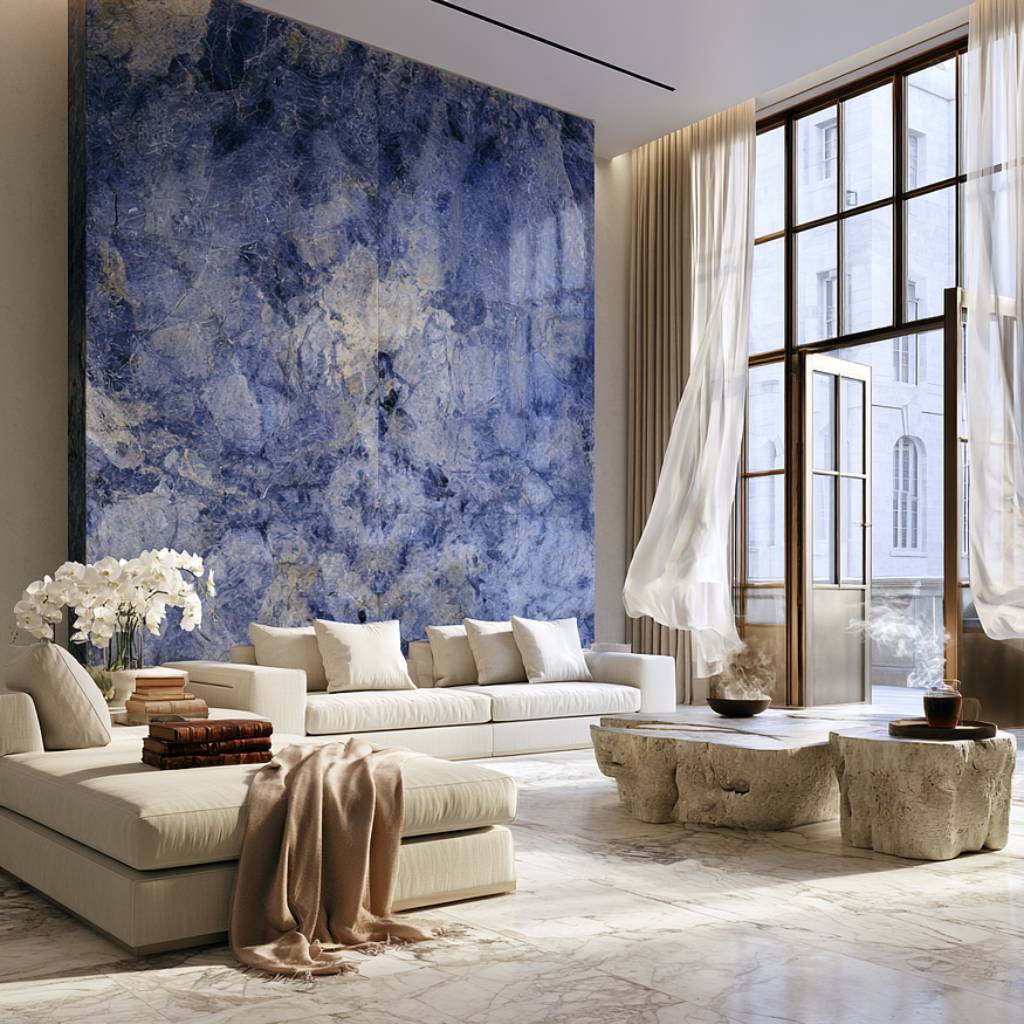
Texture deserves patience from both the craftsman and the filmmaker. Polished marble, brushed limestone, leathered quartzite or hand-finished timber all respond differently to changing daylight. Their surfaces reveal themselves gradually rather than immediately. A hurried camera movement flattens these differences into decoration, while a slower observation allows viewers to understand why certain materials continue to be chosen generation after generation. Light sliding across the crystalline structure of Sodalite Blue or lingering within the translucent depth of Amazonite transforms stone from a construction material into something almost geological in its quiet permanence. The camera’s responsibility is not to exaggerate that beauty but to witness it honestly.
Hands become equally important. They carry evidence of repetition that polished tools never reveal. Fingernails darkened by stone dust, sleeves rolled instinctively above the wrist, small pauses before every decisive cut, these gestures tell stories that architecture alone cannot communicate. Every experienced fabricator develops rhythms invisible to those unfamiliar with the trade. Measurements are confirmed without conscious thought. Heavy slabs are approached with respect rather than force. Conversations become shorter as concentration deepens. Filming these movements requires restraint. Rather than directing action, the filmmaker learns to anticipate it, allowing each gesture to unfold naturally without interruption.
Time itself should become visible within the frame. Modern media often compresses weeks of work into seconds, creating satisfying before-and-after transformations that entertain but rarely educate. Yet luxury craftsmanship resists acceleration. Adhesives cure at their own pace. Stone settles under its own weight. Hand-finishing cannot be rushed without becoming immediately visible years later. A sequence showing the same workbench at sunrise, midday and evening reveals something far more valuable than a rapid montage ever could. It demonstrates that excellence is measured not by speed but by consistency sustained over long periods of quiet attention.
Sound deserves the same respect as imagery. Every workshop possesses its own acoustic identity. The gentle scrape of polishing pads across marble, the soft metallic click of measuring tools, the muted conversation between craftsmen discussing alignment, water flowing steadily across cutting surfaces, all these sounds create an atmosphere that polished background music often erases. Silence is equally meaningful. The absence of unnecessary noise communicates concentration more effectively than narration ever could. Good craft has always possessed its own rhythm, and thoughtful filmmaking allows viewers to hear it.
Close-up cinematography also changes the emotional relationship between audiences and luxury. Wide shots encourage admiration. Close-ups invite understanding. They ask viewers not merely to appreciate the finished result but to recognise the human commitment hidden beneath its flawless appearance. A single carefully filmed sequence of a craftsman adjusting the alignment of a marble inlay by fractions of a millimetre carries more emotional weight than another panoramic view of a completed residence. Precision becomes visible. Patience becomes tangible.
This approach transforms filmmaking from documentation into preservation. Every generation inherits techniques developed by those who came before it, yet many of these methods survive only because they continue to be practised rather than recorded. The angle of a wrist while polishing an edge, the pressure applied when checking a joint, the instinctive decision to reject an otherwise acceptable piece of stone, these moments contain cultural knowledge that extends beyond architecture itself. They belong equally to craft, memory and tradition.
There is also dignity in refusing to rush the camera. Luxury today is increasingly associated with speed of consumption, instant visual impact and endless novelty. Craft offers a quiet counterargument. It suggests that some things deserve more time than efficiency can justify. A filmmaker who understands this does not chase movement for its own sake. Instead, they remain still long enough for the audience to notice dust settling after a cut, daylight changing across polished marble, or a craftsman’s hand resting briefly before beginning the next task. These intervals are not empty. They are where meaning quietly accumulates.
The finest films about craftsmanship leave viewers with an unexpected feeling. They no longer admire marble simply because it is rare or beautiful. They admire the invisible discipline that allowed its beauty to emerge without compromise. They begin to understand that luxury has never been defined by expensive materials alone, but by the patient repetition of ordinary actions performed extraordinarily well over time. In the end, the camera becomes less interested in what was built than in how it came into being, and in doing so, reveals that every remarkable home is first created long before anyone steps inside.
The finest homes are remembered not because they looked extraordinary, but because someone cared enough to make every unseen moment matter.