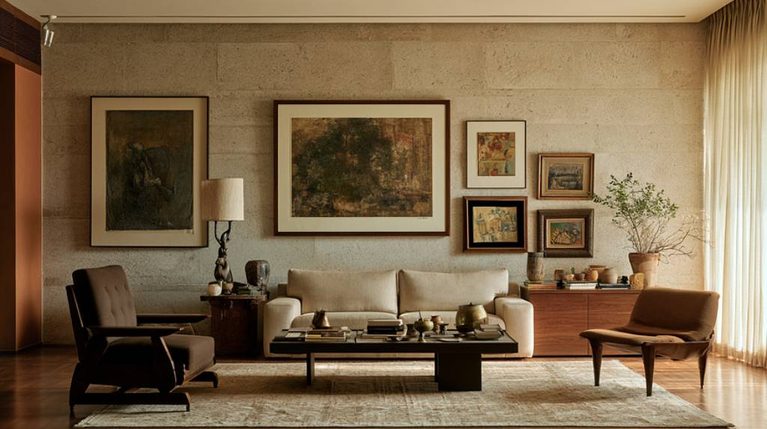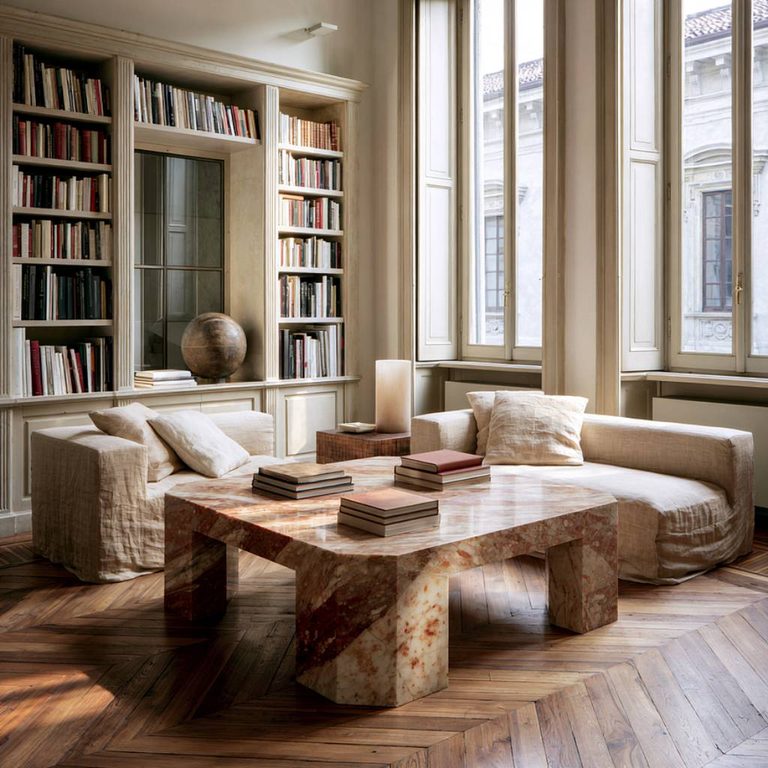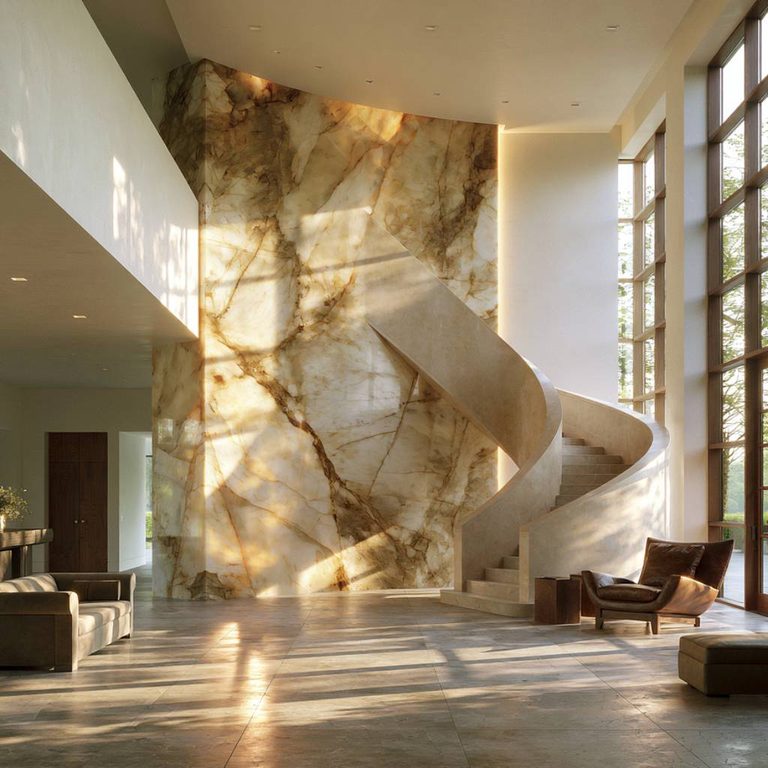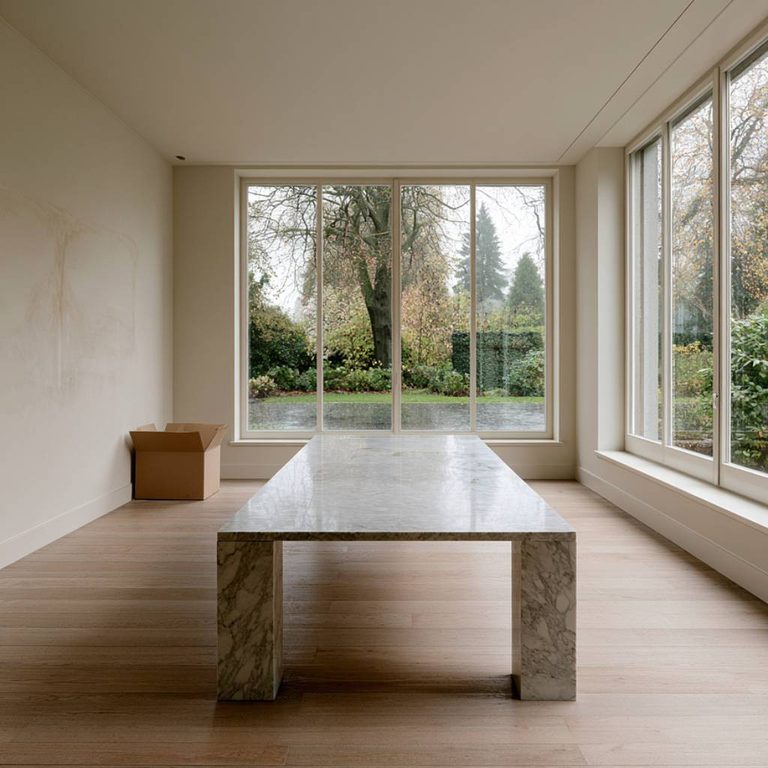
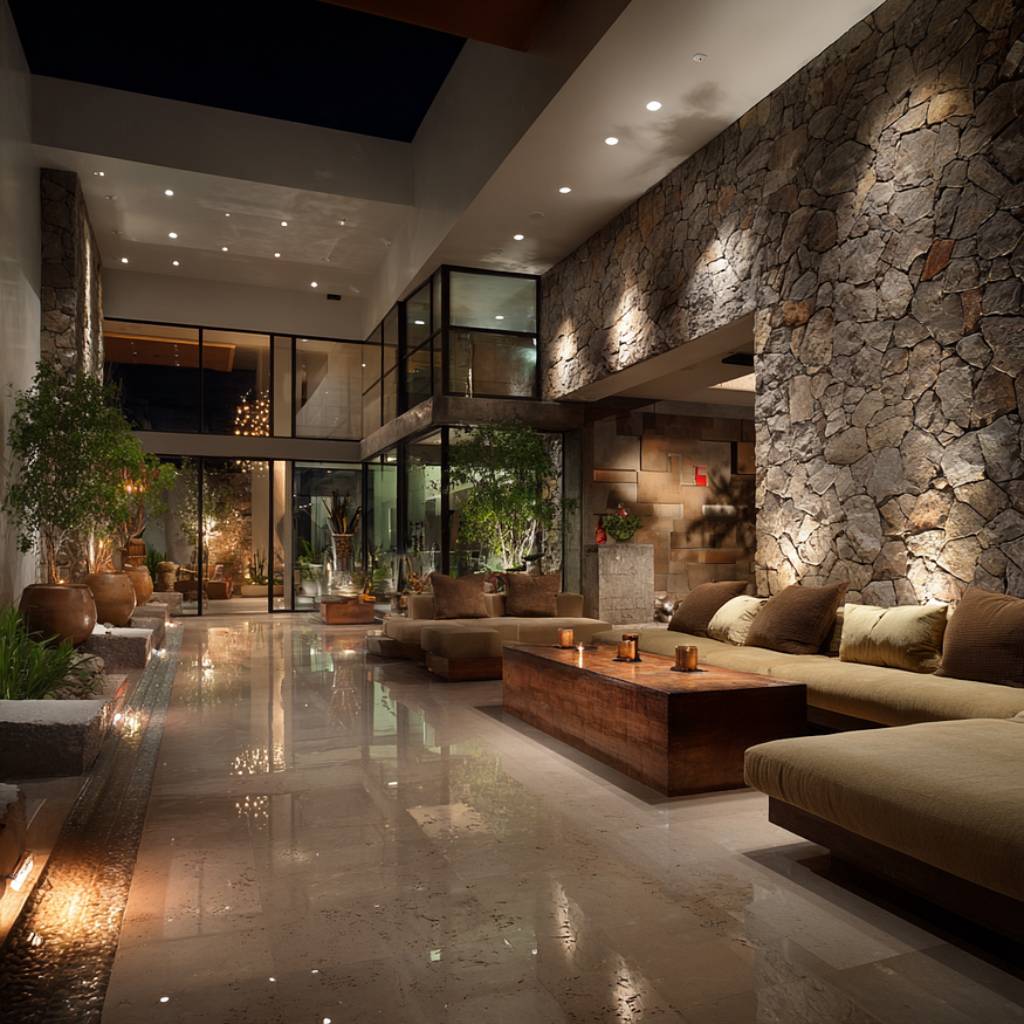
There is a particular moment that happens in certain homes, usually late into the evening, after dinner plates have been cleared and conversations have softened into smaller circles. Someone runs their hand along the edge of a dining table. Another person notices the stone beneath a glass of wine. A guest pauses near a shelf and asks where something came from.
The answer is rarely technical.
Nobody says the slab is 20 millimetres thick or mentions compressive strength or manufacturing tolerances. Instead, the story begins somewhere else entirely. It begins with a quarry in a quiet region. With a craftsman who refused to cut the vein too aggressively. With a stone selected because its movement resembled rainfall. With a surface that reminded someone of a childhood home, or a monastery they once visited, or a hotel lobby they could never forget.
This is the real language of interiors.
Not specification. Association.
The homes people remember most are rarely the homes with the highest concentration of luxury materials. They are the homes where every material appears to have arrived there for a reason. A reason beyond trend, beyond expense, beyond performance. A reason that feels emotional, even if nobody says the emotion out loud.
That is what guests respond to instinctively. Not the object itself, but the care behind the choice.
There was a time when luxury was communicated through visibility. Marble meant wealth because marble was difficult to obtain. Rare woods meant status because transportation itself was expensive. Ornament signalled labour, and labour signalled privilege. The message was direct and public.
But contemporary luxury has become quieter. The performance of wealth has become less convincing than the evidence of discernment. People no longer admire spaces simply because they are expensive. They admire spaces that feel considered. And consideration leaves traces.
You can feel it in the restraint of a room that knows when to stop. In a surface chosen for the way it ages instead of the way it photographs. In a material palette that feels personal rather than assembled from references. These details create atmosphere long before they create visual impact.
What is interesting is that provenance has also changed meaning. For years, provenance became a marketing exercise. Every brand began telling stories about heritage, sourcing, artisanship, legacy. Eventually, many of those narratives started sounding interchangeable. The language became polished to the point of losing sincerity.
But genuine provenance still carries emotional weight when it is spoken about naturally.
Not announced. Shared.
There is a difference between a homeowner saying, “This stone came from Italy,” and saying, “We waited months for this slab because the movement reminded us of wet earth after rain.” One statement is information. The other is memory attached to material.
And memory is what gives objects permanence.
This is why some homes continue feeling relevant decades later while others begin aging almost immediately. The enduring homes are usually built around emotional logic rather than visual urgency. They are assembled patiently. Their materials hold biography. Their surfaces become part of family rituals over time.
A dining table absorbs conversations.
A staircase remembers footsteps.
A stone counter slowly reflects years of morning light. These are not decorative functions. They are emotional accumulations.
The interesting thing about material selection is that most people believe they are choosing surfaces visually, when in reality they are choosing them psychologically. Certain stones feel grounding. Certain woods feel warm even before they are touched. Certain textures create calm because they absorb noise differently. A home begins communicating long before anyone consciously interprets it.
That communication becomes even more important in luxury spaces because abundance alone no longer impresses people the way it once did. Access has expanded. Images circulate endlessly. Beautiful interiors are available everywhere online. What remains rare is not beauty itself, but coherence. Spaces that feel internally honest. Spaces where the materials seem connected to the people living among them.
The most memorable homes tend to reveal themselves slowly.
Nothing shouts immediately.
Instead, details unfold over time. Guests notice the softened finish near a frequently used corner. They notice how evening light changes the color of stone. They notice how silence feels inside the room. Eventually, they begin asking questions. And those questions create stories.
That is the point where design stops being visual and becomes social.
Because the objects inside a home are not only there to be seen. They become part of conversation, ritual, memory, and identity. They help people narrate themselves to others without ever needing to announce anything directly.
In that sense, the materials inside a home behave almost like personal artifacts. They hold evidence of taste, patience, travel, sentiment, and emotional preference. Not as branding exercises, but as quiet forms of authorship.
Perhaps that is why the most powerful luxury spaces today feel less curated for cameras and more curated for living. Their beauty is difficult to summarize quickly because it exists in accumulation rather than spectacle.
A surface. A gesture. A remembered story. A reason something was chosen.
And eventually, that becomes the story guests carry home with them long after they leave.