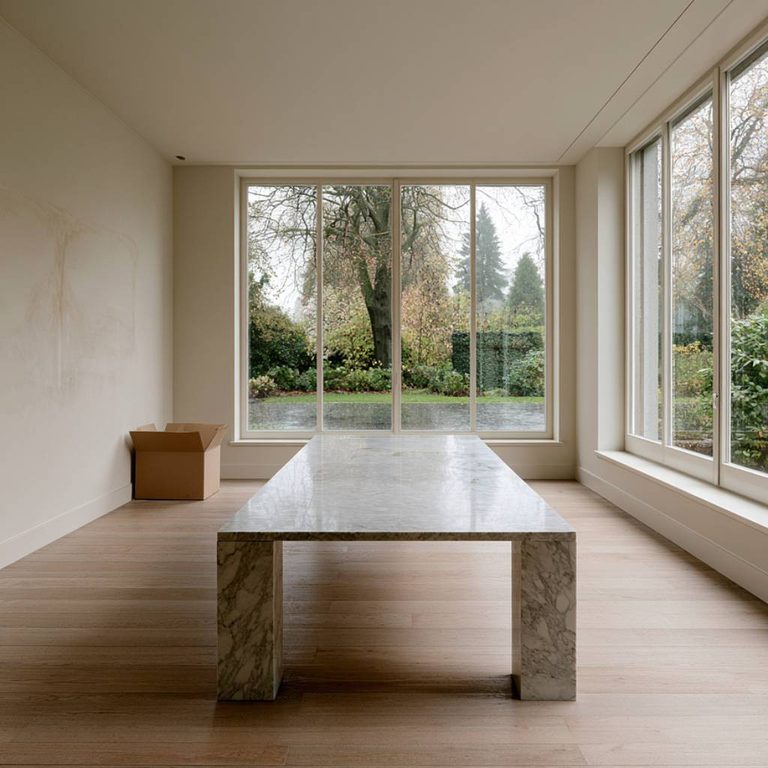
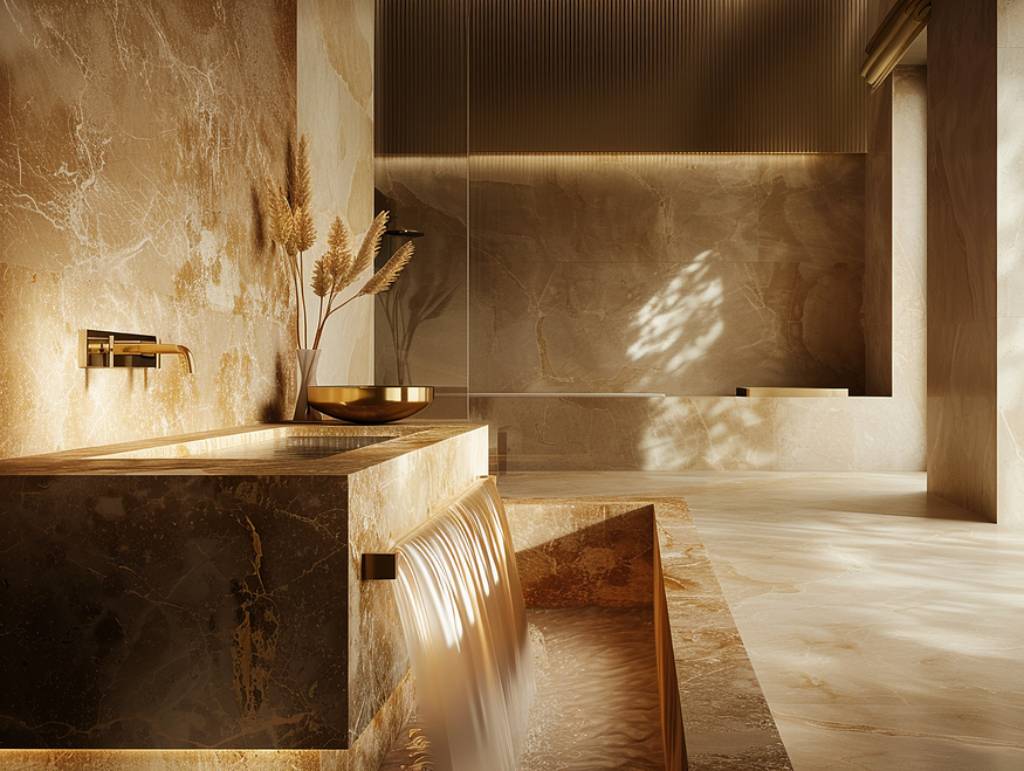
The story of a home rarely begins with drawings.
It begins much earlier, in moments that are often overlooked. In the way someone wakes up. In how long they stay in bed before getting up. In whether they reach for light immediately, or sit with the quiet for a while.
These are not design decisions yet. But they are where design begins.
Most homes are built from plans outward. Rooms are defined, materials are shortlisted, layouts are resolved. But somewhere in that process, the person disappears. What remains is a space that functions well, looks refined, and yet feels slightly disconnected from the life it is meant to hold.
A home, at its most honest, is not a composition of surfaces. It is a sequence of rituals.
Morning light falling across a countertop that is still cool to the touch. Bare feet meeting stone before the body is fully awake. The pause before the first conversation of the day. These moments are not decorative but they are formative. They shape how a space is felt, long before it is evaluated.
To design from this place requires a different kind of beginning.
It requires listening before proposing. Asking questions that are not about style, but about rhythm. Not about preference, but about experience. What does your morning feel like? Where do you go when the house is quiet? What kind of silence do you return to at the end of the day?
These questions do something subtle but powerful.
They shift luxury away from what is visible, and toward what is lived. They uncover the emotional structure of a home, the invisible framework that determines whether a space will feel right, even before it looks right.
Material, then, enters later. But when it does, it carries meaning.
A surface is no longer chosen for how it appears in isolation, but for what it must endure. The stone in the kitchen is not just selected for its colour, but for how it holds warmth in the morning, or resists the marks of daily use. The floor is not just continuous; it becomes the first point of contact between the body and the house.
In this way, selection becomes less random, more deliberate.
Not everything belongs everywhere. Each material begins to align with a moment, a behaviour, a need that has already been understood. The home starts to take shape not as a collection of choices, but as a response.
A Quiet Framework for Beginning
How does your morning arrive: slowly or all at once?
Where does your body go when it needs stillness?
What kind of silence feels comfortable, not empty?
What is the first surface you touch each day?
What must that surface endure over time?
What do you want to feel before anything else happens?
These are not questions that produce immediate answers.
They create awareness.
And from that awareness, a different kind of design emerges, the one that is less about impressing, and more about holding. A home that does not perform luxury, but allows it to unfold quietly, through use, through touch, through time.
Because in the end, the most memorable spaces are not the ones that are seen first.
They are the ones that are felt, slowly. And they always begin with a story.