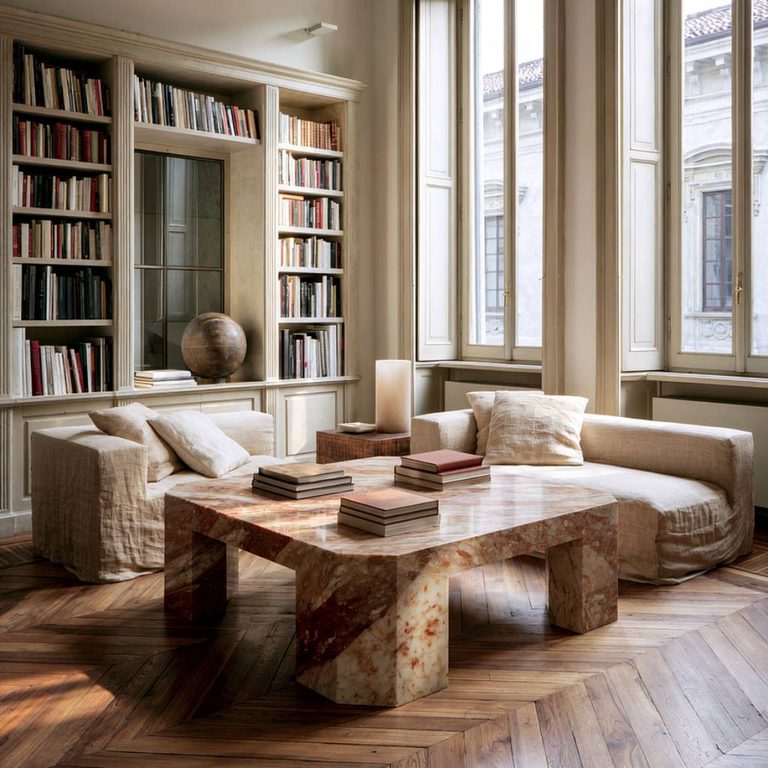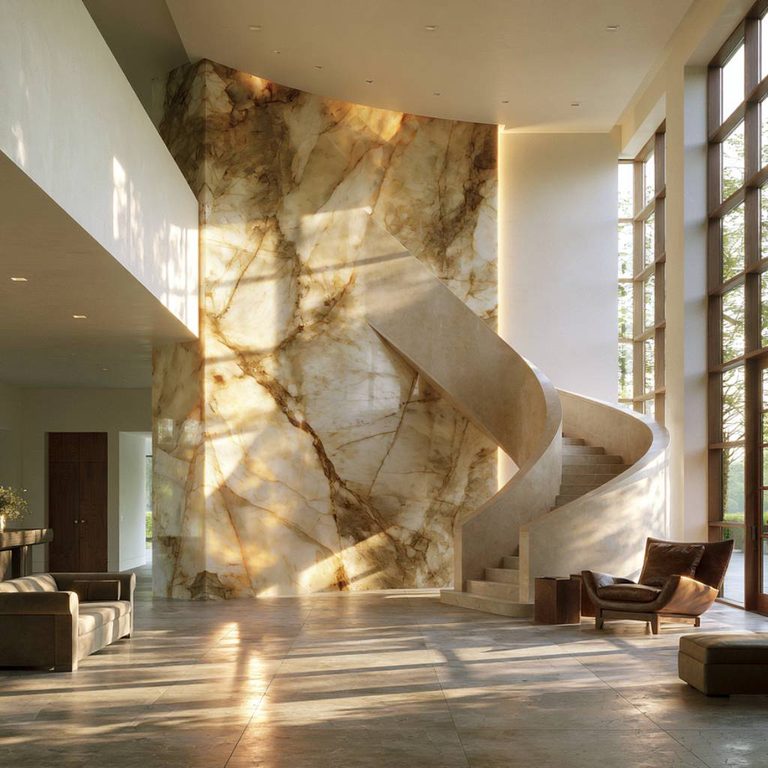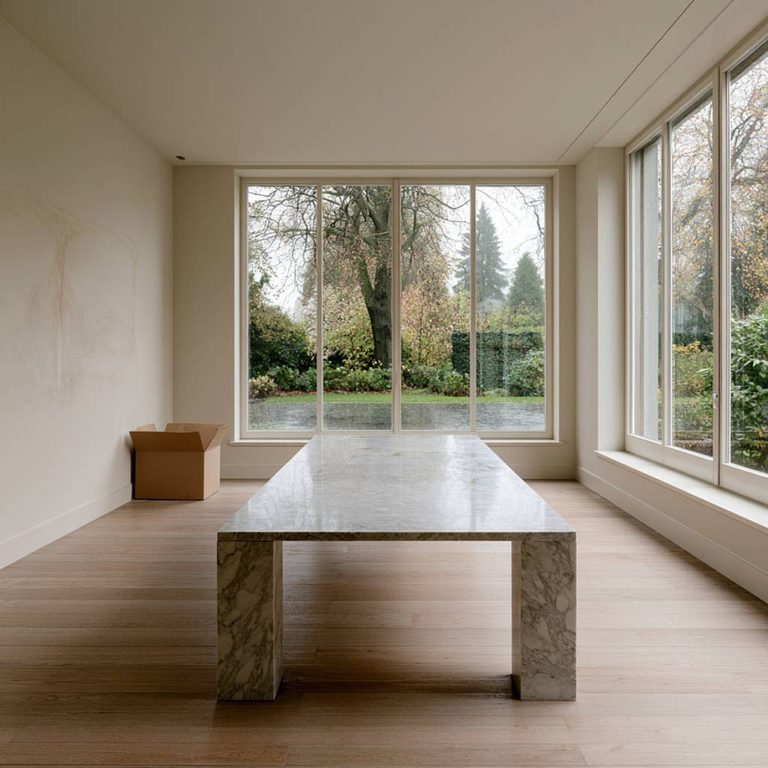
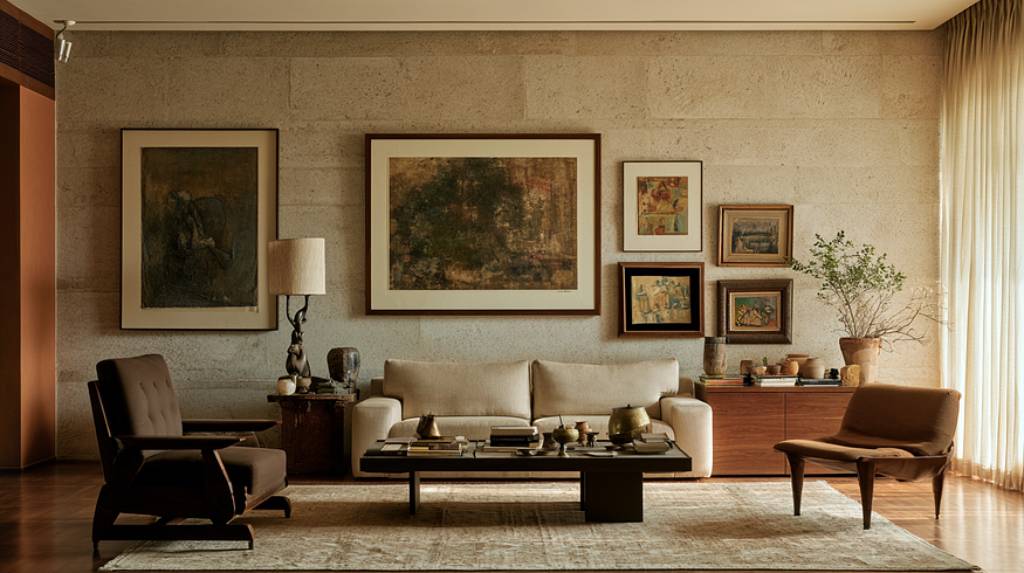
Collected furniture, inherited objects and the quiet comfort of rooms assembled over years rather than purchased in one afternoon
There is usually one chair that does not quite belong. Its timber may be darker than the table beside it. Its upholstery may have faded differently from the newer sofa across the room. Perhaps it came from a grandparent’s house, survived two moves and was repaired once by someone whose name the family still remembers. Nobody would have selected it for this particular room from a showroom floor. Yet when guests arrive, someone almost always chooses to sit there. The chair has acquired something design cannot order by the metre: familiarity.
Some of the most memorable homes are full of such interruptions. A contemporary dining table sits beneath an old painting. A Persian rug extends slightly too far beneath a modern sofa. Ceramic bowls collected while travelling occupy shelves beside inherited silver. A side table belongs to another decade entirely. Nothing appears careless, but neither does everything appear to have been decided at the same moment.
The room feels settled because it has been allowed to accumulate.
There is a particular kind of visual confidence in a home that does not insist upon perfect agreement. Materials repeat without matching exactly. Colours return in altered shades. Furniture pieces possess different histories. Objects reveal different hands. The effect can be difficult to manufacture because its most persuasive ingredient is time.
This is why rooms purchased almost entirely in one afternoon can sometimes feel strangely finished before anyone has begun living in them. The sofa coordinates with the armchairs, which coordinate with the console, which has been styled with objects selected for precisely the same palette. The arrangement may be beautiful. It may photograph impeccably. Yet everything arrives carrying roughly the same age and the same absence of memory.
Living gradually introduces disorder of a much more interesting kind.
A child makes something that remains on a shelf long after childhood. Someone brings home a small artwork from a holiday. A parent passes down a cabinet that is too useful to discard and too familiar to replace. A rug fades where morning sun reaches it. Leather changes colour where hands repeatedly touch the same armrest. A dining table records faint marks from meals that nobody remembers individually, but which collectively become its character.
The comfort of these rooms is partly visual, but it is also emotional. Familiar objects reduce the constant demand for novelty. They allow the home to become recognisable to its inhabitants. You know which drawer sticks slightly. You remember who chose the lamp. You know that the small chest in the hallway once stood in another house entirely. The physical room begins to hold several periods of life simultaneously.
This is where collected interiors differ from deliberately eclectic ones. Eclecticism can itself become an aesthetic formula: different periods, contrasting forms, calculated tension. A truly collected home is less concerned with demonstrating range. Its objects have simply earned permission to remain.
For architects and interior designers, this distinction matters. A renovation can unintentionally remove precisely the things that make a house belong to its occupants. Existing furniture is sometimes treated as an inconvenience to be accommodated after the larger design decisions have been made. Old rugs are rolled away while layouts are developed around new pieces. Inherited cabinets are described as difficult because their proportions refuse contemporary standards.
Yet those awkward objects can become unusually powerful anchors.
A room designed around a much-loved table begins from a different question than one designed around a furniture catalogue. The architect must notice circulation around its actual dimensions. The lighting designer must understand how people use it. The rug might need to be chosen because it works with two generations of furniture rather than one collection. Wall colour may need to reconcile old timber with new stone. Joinery may become quieter so that paintings accumulated over decades can remain visually important.
The result is often richer because the designer is responding rather than replacing.
Furniture makers, upholsterers, restorers, framers, textile specialists and antique dealers occupy an interesting place within this kind of home. Their contribution is frequently less about supplying the next object than extending the life of one already loved. A worn chair can be reupholstered without removing its personality. A damaged table can be repaired while retaining evidence of age. An inherited artwork can be reframed so that it belongs comfortably within a more contemporary room.
Even new furniture can participate in this slower rhythm. The most useful pieces are often those capable of ageing without becoming visually obsolete. Timber that accepts marks, leather that develops a patina, woven textiles that soften, metal that changes subtly with handling and handmade ceramics that do not depend upon identical repetition can sit easily among objects of different generations.
Rugs are particularly good at negotiating these relationships. They can gather furniture that would otherwise appear unrelated, not by making everything match but by giving disparate pieces common ground. Art works differently. A wall assembled gradually can reveal interests, journeys, family relationships and shifts in taste far more convincingly than an arrangement acquired to complete a room.
The value lies in allowing composition to remain slightly open.
A memorable home therefore needs a certain tolerance for incompleteness. One corner might wait for the right table rather than accept the immediately available one. A wall may stay empty until something genuinely worth living with appears. The old armchair might remain while everyone decides whether it truly needs recovering. The house is permitted to change at approximately the same pace as the people inside it.
This slowness has another consequence: homeowners become participants rather than consumers of an already resolved aesthetic. Their choices leave traces. Their mistakes sometimes remain. Taste develops visibly. What began as an interior becomes biography.
Haus Tales is interested in hearing from interior designers, furniture makers, antique dealers, restorers, textile houses, collectors and homeowners who have allowed rooms to evolve rather than completing them all at once. The most revealing stories may lie in the pieces that were almost removed, repaired instead of replaced, or carried from one house into the next.
For readers drawn to homes that reveal life rather than simply display design, Haus Tales will continue to follow the objects, rituals and memories through which rooms acquire their character.
A beautiful room can be furnished in a season; a memorable one usually takes years.