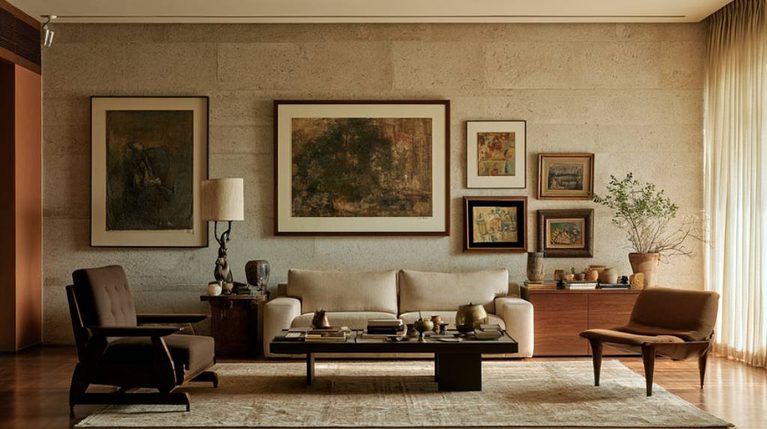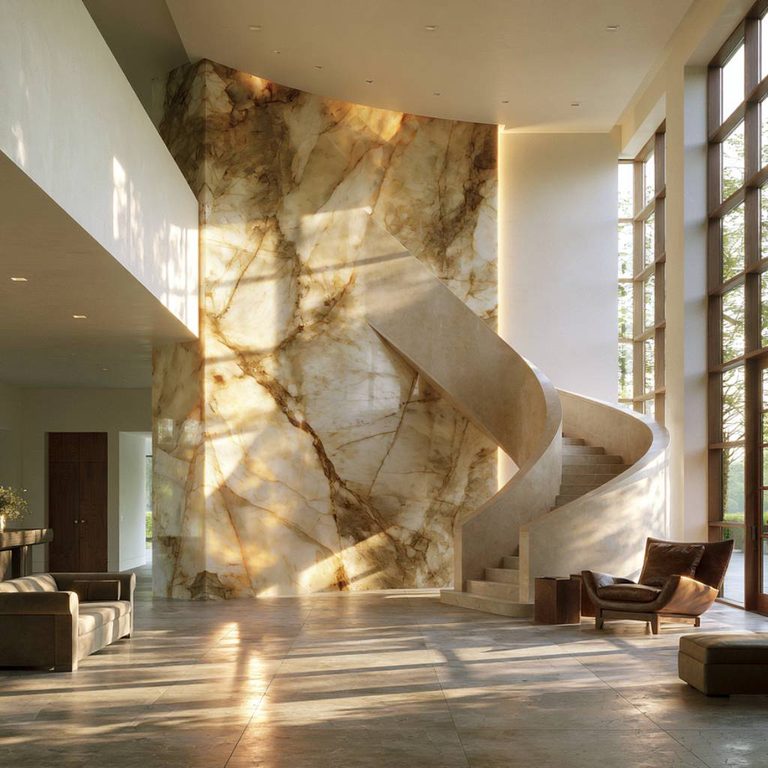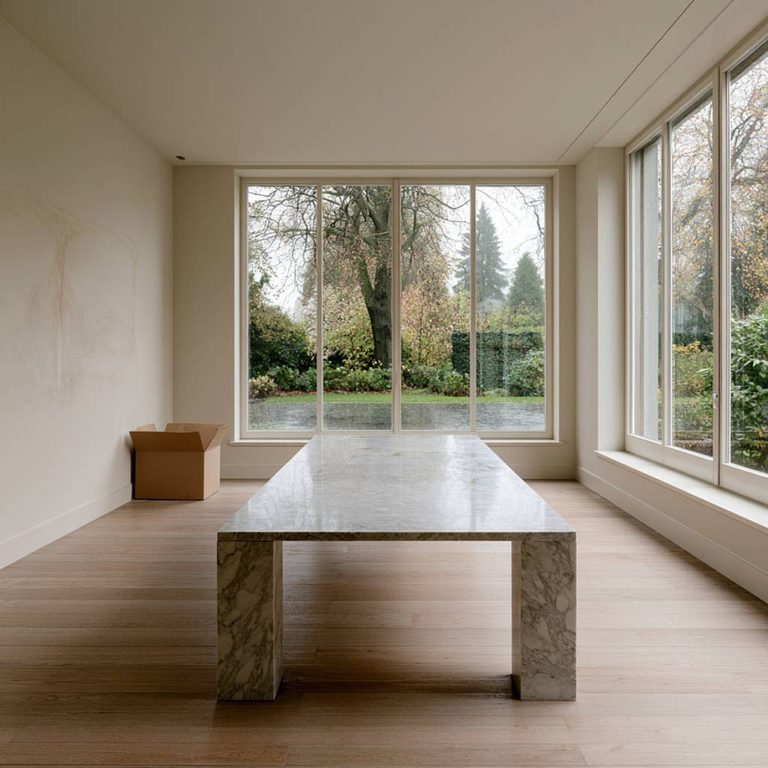
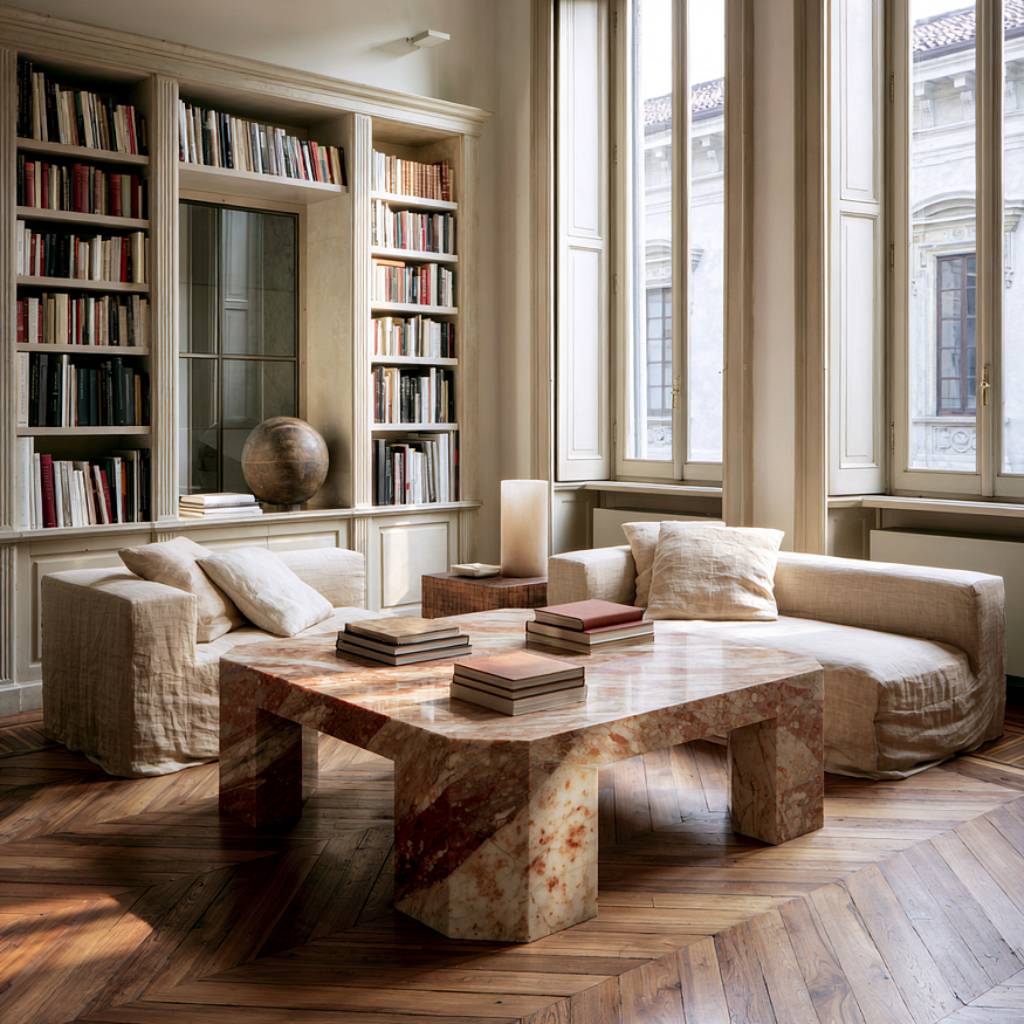
By the time a home is complete, every surface appears untouched. The stone has been polished, the timber sealed, the walls painted and the furniture placed with almost ceremonial precision. The rooms hold the stillness of something newly finished, as though life has not yet been permitted to enter. Photographs are taken before the first glass is placed on the table, before a child runs across the floor with wet feet, before sunlight begins to soften the colour of fabric or hands repeatedly reach for the same edge of a counter. At that moment, the home may look perfect. Yet perfection is not what will make it meaningful. Meaning begins only after the house starts remembering.
A surface becomes part of a home not when it is installed, but when it begins to absorb the rhythms of the people living around it. The entrance floor learns the sound of familiar footsteps. The kitchen counter holds the hurried mornings when breakfast is prepared between unfinished conversations. The dining table receives formal dinners, ordinary meals, difficult decisions and celebrations that continue long after the plates have been cleared. The bathroom ledge collects the small objects placed there without thought every evening. These surfaces do not speak, but they become witnesses to the life unfolding around them.
We often describe luxury through rarity, craftsmanship and visual distinction. Yet the deeper function of luxury may be emotional regulation. A well-made home creates a sense of continuity in a world that constantly asks people to adapt. Outside, schedules change, relationships shift, work becomes uncertain and time seems to move faster than the body can process. Inside, a familiar material offers something quieter. The floor remains beneath the feet. The table continues to hold the weight placed upon it. The wall catches the same morning light. Permanence becomes less about resisting change and more about giving change a stable place from which to occur.
This is why people often feel attached to surfaces they barely noticed when a home was new. A particular step on the staircase may hold the memory of a child sitting there after school. A kitchen island may be remembered not for its marble but for the evenings when the family gathered around it while dinner was being prepared. A windowsill may become important because someone waited there every afternoon for another person to return. The emotional value of these elements is not created by material alone. It emerges through repetition.
The finest materials are capable of carrying time without becoming fragile in meaning. They may change, but they do not disappear beneath those changes. Stone develops subtle differences in finish. Timber darkens where it is touched frequently. Metal begins to reveal a softer patina. These shifts are often described as ageing, but ageing is not necessarily deterioration. It can be evidence that the home has remained present long enough to become inseparable from the lives within it.
Modern design culture sometimes treats every mark as a failure. Surfaces are expected to remain permanently new, as though a successful home should resist all evidence of occupation. Yet a home that cannot tolerate touch, movement or time may be visually impressive while making its inhabitants anxious. People begin protecting the material from life instead of allowing the material to support life. They hesitate before placing an object on a table, worry about every footprint and treat rooms as compositions that must constantly be preserved.
Human-centred luxury asks for something more generous. It chooses materials and details that can receive daily life without losing their dignity. It recognises that permanence does not mean remaining unchanged. It means possessing enough integrity to evolve without collapsing into damage, inconvenience or visual disorder. A surface should not demand constant fear. It should quietly reassure the inhabitants that the home can be used, inhabited and trusted.
That reassurance begins long before anyone moves in. The longevity of stone, for instance, does not depend only on the beauty of the slab. It depends on how carefully the material is understood, detailed, transported, fabricated, installed and maintained. The most dramatic marble can become vulnerable if the substrate is unsuitable, the joints are poorly planned or movement has not been considered. A quieter stone, responsibly selected and precisely installed, may serve the household for generations.
Permanence is therefore not an accidental quality. It is protected through invisible decisions. Installation audits, mock-ups, movement allowances, correct adhesives, appropriate sealing and realistic maintenance plans may not appear in the final photographs, but they determine whether the surface can continue carrying time. These technical acts are not separate from the emotional life of the home. They make that emotional life possible.
When The Quarry speaks about the long life of stone, the idea extends beyond geological age or material prestige. Stone may have existed for millions of years before entering a home, but its architectural life depends on human stewardship. Curation identifies where a material belongs. Craft allows its character to be expressed with precision. Installation protects its performance. Maintenance ensures that the surface can continue participating in the life of the home rather than becoming a source of constant concern.
This understanding changes the meaning of luxury. The value of the material is no longer limited to the day it is selected or installed. Its value lies in how it supports decades of living. It should survive changing furniture, shifting family structures, new routines and different generations. A child who once completed school projects at a stone table may later return to the same surface with children of their own. The room may be altered, the lighting replaced and the chairs reupholstered, but the table continues to anchor the memory of the house.
Not every memory held by a home will be joyful. Surfaces also witness absence, illness, disagreement and periods when the household feels uncertain. Yet this is precisely where permanence becomes emotionally important. The home does not need to erase difficult moments. It holds them alongside everything that follows. The room where painful news was received may later become the room where the family gathers again. The floor crossed during a restless night may receive morning sunlight. The table that held a difficult conversation may later hold flowers, food and laughter.
A permanent surface gives life permission to remain complicated. It does not demand that every chapter be beautiful before it can belong. It simply stays.
Over time, the inhabitants may forget why a specific stone was chosen or how many alternatives were considered. They may no longer remember the technical discussions, the installation sequence or the exact name of the finish. What remains is the sensation of reliability. They know where the light will fall in the afternoon. They know how the floor feels in summer. They know which part of the table someone will instinctively choose during dinner. The designed object becomes part of the emotional geography of the family.
This is perhaps the quietest achievement of a well-made home. Its materials eventually stop presenting themselves as design decisions. They become familiar enough to disappear into belonging. The surface no longer asks to be admired. It waits beneath the ordinary acts that slowly give it significance.
The final promise of luxury is therefore not that nothing will change. Everything will. Children will grow, routines will shift, objects will be moved and people will arrive and leave. The promise is that the home will contain these changes without losing its ability to offer stability. Its surfaces will carry time without becoming emotionally or materially fragile. They will remain strong enough to hold both memory and possibility.
Years after the project is completed, someone may rest a hand on the edge of a familiar stone table and feel something that cannot be captured in the original photographs. Not the excitement of newness, but the comfort of continuity. The surface will carry traces of meals, conversations, celebrations and ordinary mornings, none of them visible in isolation yet all of them present.
And in that moment, the house will offer its most meaningful form of luxury: the quiet assurance that life does not need to remain perfect in order to remain held.
We can live here for a long time.