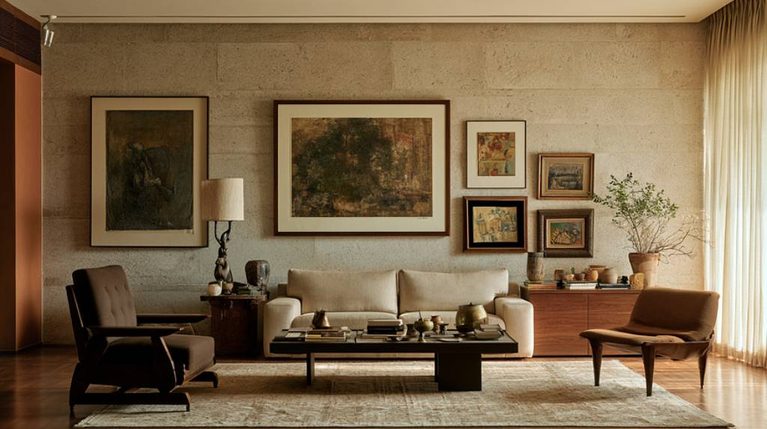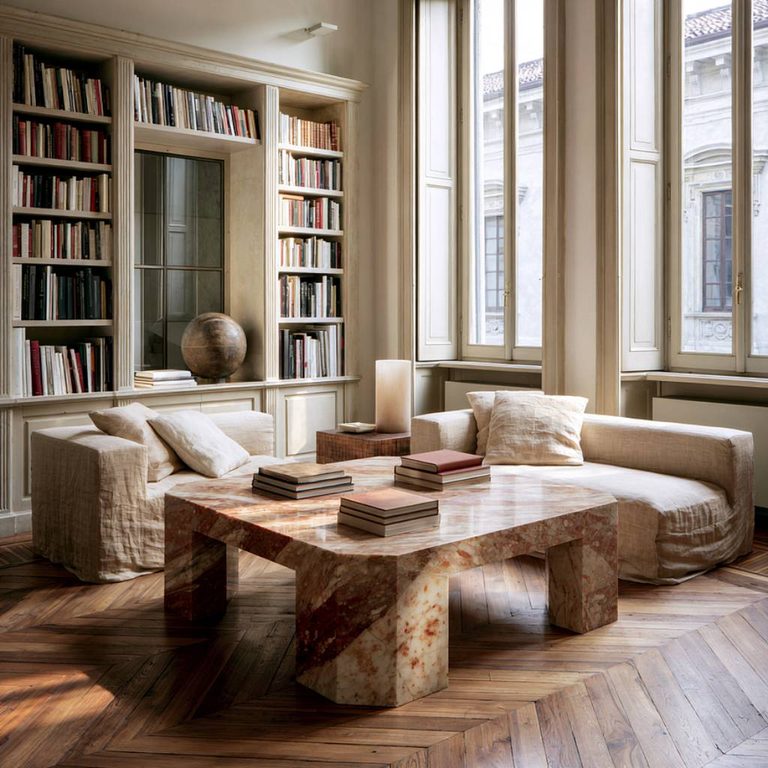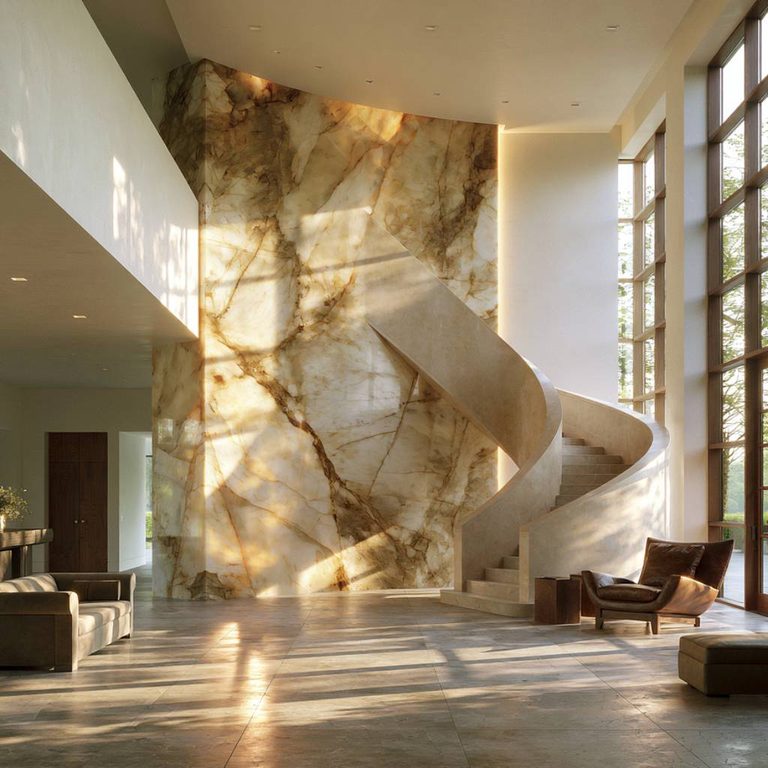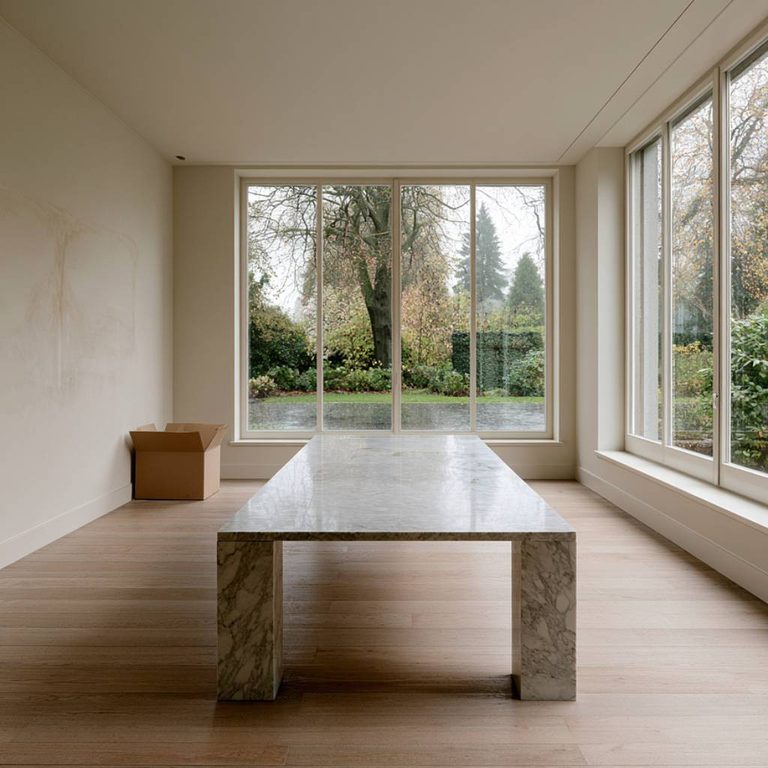
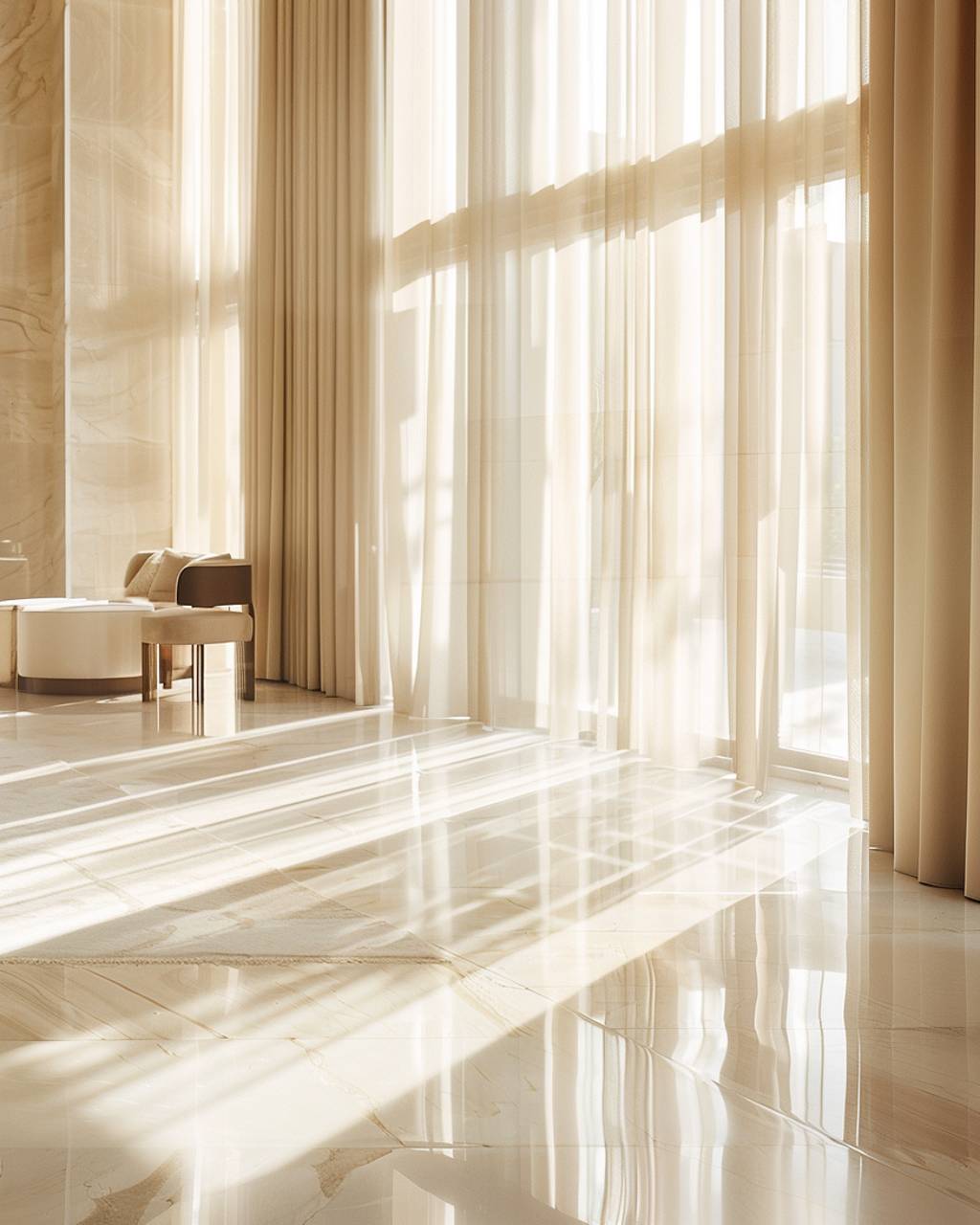
There is a particular kind of memory that does not belong to photographs. It does not live in albums or social media archives. It lives in the body. It returns unexpectedly, often years later, triggered not by sight but by sensation. For many who have lived in thoughtfully designed homes, that memory begins with a simple act: stepping barefoot onto a cool floor at dawn in the middle of summer.
In the residences I have designed for families whose lives are otherwise defined by velocity and decision-making, it is rarely the grand arrival sequence or the sculptural staircase that remains most vivid. It is something quieter. A summer morning before the household wakes fully. Light filtering softly through sheer curtains. Air already warming outside. And the steady coolness underfoot that grounds the body before the mind accelerates into the day.
Luxury, at its highest expression, is rarely loud. It is rarely the thing one points to. It is often the thing one feels without naming. The cool mineral surface beneath bare feet at sunrise is not a spectacle; it is a gesture of alignment between architecture and climate. It is a house responding intelligently to its environment without mechanical insistence. It is comfort that does not hum or circulate artificially, but simply exists.
I once worked on a coastal home where summer heat would rise sharply by late morning. The client, a global financier accustomed to climate-controlled interiors across continents, surprised me in our early meetings. He did not ask for advanced cooling systems or technological innovation. He spoke instead of childhood mornings in his grandmother’s home, where the floors remained cool long after the night air had settled. He wanted his children to feel that same calm at the start of their day.
We shaped the house carefully around that desire. Orientation became crucial. Mass became intentional. The floors were finished in pale mineral surfaces chosen not only for their beauty but for their quiet thermal intelligence. They would absorb the night’s coolness and release it slowly as the sun rose. No announcement. No performance. Just consistency.
Months after moving in, he wrote to me. Not about the façade or the detailing, but about mornings. He described walking into the kitchen before sunrise, coffee in hand, and feeling the floor steady beneath him. “It makes the day feel slower,” he said. “Like the house is not in a hurry.”
That is the difference between controlled air and composed matter. Mechanical systems create uniformity. They flatten experience into sameness. Natural materials create subtle gradients. The floor near the eastern windows warms first. The shaded corridor remains cool longer. The house becomes dynamic, encouraging movement not through instruction but through sensation.
Children respond instinctively to this. They do not analyze thermal mass or environmental strategy. They simply stretch out on the floor, lingering in the coolness. They sit cross-legged in patches of light that warm gradually. Their bodies learn the rhythm of the house before they understand its design.
In ultra-luxury architecture, there is a temptation to chase visible excellence. Rare surfaces, dramatic lighting, curated art. Yet what ultimately anchors belonging is sensory continuity. The weight of a door closing gently. The acoustics of a hallway at dawn. The coolness beneath bare feet that signals the day has begun but has not yet demanded anything.
Stone, in this context, is not a product. It is a climate companion. It participates in the environment rather than resisting it. It carries memory of the night into the morning. It responds to the sun without complaint. It cools not through force, but through presence.
I revisited that coastal residence several years later. The children had grown taller. The garden had matured. The floors had softened in tone where daily movement traced familiar paths. The owner walked barefoot across the living space and paused, as if reacquainting himself with the sensation. “It still feels the same,” he said quietly.
What he meant was not that nothing had changed. Life had changed. Schedules had shifted. The children were nearly teenagers. But the ritual remained intact. The first step of the day still met the same calm response from the ground.
Luxury, when done well, creates rituals that outlast novelty. It does not depend on constant reinvention. It does not require upgrades to remain relevant. It supports continuity of feeling. A cool floor on a summer morning becomes part of the family’s narrative. It is the backdrop to sleepy conversations, to early departures for travel, to quiet weekends when no alarms interrupt the dawn.
Architecture succeeds most completely when it recedes into these moments. When it stops presenting itself as design and becomes environment. When it collaborates with climate instead of overpowering it. When it understands that comfort can be as simple as a surface holding the night’s breath for a little longer.
We rarely speak of temperature as emotional, yet it is deeply so. Warmth suggests welcome. Coolness suggests clarity. The meeting of the two, at dawn in summer, suggests balance. A house that provides that balance each morning does more than shelter its inhabitants. It steadies them.
In the end, the most profound luxury is not excess. It is the alignment between body, material, and season. It is the sensation of bare feet touching a floor that understands the climate better than any machine.
Long after the architecture awards are forgotten and the photographs archived, what remains is that memory in the body. A quiet summer morning. Light just beginning to stretch across the room. And the cool certainty beneath your feet that tells you the house is awake, even before you are.