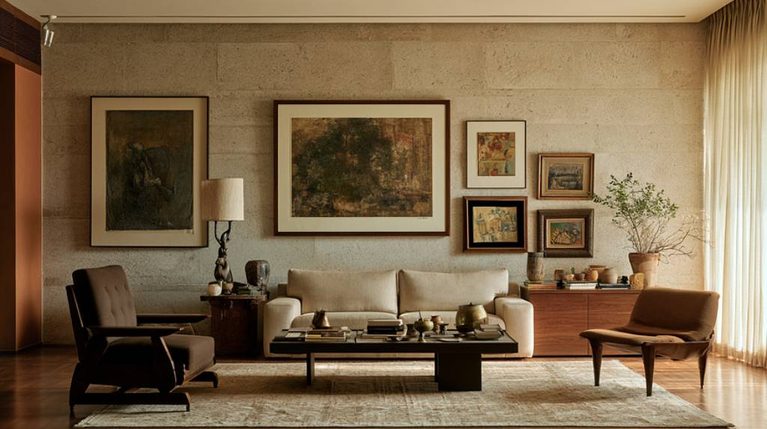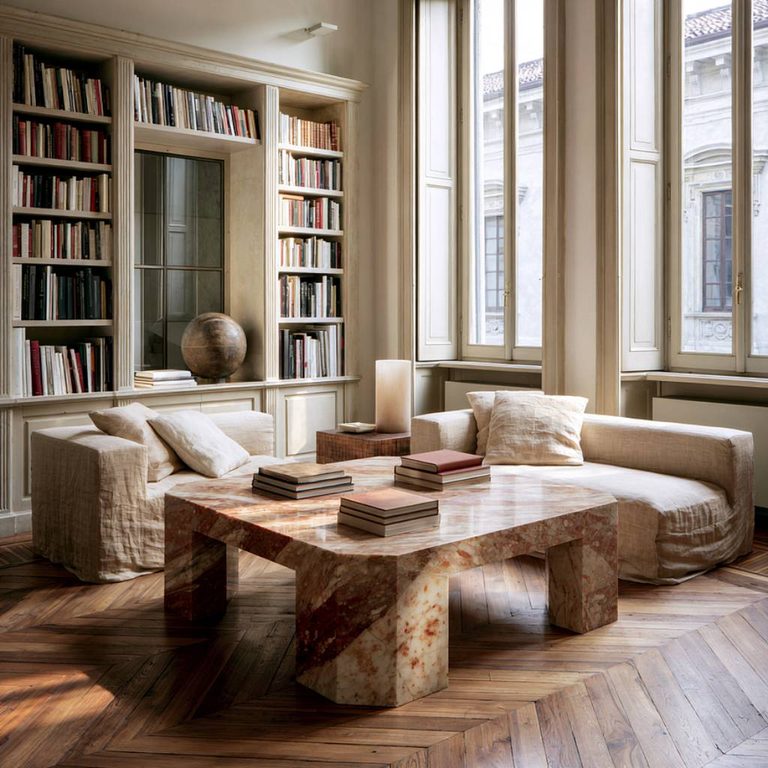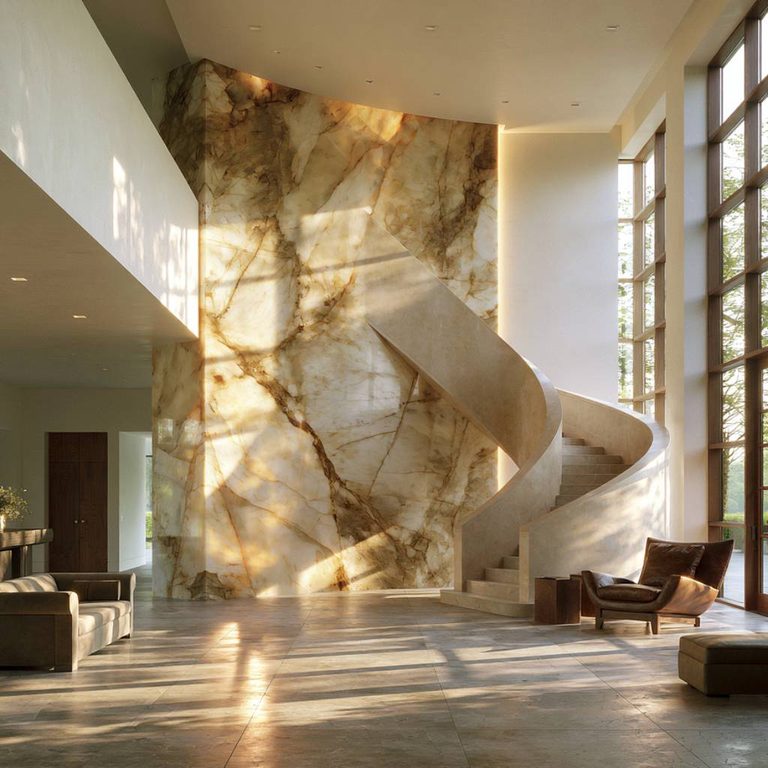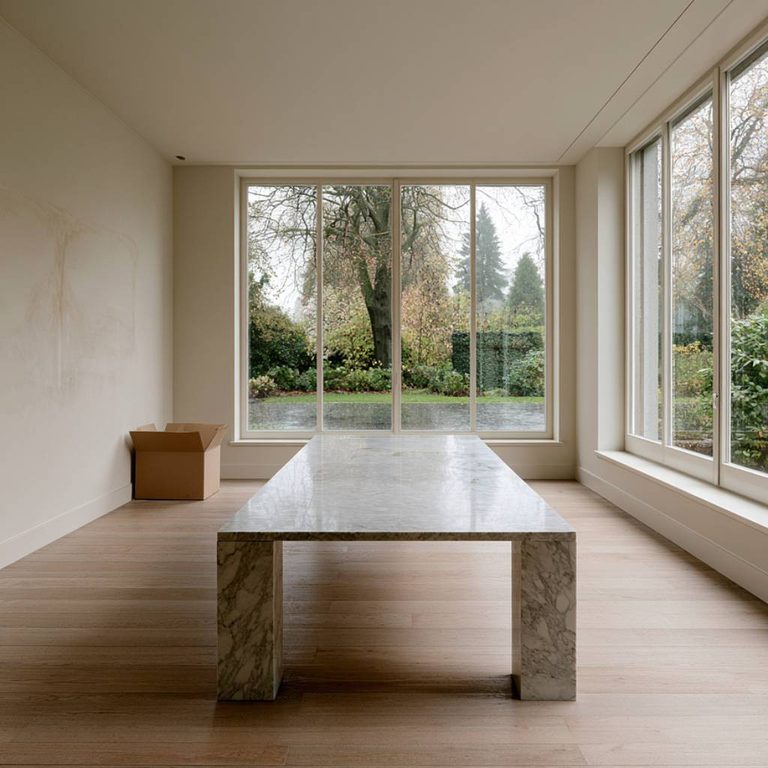
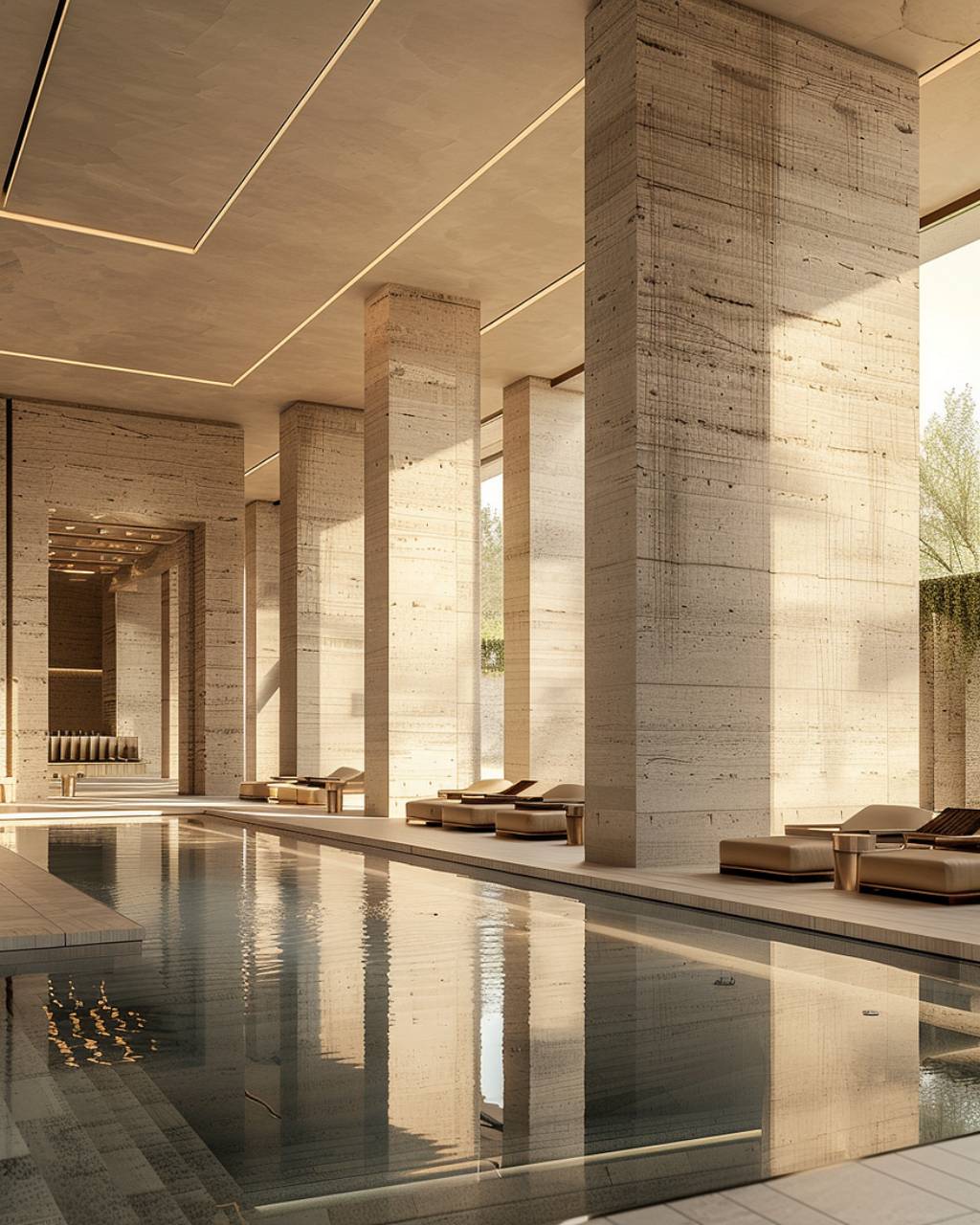
There is a particular hour in every well-loved home when the noise recedes completely. Doors close. Laughter fades down the driveway. Footsteps disappear beyond the threshold. And what remains is not emptiness, but silence.
Not all silence feels the same.
In some houses, silence is fragile. It feels temporary, as though the slightest movement could fracture it. In others, silence has mass. It settles into the room. It rests against the walls. It feels held.
Over the years, I have come to understand that materials determine the character of that silence more than any decorative decision ever could.
Recently, I visited a residence I had completed nearly fifteen years ago. It had hosted a large family gathering the night before, multiple generations seated at long tables, music drifting from one room to another, children moving quickly between spaces that had once been their playground. By the time I arrived the following morning, everyone had left.
The house was still.
Sunlight filtered through tall glazing, touching walls and floors that had quietly witnessed decades of living. The air carried the faint echo of the previous evening, but the structure itself did not feel hollow. It felt grounded.
There is something profound about a room that holds silence with composure. Heavy materials have a way of absorbing rather than amplifying absence. They do not ring when emptied. They do not feel temporary once the voices are gone. Instead, they remain steady, as though the life that passed through them has been gently stored.
In lighter constructions, silence can feel sharp. Sound dissipates too quickly. Surfaces seem restless. The room feels as though it is waiting to be filled again. But in spaces anchored by weight, in floors that press confidently into the earth, in walls that carry density, silence becomes textured.
It becomes calm rather than vacant.
As I walked through that residence, I noticed how the morning light landed across the main living space. The furniture had not yet been repositioned from the night before. A chair slightly angled. A glass left near the edge of a table. But the architecture did not feel disturbed. It felt patient.
Heavy materials alter the emotional acoustics of a home. They temper echoes. They soften reverberation. They create an environment where even absence feels intentional. After everyone has left, the house does not feel abandoned. It feels reflective.
This is not something clients always articulate at the outset of a project. They speak of aesthetics, of elegance, of scale. But what they are often seeking, especially those building homes intended to endure across generations, is a kind of atmospheric permanence. A feeling that when life quiets down, the house will not feel exposed.
In residences designed with lightness as the dominant gesture, expanses of glass, ultra-thin surfaces, weightless detailing, there can be beauty in transparency. But there is also vulnerability. The silence in such spaces can feel suspended, almost precarious.
By contrast, rooms grounded by mass create psychological stability. They feel anchored. The quiet does not float; it settles.
When everyone has left and the doors are closed, a grounded room does not seem diminished. It seems complete.
The family whose home I revisited told me later that they cherish that particular stillness. “After the gatherings,” they said, “the house feels like it exhales.” Not emptier. Not lonely. Simply settled.
That settling is the product of intentional choices made years before. Choices about proportion, about thickness, about how materials meet the ground. Decisions that were not about spectacle, but about endurance.
Weight, in architecture, is often misunderstood as visual heaviness. But true architectural weight is not oppressive. It is reassuring. It is the quiet confidence of matter that does not shift when life moves around it.
Silence after departure reveals whether a house has gravity.
Does the space feel held? Or does it feel exposed?
In the finest homes, silence becomes an extension of the architecture itself. It deepens corners. It slows the air. It allows light to move across surfaces without interruption. It invites reflection rather than urgency.
There is a particular dignity in a room that remains composed after joy has passed through it. That does not demand constant occupation to justify its existence.
That kind of composure cannot be achieved with surface-level decisions. It emerges from material integrity, from density, from permanence, from a refusal to feel temporary.
When everyone has left and the house stands alone, the true character of its construction reveals itself. The quiet is no longer masked by conversation or movement. It rests directly against the architecture.
And in well-grounded spaces, that quiet feels substantial.
Not empty. Weighted. Held.
In the end, luxury is not proven in the presence of guests. It is revealed in the stillness that follows.
A house that carries silence with gravity carries life with equal dignity.