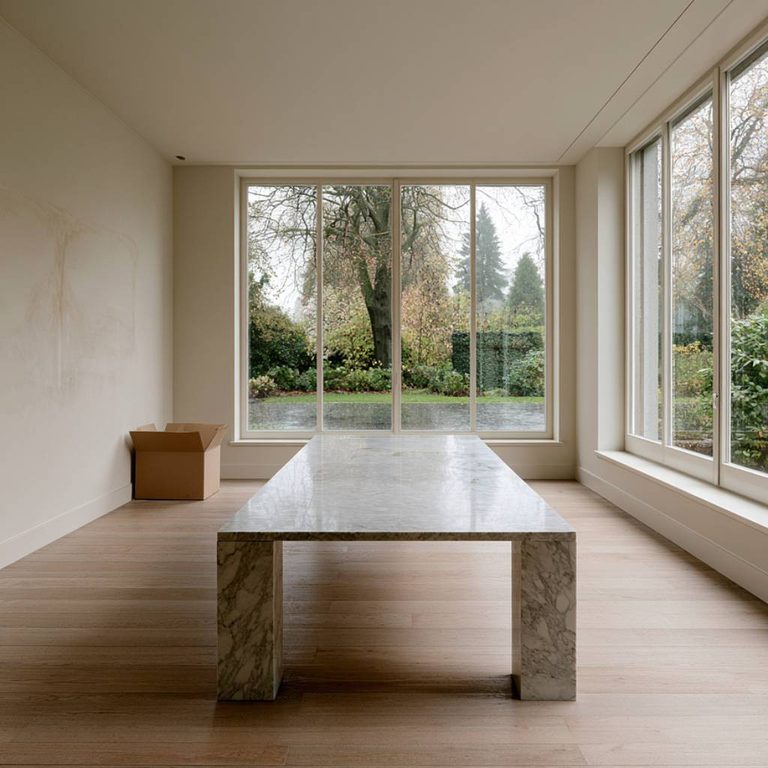
There is a quiet ritual that unfolds in every home, often without anyone noticing it consciously. It happens in passing moments, between destinations inside the house. A hand drifts along the wall while walking down a corridor. Fingers trace the edge of a kitchen counter while waiting for coffee to brew. A palm slides gently along the banister while descending the stairs. These gestures are so small they seem insignificant, yet they reveal something profound about how we experience architecture.
We do not only see our homes. We feel them.
Touch is the most instinctive form of reassurance the human body possesses. Long before we interpret space intellectually, before we admire proportions or recognize design references, the body reads material through the hand. Texture, temperature, density. The mind may appreciate beauty, but the hand searches for permanence.
In the homes I design for families whose lives are defined by extraordinary pace and responsibility, I often observe this instinct in its purest form. Individuals accustomed to controlling complex financial systems, global businesses, or public institutions move through their private homes with a surprisingly simple gesture: they touch surfaces.
A hand rests on a wall. Fingers graze the edge of a stone island. Someone pauses briefly at the stair rail before continuing upward.
These gestures are rarely deliberate. They are unconscious confirmations that the environment around them is stable.
The human body craves this stability. In a world that is increasingly digital, frictionless, and intangible, physical contact with material provides reassurance that something in our environment is real, grounded, and enduring. When the hand meets a surface that feels substantial: cool, dense, steady, the body relaxes.
This is not merely aesthetic experience. It is psychological grounding.
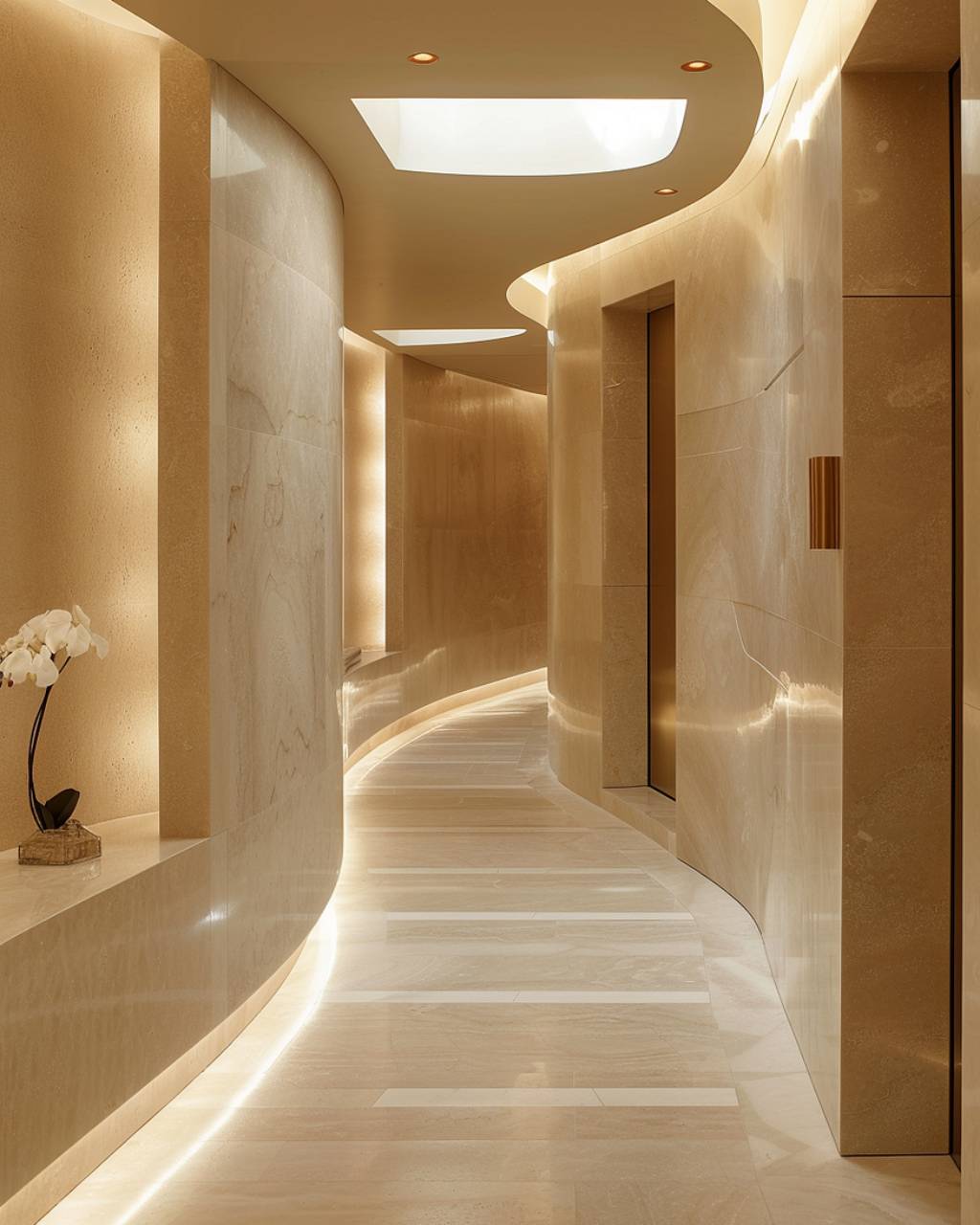
I once designed a residence where a long hallway connected the family’s private wing to the central living spaces. The walls along that corridor were clad in a calm, mineral surface with subtle texture. Months after the family had moved in, the client mentioned something curious. “Everyone runs their hand along that wall when they walk past,” he said. “Even the children.”
We visited together, and he demonstrated the path. Sure enough, the faintest variation in tone had begun to appear along the height where palms naturally rested. It was not worn in the destructive sense. It was evidence of repetition, the quiet mark of touch.
Architecture had become tactile memory.
This phenomenon appears repeatedly in homes that prioritize material depth. Stair edges soften slightly over years of hands passing across them. Countertops develop the gentle polish of countless gestures. Walls that once felt abstract become familiar through contact.
What fascinates me most is how these surfaces begin to anchor emotional rhythms within the home. A person returning late at night may brush their hand along the hallway wall as they move quietly toward their room. A parent preparing breakfast rests their palms against the counter while thinking through the day ahead. Children sliding their hands along stair rails turn movement into play.
Touch transforms architecture from environment into companion.
In the realm of ultra-luxury residences, where the visual dimension of design is often celebrated, dramatic views, sculptural forms, curated materials, the tactile dimension remains under-discussed. Yet for the families who inhabit these homes daily, it becomes one of the most intimate aspects of experience.
Materials that invite touch do something remarkable. They remove distance. They encourage familiarity. Instead of feeling like museum artifacts, surfaces begin to feel like extensions of the life unfolding around them.
There is also an important psychological component here. Individuals operating in high-stakes professional environments often live in a state of constant cognitive activity. Their decisions affect markets, companies, and communities. In such lives, physical grounding becomes essential. The act of touching a stable surface, one that carries weight and permanence, offers a momentary recalibration.
It reminds the body that not everything is abstract.
This is why the choice of material in a home matters beyond appearance. Certain surfaces resist touch. They feel fragile, overly polished, or artificially smooth. They encourage distance. Others welcome the hand. Their texture communicates resilience. Their temperature carries calm. Their density conveys trust.
Over time, these surfaces become part of daily ritual.
Years after a house is completed, when families speak about their homes, they rarely describe this phenomenon explicitly. They do not say, “I love touching the wall.” But they describe feelings that reveal the same truth. They speak of how grounded the house feels. How calm the space becomes when they walk through it. How certain rooms seem to slow their thoughts.
What they are describing, in part, is the reassurance of touch.
Architecture succeeds most deeply when it engages the body as much as the eye. When surfaces are not merely looked at but lived with. When materials respond to the hand with the same composure they show to the light.
Because in the end, luxury is not only about what we see when we enter a home.
It is about what we feel when we reach out and touch it.
The wall beneath the fingertips. The edge beneath the palm.
The surface that quietly reminds us that some things are meant to last.