Before a home is designed, it is already being lived. Not physically, but emotionally. Through routines that haven’t been named yet, preferences that haven’t been articulated, and discomforts that have quietly become normal over time.
A homeowner rarely arrives with a complete vision. What they carry instead is something far more subtle and far more important; a way of living. It reveals itself in how mornings unfold, how silence feels in the evening, and how space is used when no one is watching.
This is where the real story of a home begins.
And yet, most design processes do not start here. They begin with references, images, materials, and layouts. All of which are necessary, but slightly premature. Because without understanding the human pattern underneath, design becomes interpretation instead of translation.
And interpretation often misses what matters most.
Luxury, when reduced to objects, becomes surface-level. But when understood as experience, it becomes deeply personal. It is not defined by what is installed, but by what is enabled.
A home that feels right does not just look cohesive. It supports a person’s rhythm without asking for adjustment. It absorbs habits without resistance. It allows life to unfold naturally.
This alignment does not happen by accident. It begins with listening.
Not to what the homeowner says they want, but to how they describe their life. Because within those descriptions are small clues, often overlooked, that reveal the emotional structure of a home.
A hesitation before answering how mornings feel.
A quick response when asked about noise.
A pause when describing what comfort means.
These are not preferences. They are signals.
When captured correctly, they form the foundation of a home that feels inevitable, not designed.
Most traditional briefs focus on requirements. Number of rooms, material preferences, functional needs. These are important, but they only describe the house, not the life inside it.
And when design begins from requirements alone, it risks creating spaces that function correctly but feel disconnected.
A living room that looks complete but is rarely used.
A dining space that exists but does not invite gathering.
A bedroom that appears calm but feels emotionally restless.
Because the brief answered what was needed, but not why.
To uncover the why, the process must shift. From specification to story. From selection to understanding.
This is where the idea of a luxury home story intake emerges. Not as a checklist, but as a conversation. A structured way of uncovering how a homeowner actually lives, and how they want to feel while doing so.
Instead of asking what materials someone prefers, the questions begin elsewhere. How mornings begin. What silence means. Where time is naturally spent. What feels unresolved. What kind of light is preferred. What textures are avoided. When ease is felt most strongly.
These questions are not about collecting answers. They are about revealing patterns.
Because once patterns emerge, design becomes clearer. Not visually, but structurally. You begin to understand why certain materials will feel right, why some spaces need openness while others need containment, and why certain elements must endure while others can evolve.
At this point, material curation becomes something entirely different. No longer a catalog decision. No longer a trend response.
It becomes a narrative act.
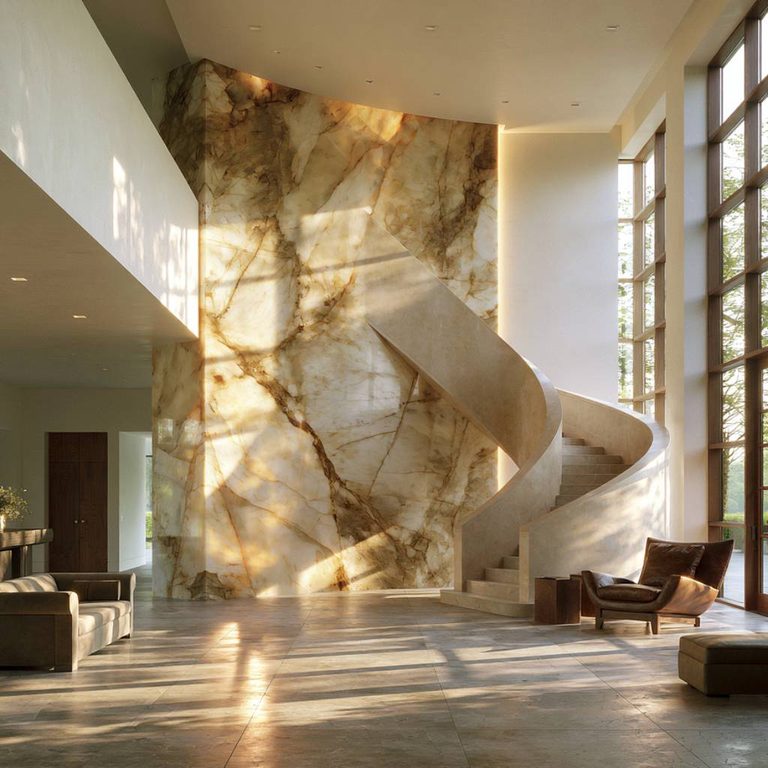
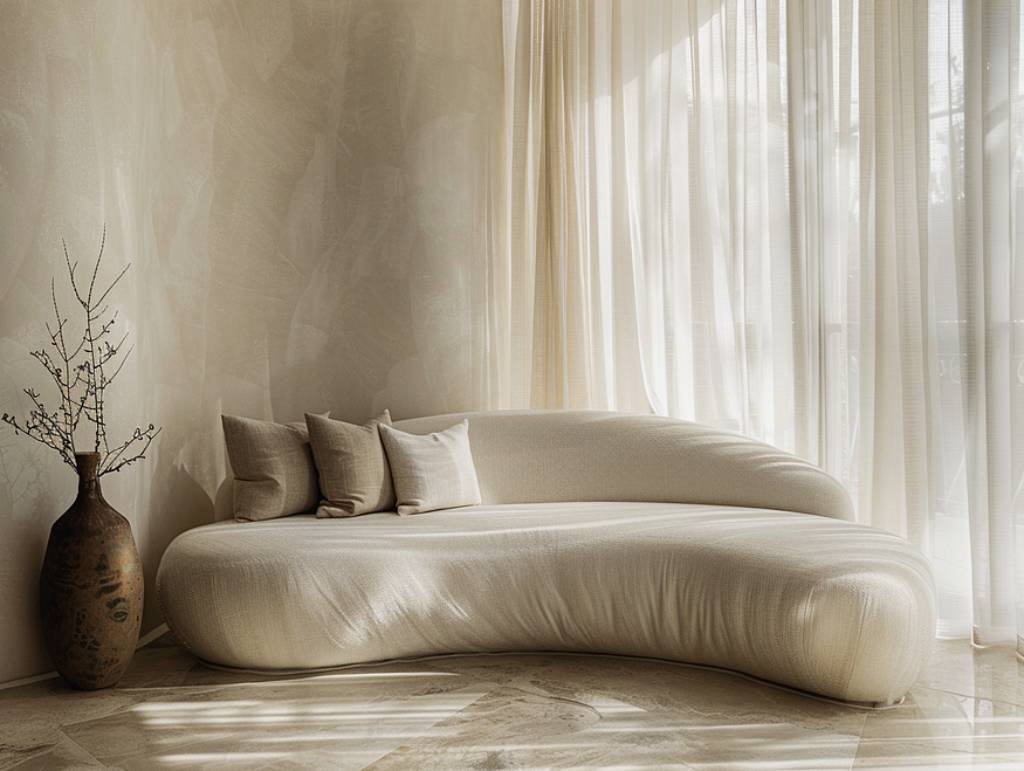
Each material is chosen not for how it looks, but for what it supports. A stone surface is selected not because it is premium, but because it can hold repetition without fatigue. A plaster wall is chosen not just for texture, but for how it diffuses light in alignment with the homeowner’s need for calm.
A floor is no longer just a finish. It becomes the most repeated point of contact in the home. And therefore, it must feel right, every single day.
This is what transforms selection into intention. Randomness into alignment.
And when this alignment is achieved, something subtle happens. The home stops feeling like a composition of elements. It begins to feel like a continuation of the person living in it.
At this stage, the role of the architect or designer shifts. From creator to interpreter. From decision-maker to translator.
The most important question is no longer what looks best. It becomes what feels inevitable for this person.
And answering that requires restraint.
Not every idea needs to be expressed. Not every option needs to be explored. Because clarity reduces excess. And excess often disrupts emotional coherence.
In high-end homes, this matters even more. Not because of cost, but because expectations are higher. A luxury home is not expected to simply function.
It is expected to resonate.
And resonance cannot be achieved through surface-level decisions. It requires depth, understanding, and a process that prioritizes human experience before visual outcome.
When this happens, the result is not just a well-designed home. It is a home that feels aligned from the moment it is lived in.
There is no adjustment period. No sense of getting used to it.
Because it was never imposed. It was uncovered.
When design begins with story instead of selection, everything downstream improves. Materials feel right. Spaces behave intuitively. Maintenance feels natural. Time enhances the home instead of diminishing it.
And most importantly, the homeowner feels understood. Not just aesthetically, but experientially.
Because in the end, a home is not a collection of objects. It is a structure that holds a life.
And if that life is not understood at the beginning, no amount of design can fully compensate for it later.
That is why the best homes are not designed in the traditional sense.
They are revealed, through the stories people were already living, long before the first material was ever chosen.