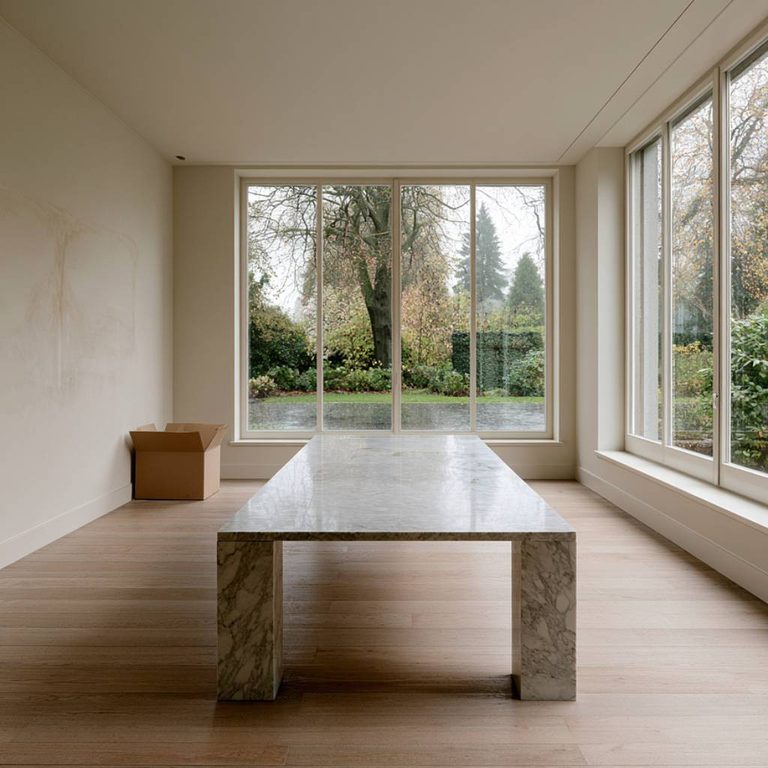
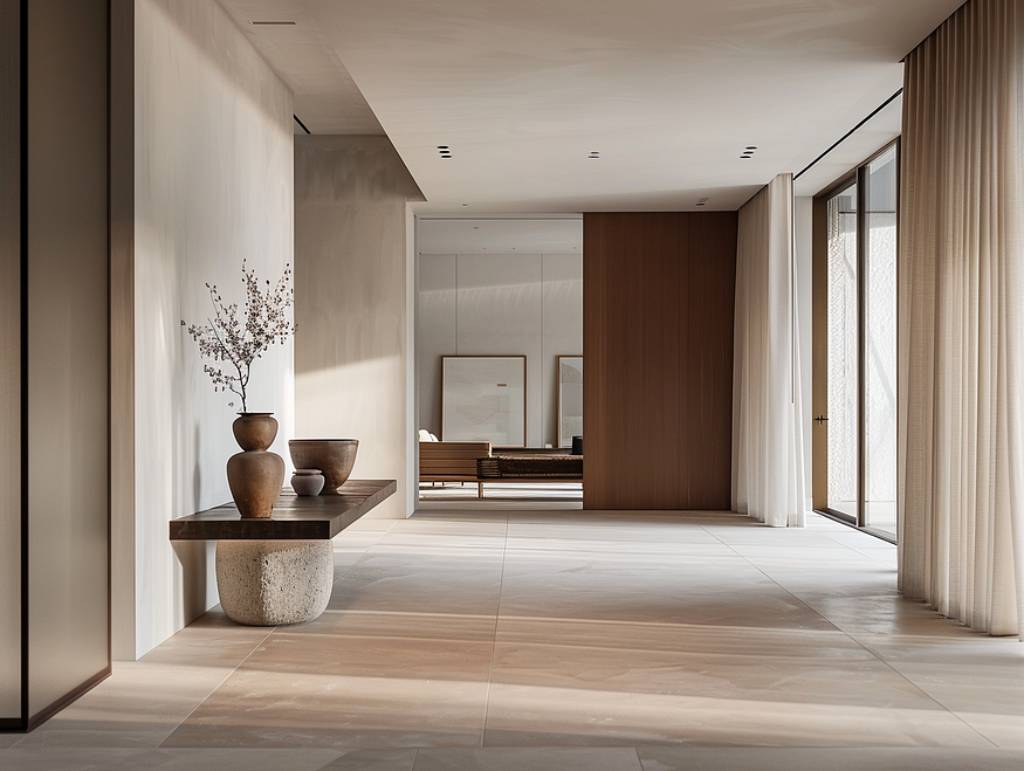
There is a particular moment that rarely gets documented in architecture, yet it may be one of the most honest interactions between a person and a space. It happens not when guests are entertained or when rooms are styled for photographs, but in the quiet return. A late evening. A suitcase set down. Shoes slipped off without ceremony. The body, still carrying the residue of movement, noise, and decision, begins to negotiate stillness again.
In that moment, the home is not evaluated visually. It is not about composition, lighting schemes, or curated objects. It is something more immediate and less conscious. The body registers the floor first. Its temperature. Its resistance. Its silence. Whether it receives or rejects the weight that has just entered.
This is where the idea of luxury often fails to be understood. It is assumed to be something seen or expressed through finishes, brands, or spatial scale. But the deeper register of luxury is physiological. It operates beneath language. It is felt in how quickly the body releases tension, how effortlessly breath returns to its natural rhythm, and how subtly the space absorbs what you bring in with you.
Stone, in this context, is not merely a material choice. It becomes an instrument of grounding. Its density carries a kind of permanence that resists the agitation of the outside world. When placed deliberately underfoot, at thresholds, along the first path of entry, it begins to act almost as a silent counterpart to the human condition. It does not react. It steadies.
The placement of that surface is not incidental. A well-considered floor near the entry does not demand attention, yet it performs one of the most important roles in the home. It becomes the first point of contact between movement and stillness. The moment the suitcase is dropped beside it, the narrative shifts. Not dramatically, but perceptibly. The urgency of arrival dissolves into something slower, something more contained.
What is remarkable is that this effect is rarely attributed to design decisions. It is often described as a feeling “this space feels calm,” or “there is something grounding about this home.” Yet behind that feeling is a sequence of deliberate choices. The scale of the tile. The continuity of the surface. The absence of visual noise. The quiet confidence of a material that does not need to assert itself.
In many contemporary interiors, surfaces are treated as interchangeable layers, selected for aesthetic alignment rather than experiential impact. Floors become backdrops rather than participants. But when the floor is understood as the first receiver of the body, its role changes entirely. It is no longer passive. It becomes active in shaping the transition from outside to inside.
The suitcase, in this narrative, is not just an object. It is a marker of movement, of accumulation, of everything carried from elsewhere. When it meets a surface that is unresolved; too cold, too reflective, too visually fragmented the body remains unsettled. The transition is incomplete. But when it meets a surface that holds weight without resistance, that absorbs sound, that stabilizes temperature, the effect is immediate. The body follows the logic of the ground.
This is where curated stone positioning becomes essential. Not as a decorative gesture, but as a structural decision in the emotional choreography of the home. The stone is not there to be admired first. It is there to be felt before it is noticed. Its success lies in its subtlety, in the fact that it does not interrupt the moment, but completes it.
There is also an important restraint in how such surfaces are presented. To name them too loudly, to frame them as luxury artifacts, is to misunderstand their role. They operate best when they remain quiet, when they allow the experience to take precedence over the explanation. The logic of the space becomes evident not through description, but through repetition at every arrival, every return, every time the body meets the same grounded response.
In this sense, the floor becomes a kind of memory device. Over time, it teaches the body what to expect. The act of coming home becomes less of a transition and more of a release. The suitcase is no longer an extension of movement, but something that can be set down without hesitation. The space does not demand adjustment. It absorbs.
What emerges from this is a different understanding of permanence. It is not about materials that last, but about materials that remain relevant to the body over time. Surfaces that do not fatigue, that do not become visually or physically disruptive, that continue to support the same quiet transition regardless of how many times it is repeated.
Luxury, then, is not in the visibility of the surface, but in its reliability. In the certainty that, no matter the state in which you arrive, the space will meet you in the same way. Calm, steady, and unassuming.
The suitcase by the door is simply the beginning of that story. The floor beneath it is what allows the story to end differently each time not with accumulation, but with release.