It was meant to be a simple visit. A brief stop between other commitments, something to complete and move on from. The intention was practical that is to finalise a material, confirm a choice, and carry on with the day. There was no expectation of anything more. The process had already been reduced to a task, something efficient and contained.
But the experience began to change even before anything was seen. The act of arriving felt different. There was no rush at the threshold, no immediate presentation of options. The space did not try to introduce itself all at once. Instead, it held a quiet composure, allowing a moment of adjustment, as if it understood that arrival is not instant. The body needs time before the mind begins to decide.
Those first moments were unstructured. No one moved forward with samples or spoke about choices. There was simply space to stand, to notice and to settle. It was a subtle gesture, but it shifted the pace entirely. The experience did not move ahead of the person; it moved with them.
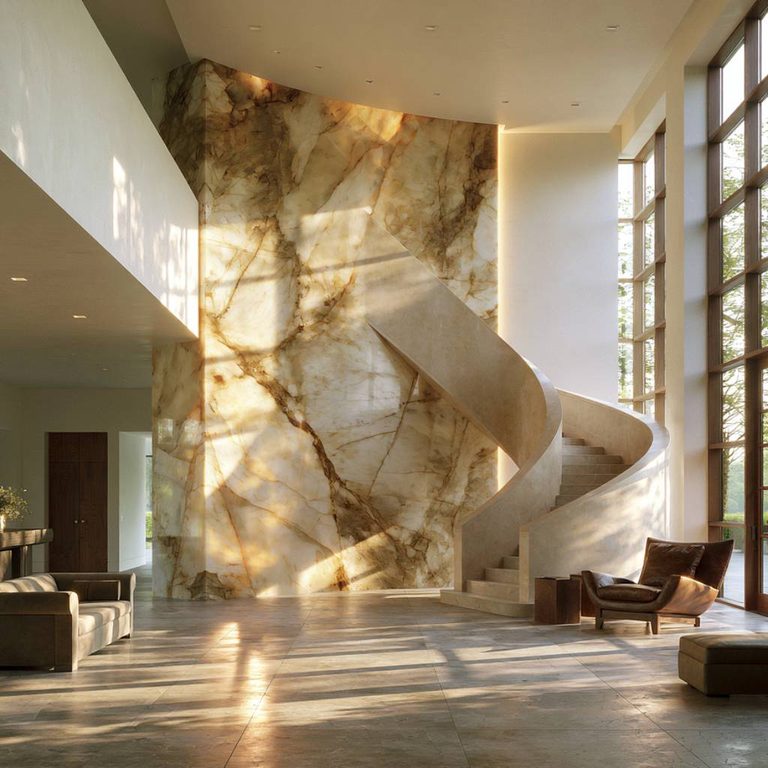
Light played a quiet role in this transition. It revealed surfaces gradually, not all at once. Materials did not present themselves as options waiting to be judged, but as elements already belonging to the space. A stone was not something to evaluate immediately. It existed first, in relation to light, to shadow, to stillness. It asked to be noticed, not compared.
The conversation that followed did not begin with the material. It began with the person. The questions were not about style or preference, but about experience. What does your morning feel like? Where does your day slow down? What kind of quiet do you return to at the end of the day? These were not questions that produced quick answers. They required pause, and in that pause, something more honest began to emerge.
At first, the responses were uncertain. These are not things people are used to articulating. But gradually, a pattern revealed itself. Small habits, subtle rhythms, the way a day unfolds without conscious thought. These details, often overlooked, began to form a clearer understanding than any visual reference could provide.
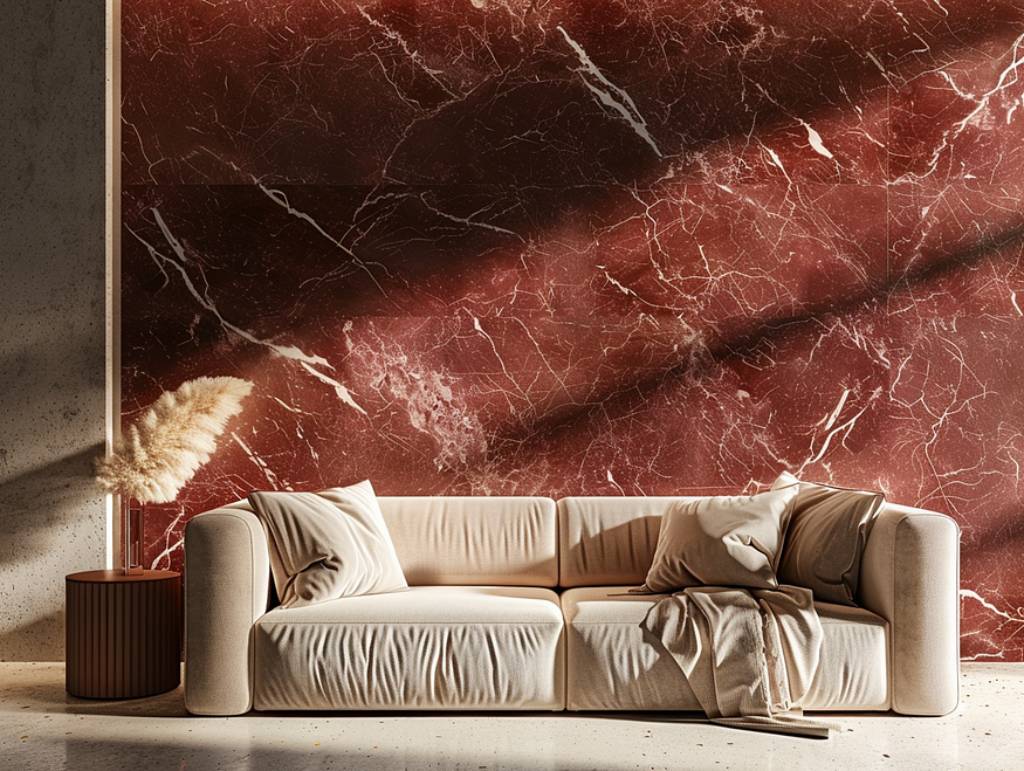
Only then did the material enter the conversation. Not as a set of options, but as a response to what had already been understood. A slab was brought forward and placed quietly within the space. It was not introduced with urgency or explanation. Instead, it was allowed to exist, to be seen over time rather than all at once.
The surface revealed itself slowly. The light moved across it, and with it, the depth became visible. The veining did not appear immediately; it unfolded depending on where one stood. There was no attempt to present it as perfect. Its variations were acknowledged gently, almost with care, as if they carried meaning rather than imperfection.
What became noticeable was the absence of distraction. There were no competing materials placed alongside it. No immediate alternatives to disrupt the moment. The space held that single surface long enough for it to be understood on its own terms. This created a clarity that did not come from comparison, but from attention.
Time, in that moment, felt different. There was no pressure to move forward, no sense that a decision was expected immediately. The process did not feel like it was leading to a purchase. It felt like it was unfolding toward understanding. And because of that, the decision, when it came, did not feel like a decision at all.
It arrived quietly. Not as a conclusion reached through evaluation, but as a recognition. A sense that the material aligned with something that had already been uncovered. It did not feel chosen. It felt inevitable.
What remained afterwards was not the specification, nor even the material itself. It was the feeling of the experience. The absence of pressure. The presence of attention. The sense that the process had made space for clarity rather than forcing it.
This is where the meaning of luxury begins to shift. It is no longer defined by what is acquired, but by how it is arrived at. By whether the process holds the person within it, or moves past them. By whether it allows understanding to emerge, rather than replacing it with speed.
The material will eventually become part of a home. It will be touched, used, and lived with. It will gather marks, reflect light differently over time, and settle into daily rhythms. But beneath all of that, it will carry something less visible.
The memory of how it was chosen. And that memory is what stays.