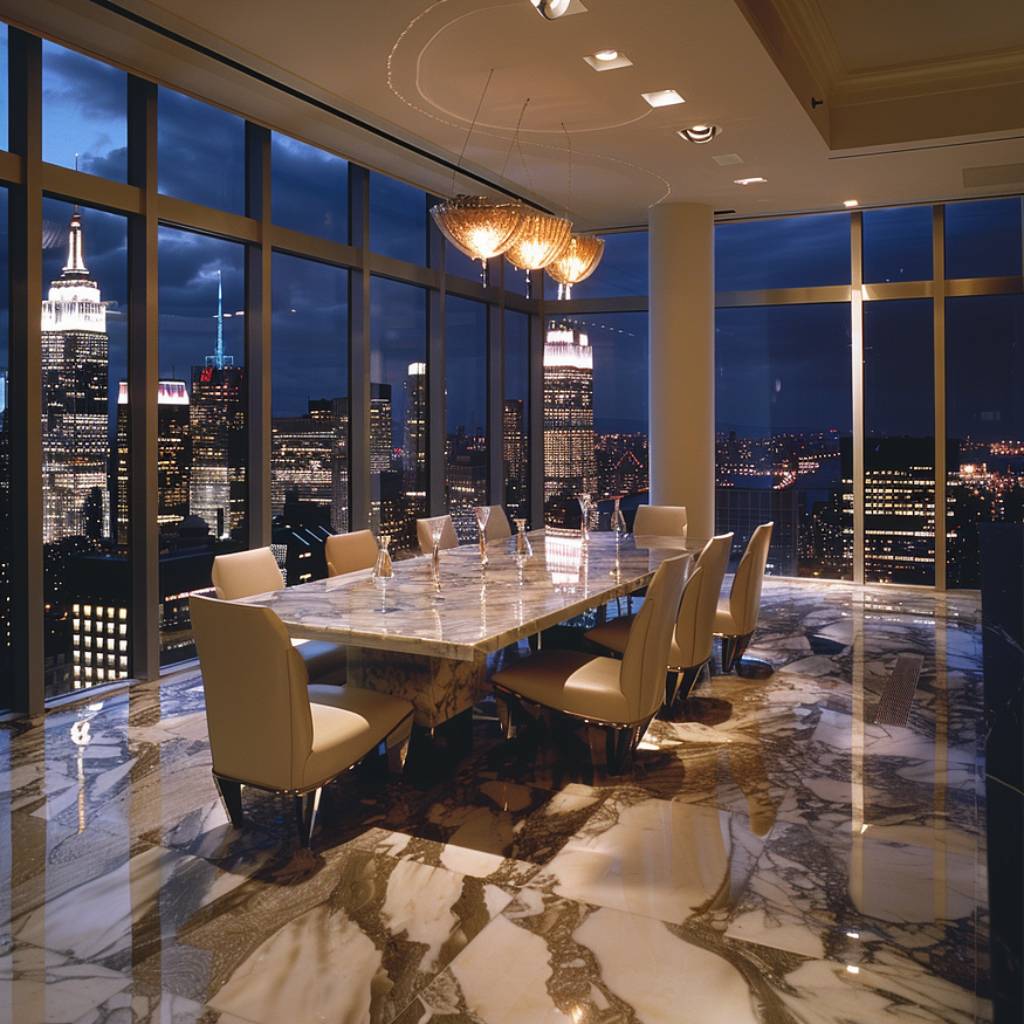
The conversation always begins before the first word is spoken. It begins in the way the chair is pulled back: slow, or abrupt. In the way hands rest on the surface: open, or guarded. In the quiet choreography of plates being placed, glasses filled, light softening almost instinctively. Dinner is never just dinner. There is a moment, often unnoticed, when the room settles into itself and what was once a space becomes something else entirely, an arena of exchange. And at the centre of it all, there is a surface that does not speak, but remembers.
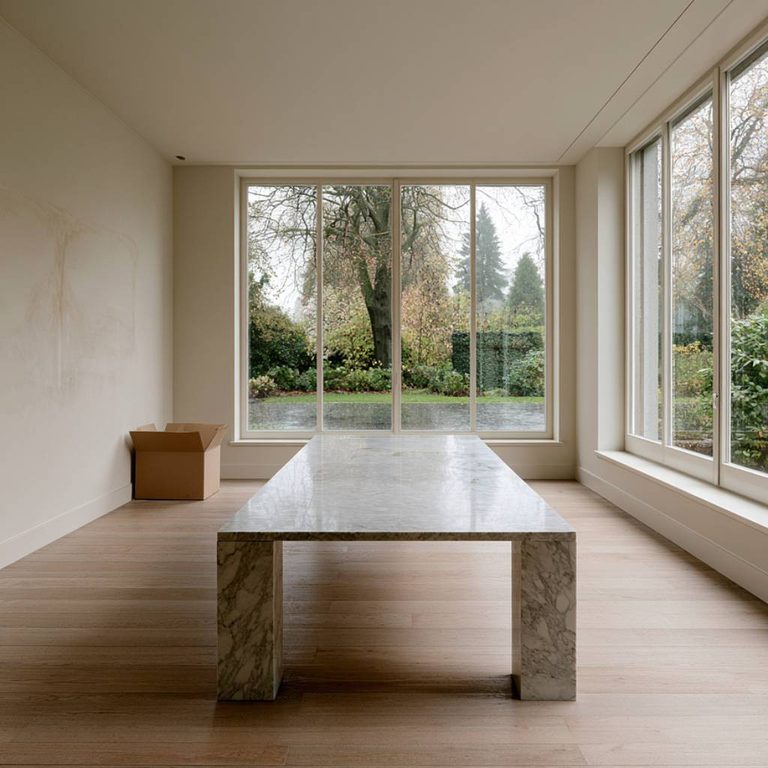
The dining table is rarely chosen for what it will eventually hold. It is discussed in terms of proportion, material, finish of marble or wood, polished or matte. But its real function begins much later, when people sit across from one another and decide, consciously or not, to reveal something. A hesitation. A truth. A version of themselves they cannot carry elsewhere. This is where luxury shifts from object to experience and not in what the table is made of, but in what it is allowed to witness.
There are conversations that belong only to dining tables. Apologies that arrive between bites. Decisions made in half-sentences. Laughter that interrupts tension just enough to keep it from breaking. The table does not react. It does not soften or harden in response. It simply receives a glass placed too firmly, a hand that lingers longer than necessary, a silence that stretches and then dissolves. Over time, these moments begin to layer. Not visibly, but undeniably.
In homes that feel deeply lived-in, the dining surface carries a quiet intelligence. It knows the rhythm of the people who gather around it: who speaks first, who waits, who avoids eye contact, who always fills the silence. It understands the difference between an ordinary evening and one that will be remembered, not because of what is said, but because of what shifts beneath the surface of it.
This is where care becomes something more than maintenance. A coaster is no longer just protection; it is an acknowledgment that this moment matters enough to preserve the surface that holds it. The placement of a trivet becomes a gesture of continuity, ensuring that what is used daily remains intact for what is yet to come. Even the way a spill is handled carries meaning. Is it rushed, anxious, disruptive? Or calm, immediate, almost rehearsed? In homes where care is understood as part of living, not restriction, there is less fear of using the space fully, and more freedom to let conversations unfold without hesitation.
Homes are rarely remembered through materials alone. They are remembered through moments that attach themselves to objects. The table is not recalled as marble or stone, but as the place where something important was finally said. The edge is not a design detail, but where a hand rested during a pause that changed everything. The surface is not a finish, but the thing that stayed steady when everything else felt uncertain.
To understand a home, begin with the conversation. Then trace it back to the object that held it, and further still to the surface that witnessed it. Not as product, but as presence. Because the most powerful homes do not impress, they absorb. They hold what is fragile without making it feel exposed. They allow tension without amplifying it. They create a kind of quiet permission to speak, to pause, to stay.
And long after the plates are cleared, the lights dimmed, and the room returns to stillness, the table remains, carrying everything that was said, and everything that wasn’t.