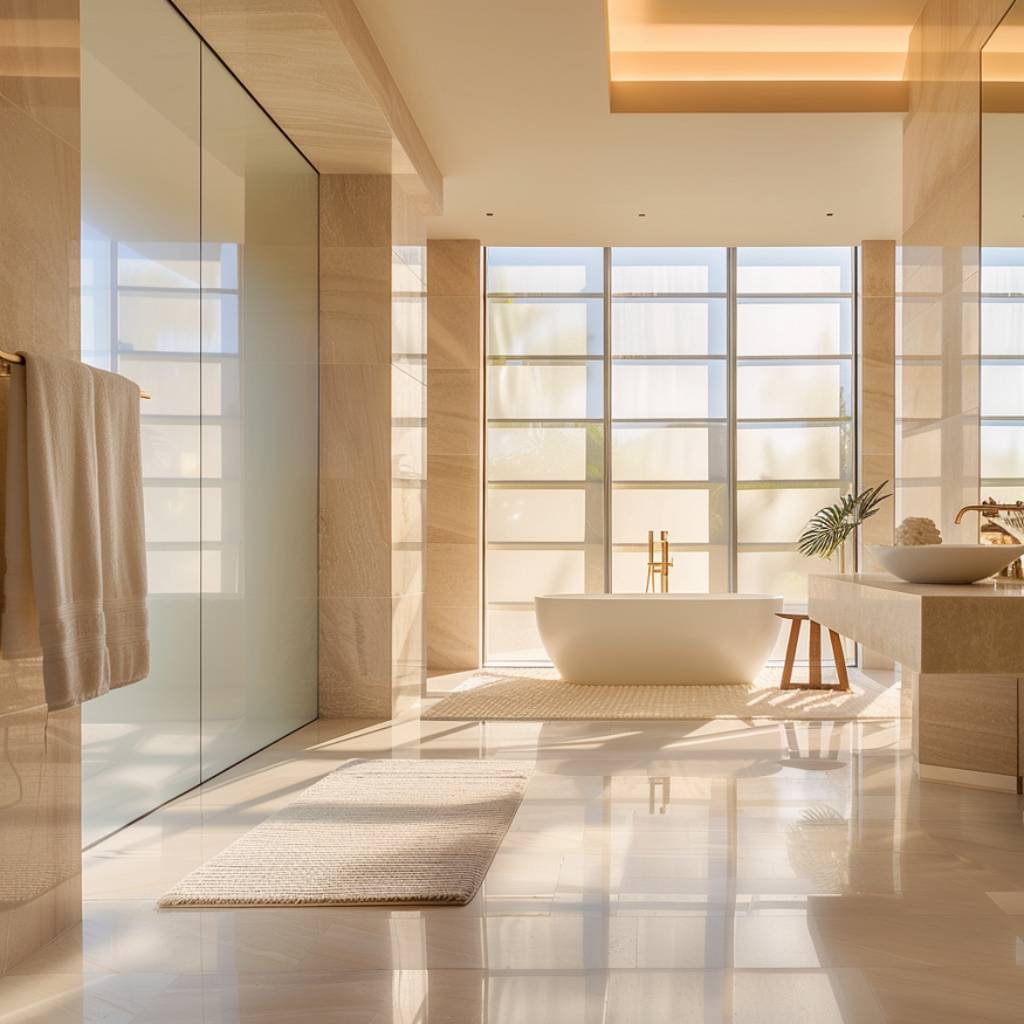
Relief rarely begins with water. It begins earlier, in the quiet decision to step away from everything that continues to demand attention. The closing of a door, the pause before entering, the subtle shift from movement to stillness, these are the first signals. The body does not need instruction; it recognizes the transition. A bathroom, in this sense, is not a functional extension of the home. It is a contained space where the outside world is temporarily held at a distance, allowing something internal to surface.
There is a distinct quality to the silence here. It is not empty, but softened. Sound behaves differently: contained, slightly echoed, returning in a gentler form. A footstep is more pronounced. A breath feels closer. This acoustic shift draws attention inward, making the body more aware of itself without effort. The ritual does not begin with action, but with this awareness, the recognition that nothing more is required in this moment except presence.
Before water touches the skin, there is the surface. The ground beneath bare feet, the wall that holds temperature, the edge that the hand instinctively reaches for, these are the first points of contact. They are not decorative decisions; they are sensory cues. A cool stone floor interrupts the pace carried in from outside, slowing movement without resistance. A smooth, stable surface under the palm offers quiet reassurance. These interactions happen instantly, below conscious thought, yet they shape the entire experience that follows.
When the water begins, it does not transform the space, it completes it. The sound introduces rhythm. The temperature introduces contrast. The body begins to recalibrate, not dramatically, but gradually. Tension held in shoulders softens. Breathing deepens without instruction. The mind, which moments earlier was occupied, begins to lose its grip. This is not indulgence; it is regulation. A return to a more natural state of balance.
In spaces that are carefully considered, this transition feels effortless. Light does not demand attention; it diffuses softly, allowing the eyes to rest. Surfaces do not compete; they align, creating a sense of continuity rather than fragmentation. There is no excess to interpret, no visual noise to process. Everything contributes to a singular outcome, to reduce resistance between the body and the space it occupies.
Relief, however, cannot exist where there is fragility. If a space feels too delicate, too precious, or too demanding of caution, the body remains alert. True comfort requires a different kind of confidence; the one built through materials and craftsmanship that are dependable. Surfaces that can withstand water, heat, and repetition without losing integrity allow the user to move freely, without hesitation. This reliability is rarely noticed directly, but its absence is always felt.
The ritual itself follows no strict structure, yet it carries a rhythm. Water begins, temperature adjusts, movements become slower and more familiar. Some days the process is brief, functional. Other days it extends, unhurried. The difference is not in the design, but in what the body brings into the space and what it is permitted to release. Because this is ultimately the purpose of the ritual: not cleansing alone, but letting go.
What is released is not always visible. It may be physical tension, accumulated thought, or the residual weight of a day that has not yet settled. The space does not remove these things entirely, but it creates enough distance for them to loosen. In doing so, it offers something rare, a moment where the body is not required to hold everything at once.
The bathroom, then, becomes a threshold. A space between states, between outside and inside, between effort and ease, between holding and releasing. It allows transition without forcing it, providing a quiet environment in which change can occur naturally.
When the water stops, the ritual does not end immediately. There is a lingering warmth, a softened quiet, a subtle shift that remains in the body. Surfaces begin to dry, reflections return, the space resets. But something has already changed. Not in the room itself, but in the person who occupied it.
This is the deeper architecture of luxury. Not defined by what is visible, but by what is supported. A home that understands this does not rely on excess. It relies on alignment, between material, sensation, and human need. And in that alignment, it creates something far more valuable than appearance.