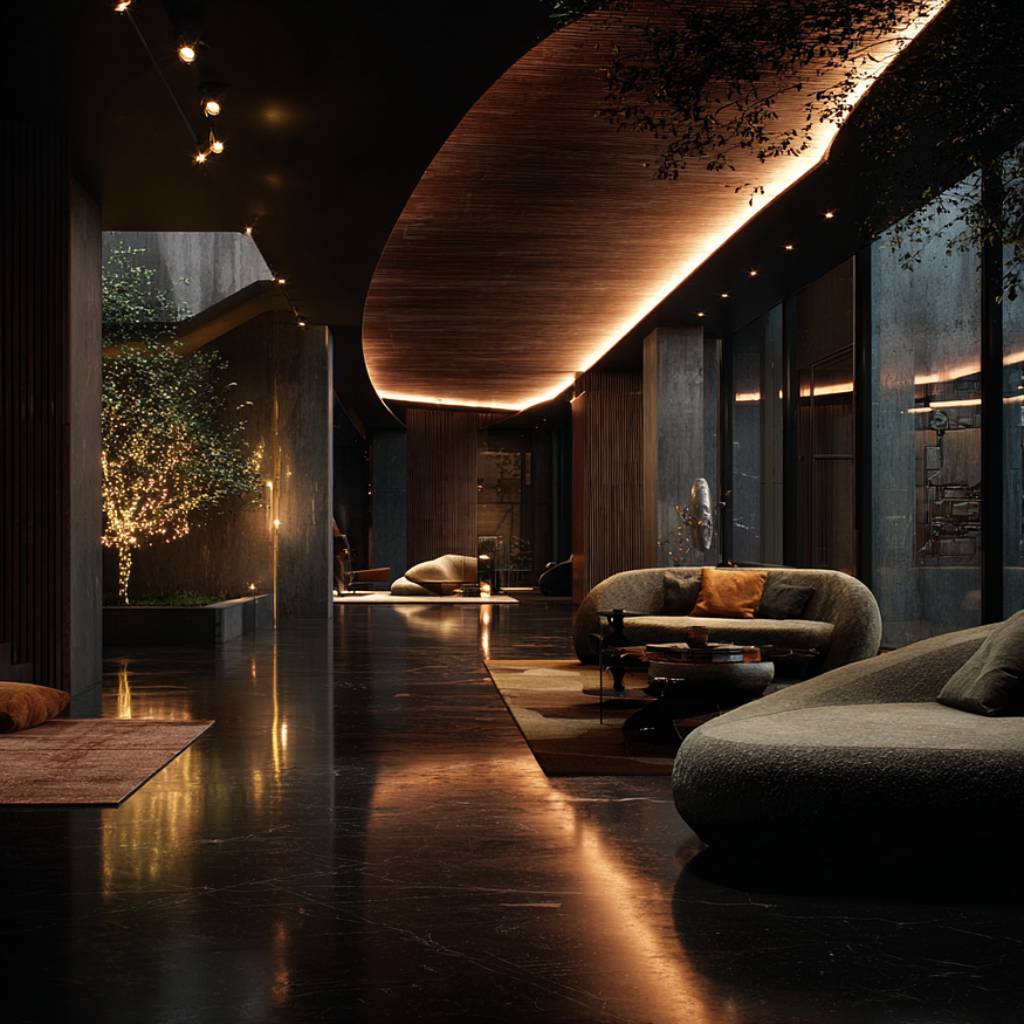
Some homes change after sunset.
Not visually at first. The furniture remains where it was. The walls hold the same color. The objects stay still. But something shifts once daylight leaves the room. Sound grows clearer. Corners feel sharper. Distances feel longer. Even the body begins moving differently.
At night, people stop experiencing a home only with their eyes. They experience it with attention.
A floor that felt smooth during the afternoon suddenly sounds louder under bare feet. A hallway becomes emotionally longer when the lighting breaks midway. A bedroom door left slightly open changes the feeling of safety in an entire apartment. The soft hum of an appliance becomes impossible to ignore. Shadows collect in places that felt invisible in daylight.
Night reveals the emotional architecture of a home. And most people never consciously notice it.
There is a reason certain homes immediately feel calming after dark while others create a low-grade tension that residents slowly adapt to without understanding why. It rarely comes down to decoration. It comes down to rhythm. The rhythm of movement. The rhythm of sound. The rhythm of interruption.
A well-designed home at night allows the body to relax before the mind asks it to.
The strange thing about comfort is that people often describe it visually even when the feeling itself is physical. Someone might say a bedroom feels “peaceful,” but what they actually mean is that nothing startled them inside it. The light was soft enough that their eyes never strained. The floor absorbed sound instead of amplifying it. The route from bed to bathroom did not require alertness. The curtains muted the city. The switches were intuitive. The silence felt intentional rather than empty.
The body remembers these things even when language does not.
This is why hotels obsess over acoustics and lighting transitions. It is why older luxury homes often used thick materials, layered textiles, heavy doors, and deeper corridors. These details were never only aesthetic decisions. They controlled emotional atmosphere. Stone softened echoes. Rugs absorbed interruption. Warm pools of light reduced visual uncertainty. Spatial sequencing slowed movement naturally.
Good night architecture is rarely dramatic. In fact, the more successful it is, the less visible it becomes.
There is a particular kind of luxury that exists only after midnight. It cannot be photographed properly because it lives in sensation rather than image. It is the feeling of walking through a home without resistance. Nothing catches your attention because nothing needs to. The floor temperature feels balanced. The pathway lighting feels intuitive. There are no abrupt reflections, no harsh shadows, no mechanical noises competing for attention.
The house begins cooperating with the nervous system. That cooperation matters more now than people realize.
Modern homes are visually cleaner than ever, but many have become emotionally louder. Open layouts amplify sound. Hard materials bounce echoes across rooms. Hidden lighting systems often prioritize drama over softness. Glass expands space visually but can make interiors feel acoustically exposed after dark. Minimalism sometimes removes the very textures that once absorbed emotional tension from a room.
Silence, contrary to popular belief, is not the absence of sound. It is the absence of disturbance. And disturbance is deeply physical.
A refrigerator hum heard repeatedly at night creates fatigue differently than the same sound during the afternoon. A corridor lit too brightly at 2 a.m. pulls the brain into alertness instead of rest. Even inconsistent flooring textures can subtly interrupt the body’s sense of ease while moving through darkness.
People think they sleep badly because of stress. Sometimes they sleep badly because the home never fully lets them arrive at rest.
The most emotionally intelligent homes understand transitions.
They understand that nighttime living is slower, quieter, and more vulnerable than daytime living. At night, people are less defended. Children walk into their parents’ rooms half-awake. Someone goes to the kitchen for water without turning on every light. A person sits alone in the living room long after everyone else has gone to bed. The atmosphere surrounding these moments matters.
A home should know how to hold silence without making silence feel empty.
This is where material choices become emotional choices.
Wood tends to soften space acoustically and psychologically. Upholstered surfaces reduce tension without announcing themselves. Matte finishes calm visual noise at night in ways polished surfaces cannot. Even curtain density changes the emotional perception of safety. Heavier drapery does more than block light. It creates enclosure. It tells the nervous system the outside world has been temporarily held back.
Many people associate luxury with visibility. But nighttime comfort belongs to another category entirely. It belongs to care.
Care is what makes someone think about how a floor sounds at midnight. Care is what softens the transition between hallway and bedroom lighting. Care is what prevents a cabinet hinge from snapping sharply in silence. These details rarely appear in photographs, yet they shape daily emotional experience more than statement furniture ever will.
Some of the most beautiful homes are difficult to live in after dark.
And some of the calmest homes would never trend online because their intelligence exists in feeling rather than spectacle.
There is something deeply human about a house that understands the body at night. Not just its routines, but its sensitivities. The way people become quieter. Slower. More aware of sound. More aware of loneliness. More aware of comfort.
Homes are often designed for daytime performance. But they are remembered at night.
Usually in fragments. The sound of soft footsteps across wood flooring.
A dim pool of light left on in the kitchen. The silence of a hallway that never felt intimidating.
The feeling of being able to move through darkness without fear. People rarely describe these memories as design. But that is exactly what they are. The best homes do not simply look beautiful after sunset. They protect the atmosphere of being alive inside them.