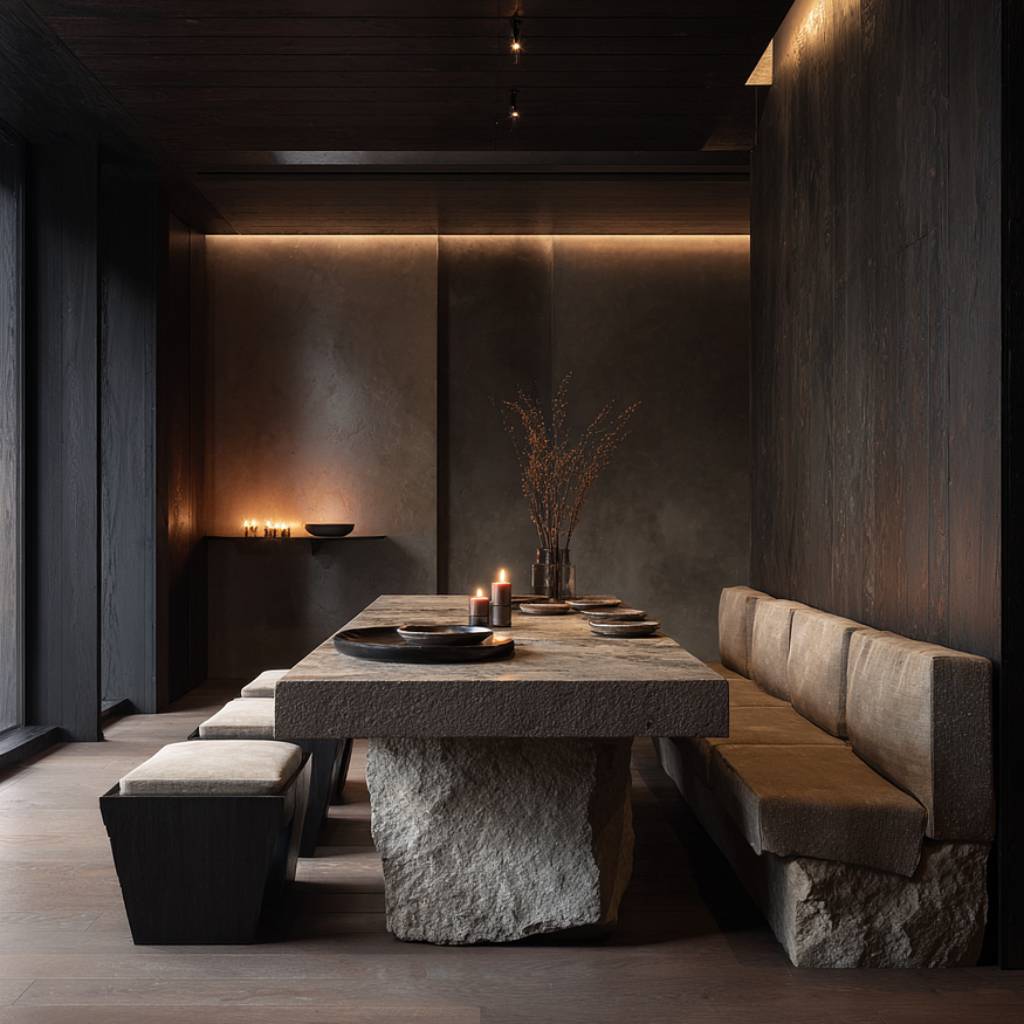
There was a time when people knew where materials came from without needing to ask.
Stone carried geography visibly. Wood carried climate. Bronze carried labour. Objects were connected to landscapes in ways that felt obvious because production was slower, more local, and more physical. A dining table was not simply furniture. It was evidence of a region, a workshop, a set of hands, and a way of working that belonged somewhere specific.
Today, most materials arrive stripped of that continuity. They appear inside pristine showrooms and perfectly lit renders with little sense of journey attached to them. A slab of marble becomes “premium.” Limestone becomes “luxury.” Travertine becomes “timeless.” The language surrounding natural materials has become so polished that it often erases the very thing that made those materials meaningful in the first place.
Their origin. Not origin as branding. Origin as reality.
There is an important difference between the two.
Luxury marketing often treats provenance like decoration. A stone is introduced through dramatic adjectives and simplified geography. Italian marble. Rare quarry. Hand-finished surface. The story is compressed into a quick emotional signal meant to imply sophistication. But increasingly, people can feel when a material story sound manufactured instead of lived.
The emotional fatigue surrounding luxury branding today comes partly from this repetition. Every object claims heritage. Every surface claim craftsmanship. Every material claim timelessness. When everything is presented as extraordinary, very little feels believable anymore.
What people respond to now is specificity. Not performance.
A stone becomes emotionally interesting the moment its story sounds human instead of promotional.
Not “sourced from Italy,” but perhaps sourced from a quarry outside Verona that temporarily closes during winter because moisture changes the extraction conditions. Not “crafted by artisans,” but cut and finished by a workshop where polishing is still done slowly because aggressive mechanical finishing changes the softness of the surface over time.
These details change the relationship entirely. They create texture rather than image.
Good provenance stories do not try too hard to sound luxurious. In fact, the more restrained they are, the more convincing they become. The goal is not to impress someone with rarity. It is to help them understand continuity. How a material moved through the world before entering a home.
Because most people are not actually searching for exclusivity anymore. They are searching for permanence. That shift matters more than many luxury industries realize.
Modern life has made access incredibly fast. Materials from every continent can now be sourced, viewed, and delivered with astonishing speed. But abundance has also flattened emotional value. Hundreds of stone slabs scroll past on screens until geography itself begins to feel aesthetic instead of real.
People have started craving context because context restores emotional weight.
A stone countertop becomes more meaningful when someone understands why its density matters, how it ages, how it reacts to touch, or why certain finishes were historically preferred in specific climates. Suddenly the object stops behaving like décor and starts behaving like a participant in daily life.
This is where provenance becomes powerful again.
Not as status signaling, but as orientation. People want to know what kind of object they are living with. They want to know whether something was chosen carelessly or thoughtfully. Whether its presence inside a home feels temporary or lasting. Whether it will age gracefully or simply deteriorate.
Natural materials communicate these things quietly over time.
Stone, especially, carries time unusually well. Unlike synthetic surfaces designed to remain visually static, natural stone changes subtly through use. A polished edge softens after years of contact. Limestone deepens in tone where sunlight repeatedly lands. Small marks accumulate like memory rather than damage.
These changes create emotional attachment because they make ownership feel participatory. The object evolves alongside the person living with it.
That relationship is difficult to replicate with heavily manufactured materials because perfection often leaves no room for intimacy. Surfaces that never change rarely become emotionally close. But stone carries evidence of time visibly and honestly. It records use instead of hiding it.
This is why the best material stories are often incomplete. They leave room for discovery. They do not explain every emotional conclusion in advance. They trust the homeowner to slowly build their own relationship with the object.
Marketing usually wants instant admiration. Provenance creates gradual recognition.
And gradual recognition lasts longer. There is also something deeply grounding about understanding the physical reality behind a material. Quarries are not abstract luxury concepts. They are landscapes shaped by labour, weather, machinery, patience, and extraction. Workshops are not mood boards. They are environments filled with dust, repetition, technical judgment, and accumulated skill.
Objects feel different when people remember that. The emotional value of craftsmanship increases once labour becomes visible again.
Not performatively visible, but honestly visible.
This may explain why many contemporary luxury spaces feel visually impressive yet emotionally empty. Materials are selected for aesthetic impact but disconnected from narrative depth. Stone becomes surface instead of story. Wood becomes texture instead of time. Objects lose the quiet gravity that comes from being linked to something beyond consumption.
The homes that feel most memorable usually contain materials with believable histories attached to them. Not exaggerated mythology. Not artificial storytelling. Simply enough truth to make the object feel anchored in reality.
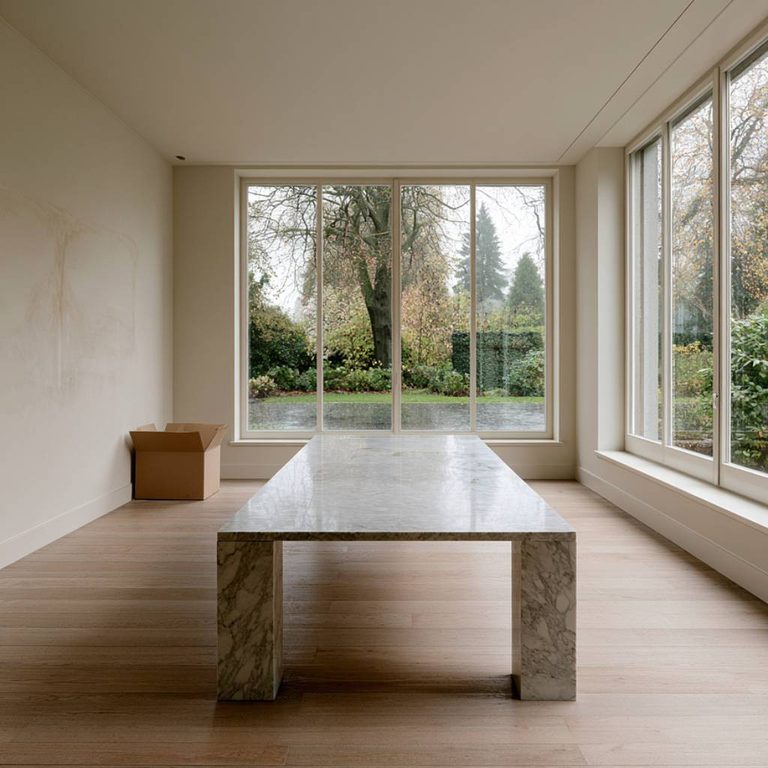
A table feels different when someone knows why that particular stone was chosen instead of another.
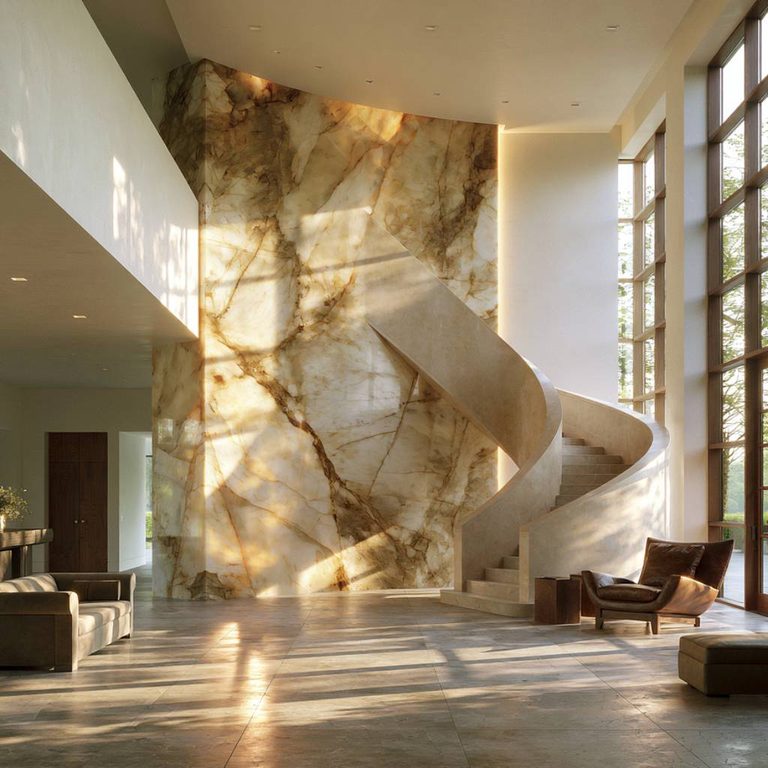
A wall feels different when its imperfections are understood as geological rather than defective.
Even care changes once provenance becomes personal. People maintain objects differently when they understand what they are preserving.
That may ultimately be the future of luxury.
Not louder narratives. More intimate ones.
Stories that sound less like campaigns and more like conversations. Stories that explain where an object has been, what shaped it, and how it might continue living inside someone else’s rituals for decades to come.
Because the most meaningful materials rarely need dramatic introductions.
They simply need enough honesty for people to form a connection with them over time.