
The rain began just after lunch, quietly enough that no one noticed it at first. The sky outside the windows gradually surrendered its brightness, and the familiar sounds of the neighbourhood softened beneath a steady rhythm of falling water. Cars passed more slowly along the road beyond the garden walls. Leaves shimmered under the weight of fresh rain. Somewhere in the distance, thunder rolled without urgency, as though reminding the afternoon that it had nowhere else to be. Inside the house, nobody reached instinctively for a television remote, opened a laptop or searched for something to fill the silence. The home had already done that. It had quietly transformed an ordinary afternoon into something worth staying present for.
Modern life has become remarkably uncomfortable with stillness. Empty moments are quickly occupied by glowing screens, endless notifications and the persistent feeling that every pause should be replaced with stimulation. We have become accustomed to entertaining ourselves even inside homes that were originally designed to shelter us from precisely this kind of restlessness. Yet there remains something deeply restorative about entering a house that asks nothing more than your presence. It offers no spectacle, no distraction and no performance. Instead, it simply creates the conditions in which ordinary moments begin to feel complete.
Rain possesses a unique ability to reveal whether a home has been designed for living or merely for looking. Under bright skies, almost every well-designed residence appears inviting. Sunlight flatters surfaces, gardens seem more vibrant and generous windows frame ideal landscapes. But when clouds gather and daylight becomes softer, architecture must rely upon something more enduring than visual drama. It must create comfort through atmosphere rather than brightness. The rooms that succeed during rain are rarely the loudest. They are the ones that know how to become quieter.
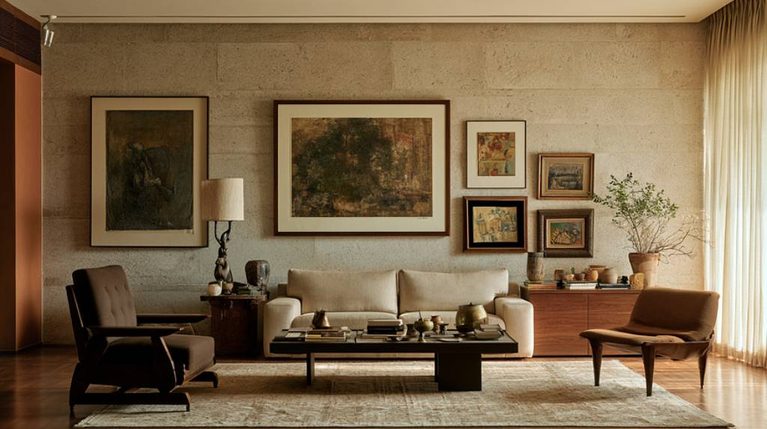
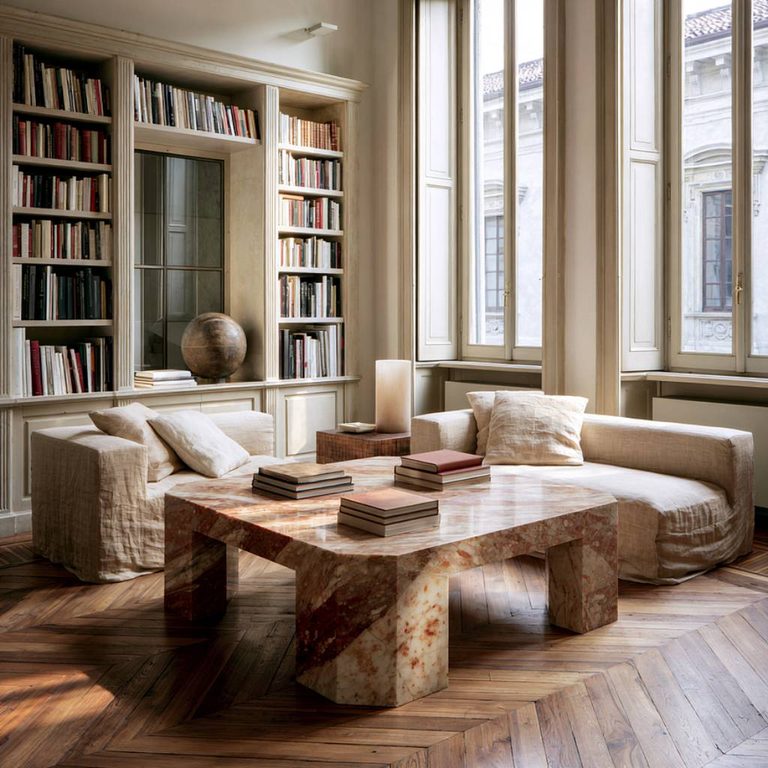
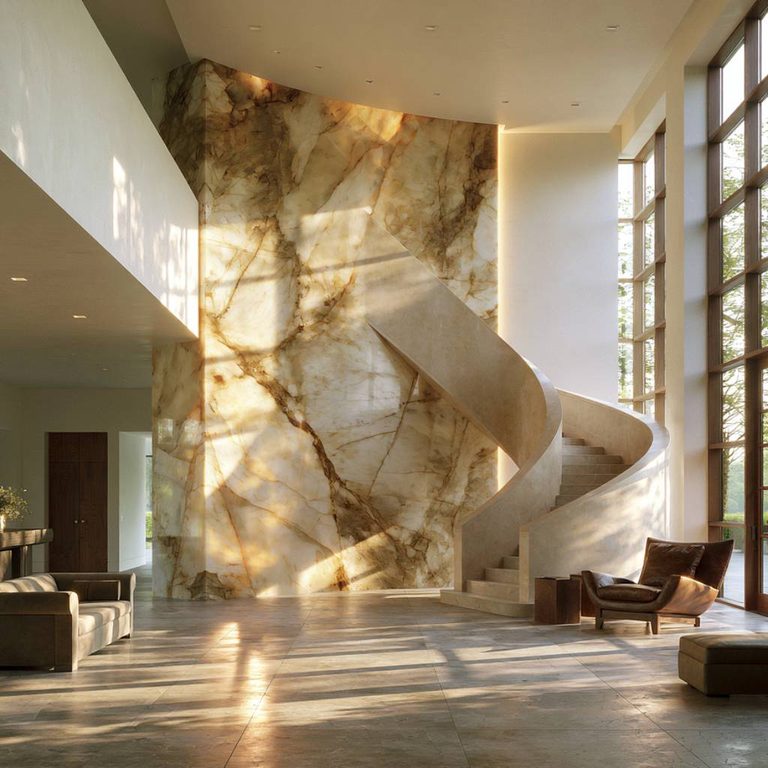
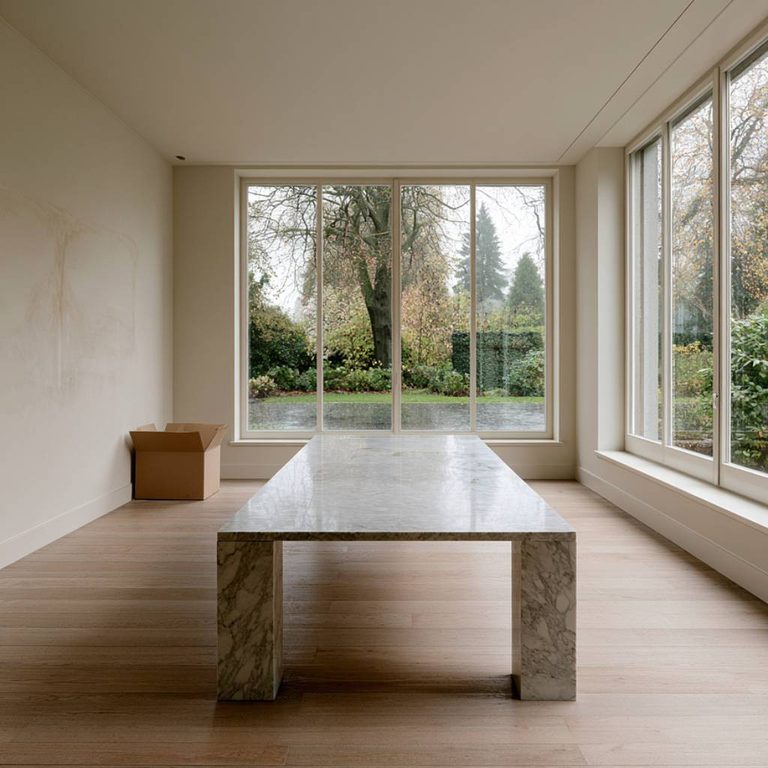
Natural materials play an extraordinary role in this transformation. Stone, timber, linen and bronze begin responding almost immediately to the changing weather. Polished marble loses its sharp reflections and develops a calm depth that resembles still water. Oak appears warmer beneath diffused daylight. Wool throws suddenly invite touch rather than decoration. Linen curtains move gently with cool air drifting through slightly opened windows. Nothing has changed physically, yet every material seems to settle into a slower rhythm, quietly encouraging the people inside to do the same.
The soundtrack of the house changes as well. Rain creates an acoustic landscape unlike any other season. Water gathers softly on stone terraces before finding its way into garden soil. Tree branches brush gently against glass. Distant traffic loses its urgency beneath the steady rhythm of rainfall. A kettle whistles briefly from the kitchen before returning the room to silence. A page turns inside an open book. Porcelain meets timber as another cup of tea is placed carefully on the table. These sounds are so ordinary that they often escape notice, yet together they create something modern homes frequently overlook, a feeling of emotional safety.
Perhaps this is why rainy afternoons have always carried a certain intimacy. They remove the pressure to be elsewhere. Plans become optional. Time stretches gently instead of disappearing. Conversations wander without destination. Reading becomes easier. Looking through a window somehow feels productive despite accomplishing nothing at all. Great homes recognise this instinctively. They never attempt to compete with the weather. Instead, they welcome it inside through softened light, framed views and materials that grow richer rather than duller beneath cloudy skies.
This relationship between weather and architecture is rarely discussed in technical drawings, yet it may be one of the most important measures of residential design. A beautifully designed home should not perform only under ideal conditions. It should become even more generous when the world outside becomes quieter. Large windows are valuable not simply because they admit sunlight but because they transform rain into part of the interior experience. Deep window seats become places to pause. Natural stone reflects changing skies. Timber absorbs warmth from surrounding light. Every design decision begins participating in an atmosphere that no furniture catalogue or lighting specification could ever create.
Luxury, perhaps more than anything else, is the freedom to remain still without becoming restless. It is the rare ability to spend an afternoon doing almost nothing while feeling that nothing important is missing. A home capable of offering that experience possesses a quality that cannot be purchased through expensive finishes alone. It has been carefully designed to support emotional comfort rather than visual spectacle. Every proportion, every material and every opening quietly contributes to a feeling that the outside world may continue rushing while the inside remains entirely at peace.
As the rain gradually slows towards evening, the house changes once more. The sky begins reflecting softly across polished stone floors. Lamps are switched on one by one, not because darkness demands them but because warmth welcomes them. The scent of wet earth drifts through open windows before they are gently closed for the night. Empty teacups remain on the table, books stay open exactly where they were left and the silence never once feels empty. Instead, it feels inhabited by everything that mattered throughout the afternoon.
Some houses entertain us with technology. The finest ones simply make us want to stay a little longer.
The greatest luxury is discovering that a quiet afternoon can become unforgettable when the house itself knows how to hold your attention.