Luxury homes are often planned through drawings, material boards, furniture schedules and reference images. These tools are necessary, but they describe what the home will contain rather than how the home will be experienced. They can define the colour of a wall, the finish of a stone or the dimensions of a table, yet they rarely explain what should happen in the room once the project is complete. A home may therefore be visually coherent and technically flawless while still feeling emotionally unfinished. Human-centred luxury begins by asking a different question: what kind of life is this home meant to hold?
A story bible provides a way to answer that question before design decisions become fixed. It is not a decorative theme or a collection of aspirational images. It is a simple narrative framework that identifies the rituals, sensory qualities and emotional transitions that should remain consistent throughout the home. It gives architects, interior designers, lighting consultants, material specialists and homeowners a shared understanding of the life being designed for. Instead of working only towards a particular visual style, every collaborator begins working towards the same human experience.
The starting point is not the room. It is the ritual. A breakfast area is not merely a table positioned near a window. It may be where one person begins the day quietly before the rest of the household wakes. A staircase is not simply a vertical circulation element. It may be the place from which children call to their parents, where footsteps announce someone’s arrival or where the house briefly comes alive every morning. A bathroom may hold the first private minutes of the day. A threshold may be where the household pauses before leaving and unconsciously slows down when returning.
When these everyday moments are identified, design becomes more precise. The breakfast corner may need softer morning light rather than dramatic illumination. The entrance may require a material that feels reassuring underfoot and improves with repeated contact. A dining table may need proportions that encourage people to remain seated after the meal rather than treating dinner as a formal performance. The room is no longer designed around appearance alone. It is designed around behaviour, memory and time.
This is where scene beats become useful. A scene beat describes a small sequence of human action within a space. Someone enters, places their keys on a familiar surface, removes their shoes and notices the changing light across the floor. A family gathers around a table, the serving dishes move from one person to another, the conversation becomes slower and no one is in a hurry to leave. Guests depart after an evening together, the doors close, the house becomes quiet and the surfaces retain traces of the occasion. These are not dramatic events, but they are the moments through which a home becomes meaningful.
Scene beats help the design team understand that the home must support movement and transition, not only static photographs. A room that looks perfect when empty may not work once people begin using it. Seating may be arranged beautifully but make conversation difficult. Lighting may be visually impressive but uncomfortable after an hour. A stone surface may be selected for its pattern without considering how it feels when touched every day. The story bible brings these practical and emotional realities into the design process early enough to influence the result.
Alongside the scenes, every home needs a sensory palette. A conventional material palette may specify marble, timber, metal and fabric. A sensory palette goes further by describing how the home should feel through light, temperature, sound, touch and atmosphere. It may speak of warm daylight moving slowly across pale stone, the quiet weight of a solid tabletop, the softened sound of footsteps in a private corridor or the coolness of a floor during an Indian summer morning. These descriptions provide direction without reducing the project to a rigid style.
The sensory palette is especially important in luxury homes because abundance can easily become noise. Too many rare materials, statement objects and dramatic finishes can compete for attention. Human-centred luxury does not require every surface to announce its value. It allows certain materials to remain quiet, revealing their quality gradually through proportion, craftsmanship and use. The finest room may be the one in which nothing appears to demand attention, yet every detail contributes to a sense of ease.
Stone holds a distinctive place within this narrative because it can become a witness to the life of the home. It is formed over geological time, shaped by craft and then placed within spaces where human time unfolds. It sees ordinary mornings, formal celebrations, difficult conversations, family decisions and years of repetition. Its meaning does not end on the day of installation. It deepens as the household begins to live around it.
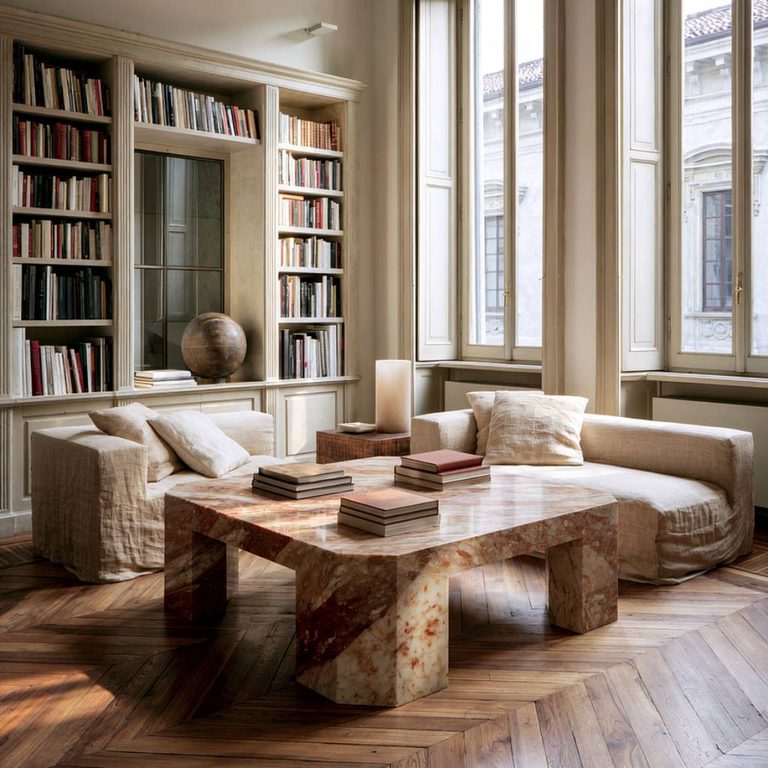
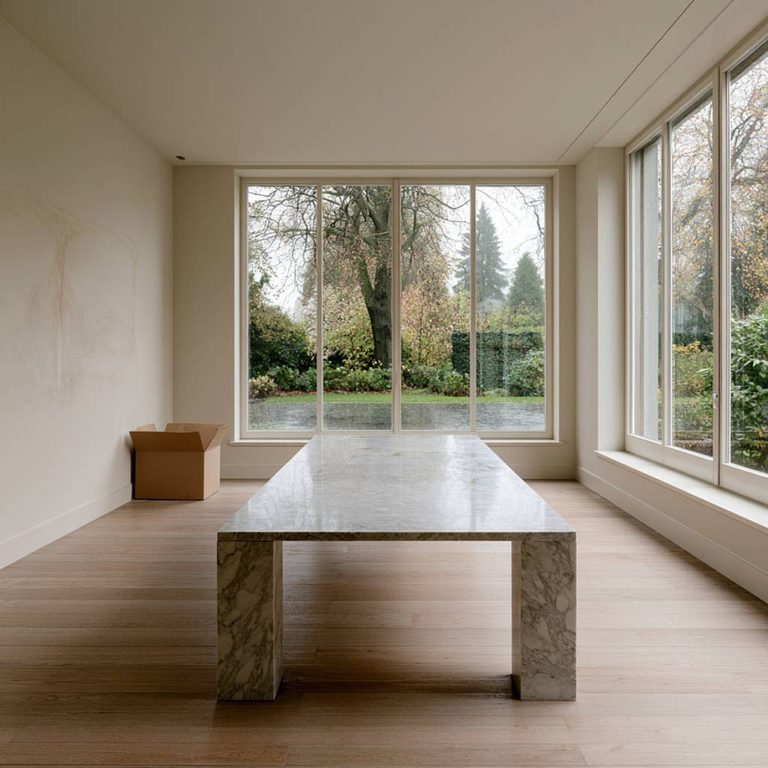
A marble dining table, for instance, may initially be admired for its veining and craftsmanship. Over time, however, its importance changes. It becomes the surface around which birthdays are celebrated, documents are discussed, children complete school projects and relatives gather during festivals. The material remains visually significant, but it also becomes inseparable from the events it has held. Stone becomes more than a finish. It becomes part of the family’s private archive.
This perspective also changes how materials should be selected. The question is no longer only whether a slab is rare or impressive. The more useful question is whether it belongs within the story of the room. A strongly veined stone may suit a space intended for ceremony and gathering. A quieter marble may be more appropriate for a bedroom where visual calm matters. A textured stone may strengthen the sense of arrival at an entrance, while a softer, more restrained surface may help a private room feel restorative.
Selection should therefore be followed by stewardship. A material that is expected to remain within a home for decades deserves more than a transactional approach. It requires careful curation, precise fabrication, responsible installation and informed maintenance. The way stone is cut, joined, sealed, lit and cared for will determine whether it ages with dignity or becomes a source of frustration. The Quarry’s approach to curated materials, craft and long-term stewardship becomes relevant here not as a visible sales message, but as a supporting philosophy. The material should not merely arrive at the site. It should be understood, placed correctly and cared for as part of the continuing life of the home.
Care itself is one of the least discussed expressions of luxury. We often associate luxury with acquisition, but the most enduring homes are shaped by maintenance, repair and attention. Someone remembers how a particular surface should be cleaned. A craftsperson returns years later to restore a finish rather than replace it. A homeowner accepts the gentle changes created by use instead of expecting the house to remain permanently untouched. These acts of care reveal affection for the home.
A care-as-love card within the story bible can record these intentions. It may explain which materials will develop a patina, which surfaces require gentle maintenance and which imperfections should be understood as part of ageing rather than immediate defects. This creates realistic expectations while also establishing a culture of stewardship. The home is no longer treated as a completed product delivered on handover day. It is recognised as something that will continue evolving with its inhabitants.
The story bible also creates a stronger basis for collaboration. Luxury residential projects often involve numerous specialists, each entering at a different stage and focusing on a particular scope. Without a shared narrative, their contributions may be individually impressive but collectively disconnected. A lighting designer may create drama where the homeowner needs intimacy. An acoustic consultant may solve noise technically without understanding where silence matters emotionally. A maintenance specialist may be appointed too late to influence material choices.
When collaborators receive a clear narrative framework, they can contribute to the same story from their own discipline. The lighting consultant can define how evening scenes should transition across the home. The sound specialist can identify where conversation, music and quietness should be protected. The craftsperson can propose details that invite touch. The maintenance expert can ensure that the selected materials remain appropriate for the household’s actual routines. Collaboration becomes more than coordination. It becomes authorship with a common purpose.
A one-page story bible does not replace architectural drawings, technical specifications or material schedules. It gives them a centre. It reminds every person involved that the final objective is not simply to produce a beautiful property. It is to create a home in which the inhabitants recognise themselves.
The most memorable luxury is rarely the loudest. It is found in rooms that understand how people gather, withdraw, return, celebrate and care for one another. It is found in materials that remain present without overwhelming the life around them. It is found in homes that feel coherent not because every object matches, but because every decision belongs to the same human story.
Before choosing the final stone, approving the lighting plan or commissioning the furniture, the project should first define that story. The moodboard can show how the home may look. The story bible explains why it should exist.